Marcos Champions Firm Diplomatic Stance in West Philippine Sea Tensions
President Ferdinand R. Marcos Jr. has endorsed a "firm with diplomacy" strategy in addressing the intensifying verbal exchanges between Philippine and Chinese officials concerning the West Philippine Sea (WPS) dispute, according to a statement from Malacañang on Thursday.
Palace Clarifies Presidential Position on Diplomatic Actions
Palace Press Officer Claire Castro revealed that President Marcos is fully aware of the ongoing back-and-forth rhetoric between Filipino officials and the Chinese embassy. This diplomatic friction has prompted some lawmakers to advocate for declaring certain Chinese diplomats as persona non grata, a move that would render them unwelcome in the country.
The Department of Foreign Affairs (DFA) has weighed in on the matter, describing the declaration of persona non grata as "one of the most severe forms of diplomatic action" available to the government. The DFA emphasized that such a measure should only be considered as "an option of last resort." Instead, the department remains steadfast in its commitment to resolving disputes through constructive dialogue and direct communication with the Chinese government on bilateral and international issues crucial to the Philippines.

In a statement read by Castro during a press briefing at Malacañang, the DFA expressed hope that it would be granted ample space to perform its functions and address issues with foreign counterparts through private consultations rather than public discourse. This approach aligns with President Marcos's vision and guidance as the chief architect of Philippine foreign policy.
Balancing Firmness and Diplomacy in Maritime Disputes
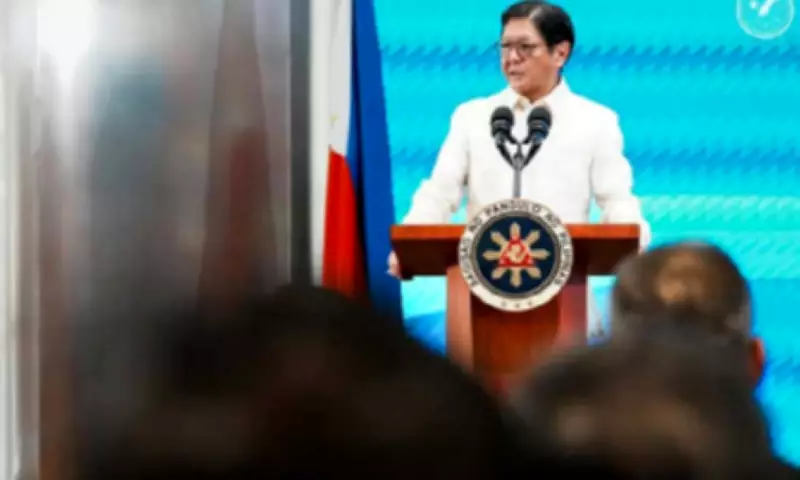
When questioned about the President's specific stance on the escalating tensions, Castro elaborated that the Chief Executive desires the government to maintain a firm position while adhering to diplomatic protocols. "Puwede naman pong magkaroon ng firm action with diplomacy" (It's possible to have firm action with diplomacy), she stated, underscoring the administration's preference for a measured yet resolute response.
The recent weeks have witnessed a notable increase in rhetorical exchanges between the Chinese Embassy and Filipino officials. Chinese representatives have particularly targeted Philippine Coast Guard (PCG) spokesperson for the WPS, Commodore Jay Tarriela, along with other lawmakers who have been vocal in opposing China's incursions into disputed territories.
Manila and Beijing have been entangled in maritime confrontations for several years, with the Philippines accusing China of aggressive maneuvers, water cannon incidents, and disruptions to supply missions within the country's exclusive economic zone (EEZ). Beijing continues to assert sovereignty over vast portions of the South China Sea, including areas that fall within the Philippines' EEZ.
The Philippine position is firmly grounded in the 1982 United Nations Convention on the Law of the Sea (UNCLOS) and the 2016 arbitral tribunal ruling, which invalidated China's expansive claims in the region. These legal frameworks provide the foundation for Manila's assertions and diplomatic efforts.
Philippines Pushes for South China Sea Code of Conduct as ASEAN Chair
As the chair of ASEAN in 2026, the Philippines is actively advocating for a binding South China Sea Code of Conduct with China. Castro highlighted that this initiative aims to prevent further incidents and promote regional stability in the contested waters.
President Marcos and the DFA are hopeful that the code will be finalized during the Philippines' chairship of ASEAN. This achievement would establish clear rules for maritime behavior while enabling the Philippines to balance a firm defense of its national interests with ongoing diplomatic engagement. The administration's approach reflects a strategic effort to navigate complex geopolitical challenges while upholding Philippine sovereignty and international law.