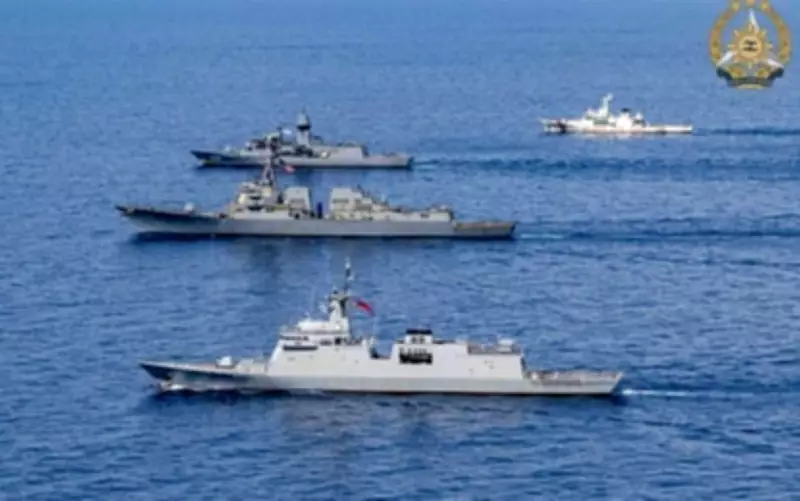
Philippines, US, and Australia Strengthen Maritime Cooperation in West Philippine Sea
The Armed Forces of the Philippines (AFP) announced on Tuesday that naval and air units from the Philippines, Australia, and the United States successfully concluded the 14th Multilateral Maritime Cooperative Activity (MMCA) in the West Philippine Sea. This marks the first such exercise of the year, held from February 15 to 16, 2026, demonstrating a unified commitment to bolstering regional security and upholding international maritime laws.
Enhanced Interoperability and Regional Security
The two-day exercise, conducted across the waters of the West Philippine Sea, emphasized the continuity of multilateral cooperation among the participating nations. According to the AFP, the activity reflects a sustained dedication to strengthening maritime security in the region through improved interoperability and the promotion of freedom of navigation and overflight under international law.
The AFP, Australian Defense Force (ADF), and United States Indo-Pacific Command (USINDOPACOM) collaborated closely during the MMCA. Philippine forces deployed a comprehensive array of air and naval assets, including the Philippine Navy's guided missile frigate BRP Diego Silang (FFG-7) and an AW-109 helicopter, as well as Philippine Air Force FA-50 fighter jets, A-29 'Super Tucano' aircraft, C-208B, and a 'Sokol' search and rescue helicopter. Additionally, the Philippine Coast Guard participated with the BRP Teresa Magbanua (MRRV-9701).

International Naval Contributions
Australia contributed the HMAS Toowoomba (FFH-156), equipped with an embarked MH-60R helicopter and a P-8A 'Poseidon' maritime patrol aircraft. The United States deployed the USS Dewey (DDG-105) alongside a P-8A aircraft. This 14th iteration of the MMCA built upon previous engagements to further enhance operational cohesion and tactical proficiency among the allied forces.
Exercise Activities and Objectives
The MMCA included a series of coordinated exercises designed to refine military capabilities and foster transparency. Key activities comprised:
- A communication exercise to improve coordination procedures and ensure seamless interaction between units.
- Maritime domain awareness events aimed at strengthening shared situational understanding and monitoring capabilities.
- Division tactics to advance maneuvering proficiency and tactical execution in naval operations.
Furthermore, a photo exercise, replenishment at sea drills, and a concluding 'hotwash' session supported logistical coordination and captured critical operational insights for future joint activities. These efforts underscore the participating nations' resolve to maintain a stable and secure maritime environment in the West Philippine Sea, reinforcing their strategic partnership in the face of regional challenges.