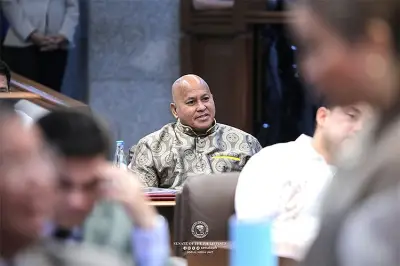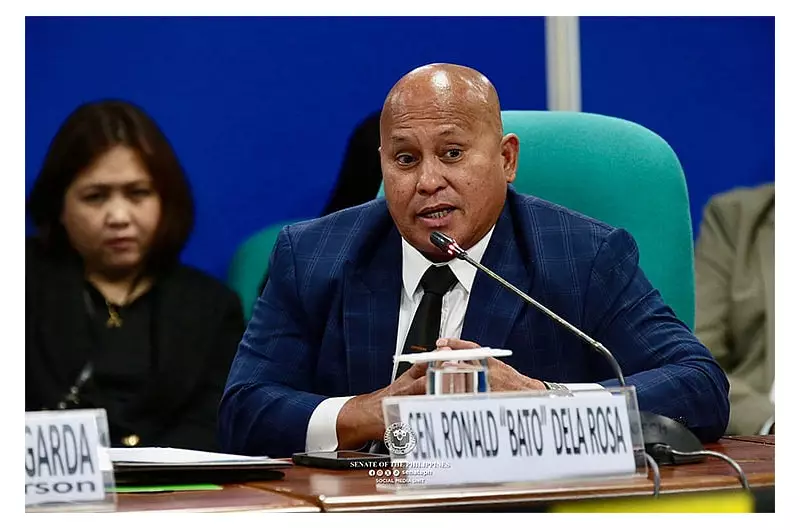
The Department of Justice (DOJ) is preparing for a potential legal and diplomatic challenge, outlining two possible courses of action should the International Criminal Court (ICC) issue an arrest warrant for Senator Ronald "Bato" dela Rosa.
Two Legal Pathways for a Potential Warrant
During a press conference on Tuesday, November 11, 2025, Chief State Counsel Dennis Arvin Chan clarified that the DOJ has not yet seen or received a copy of any arrest warrant from the ICC for the former Philippine National Police (PNP) chief. However, he detailed the procedures that would be considered if one were to arrive.
Chan explained that Senator Dela Rosa could undergo one of two processes: extradition or surrender. He noted that the surrender process would be theoretically faster. The extradition route, by contrast, would involve a formal request coming through the Department of Foreign Affairs, which the DOJ would then evaluate before filing the case in a proper trial court.

Supreme Court Petition Complicates the Matter
Despite the speed of surrender, the DOJ is also considering a significant legal hurdle. Chan highlighted the pending consolidated petition for habeas corpus filed by the children of former President Rodrigo Duterte before the Supreme Court (SC).
This petition follows the arrest of Duterte himself in March 2025 based on an ICC warrant related to the investigation into alleged crimes against humanity during his administration's drug war. After his arrest, Duterte was immediately transported to The Hague in the Netherlands and is currently detained at the Scheveningen Prison.
His children, Sebastian and Veronica Duterte, filed a petition for habeas corpus, a legal action that demands the justification of a person's detention. Davao Representative Paolo Duterte also filed a separate petition seeking his father's release from what they call illegal confinement, and to prevent Philippine authorities from cooperating with the ICC and Interpol.
"As a matter of practicality or propriety, we may have to wait for the SC to decide on the issue because our position, that is the one being questioned by the camp of the former President," Chan stated. He added that there are "many things that need to be weighed" and "many aspects that need to be looked at from different angles."
The Principle of International Reciprocity
Amid these legal complexities, Chan maintained that the Philippines should still comply with any ICC arrest warrant, citing the principle of reciprocity among nations.
He emphasized that even though the Philippines is no longer a member of the ICC, the country exists within an interconnected international community. Chan pointed out that while the nation may not be legally compelled, the government must consider the diplomatic implications of its actions, guided by principles of reciprocity and comity.
The situation places the Philippine government at a crossroads, balancing its domestic legal obligations with its role and responsibilities in the global arena.