A peace advocacy organization formed by former rebels has voiced its strong endorsement of a recent appellate court decision that confirmed the guilt of thirteen activists and educators.
Victory for Law and Truth
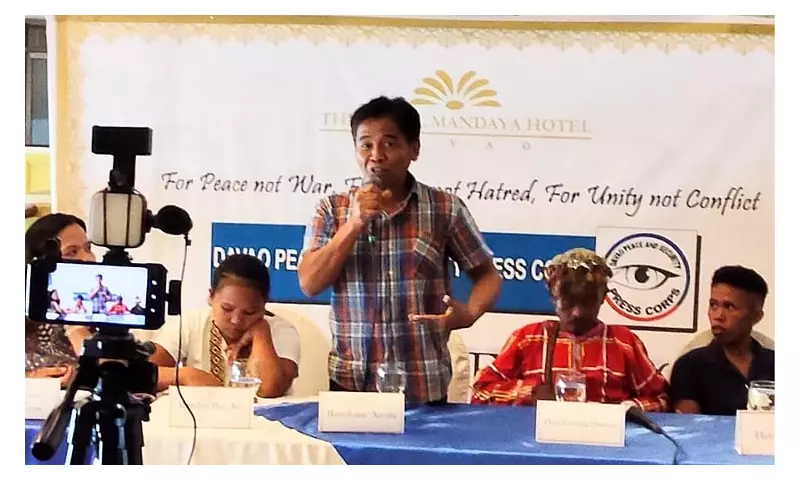
The Kalinaw-Southeastern Mindanao Region (Kalinaw-SEMR) stated that the Court of Appeals ruling represents a triumph for both legal justice and factual truth. The group's president, Ida Marie Montero-Lubguban, shared this perspective during a briefing held by the Davao Peace and Security Press Corps at the Royal Mandaya Hotel.
"In our view, the decision of the Court of Appeals is not only a victory for the law but also a victory for the truth," Montero-Lubguban said. She emphasized that the verdict sends a clear message against using young people for ideological agendas.

Community members from Talaingod also welcomed the court's action. Rurelyn Bay Ayo, a former student of the Salugpungan school, expressed happiness and gratitude, noting the decision felt like a victory and a form of respect for the indigenous residents of Talaingod.
Case Background and Legal Journey
The legal case, widely referred to as the Talaingod 13 case, stems from a fact-finding mission on November 28, 2018. Activists, including former Bayan Muna Representative Saturnino 'Ka Satur' Ocampo and ACT Teachers Party-list Representative France Castro, responded to reports that students and teachers were being blocked from accessing food and supplies.
In July 2024, the Tagum City Regional Trial Court Branch 2 found the thirteen individuals guilty of violating the Special Protection of Children Against Abuse, Exploitation, and Discrimination Act (Republic Act 7610). The court ruled their actions during the 2018 mission endangered minors in remote areas of Talaingod. Sentences ranged from nearly five to almost seven years in prison, along with orders for civil and moral damages.
The Court of Appeals affirmed this verdict in December 2025, finding no reversible errors and confirming that all elements of the offense had been sufficiently proven.
Diverging Views on Justice and Protection
While Kalinaw-SEMR and some Talaingod residents support the ruling, other groups have condemned it. The Save Our Schools Network criticized the decision in a statement on December 30, 2025, arguing it criminalizes volunteers who aimed to protect Indigenous children.
"Those who acted to protect Indigenous children are criminalized, while the structures and actors that produced dispossession, militarization, and deprivation remain beyond accountability," the network stated.
Bartolome Arcala of the Ata Manobo Former Rebels Association highlighted ongoing challenges in the region, including deteriorated access roads that make remote communities hard to reach. He acknowledged some government and private sector assistance, such as support from Dole, but stressed that more help is needed to ensure children's safety and access to education.
The contrasting reactions underscore the deep divisions surrounding this long-running case, which continues to spark debate over child welfare, activism, and justice in Mindanao.