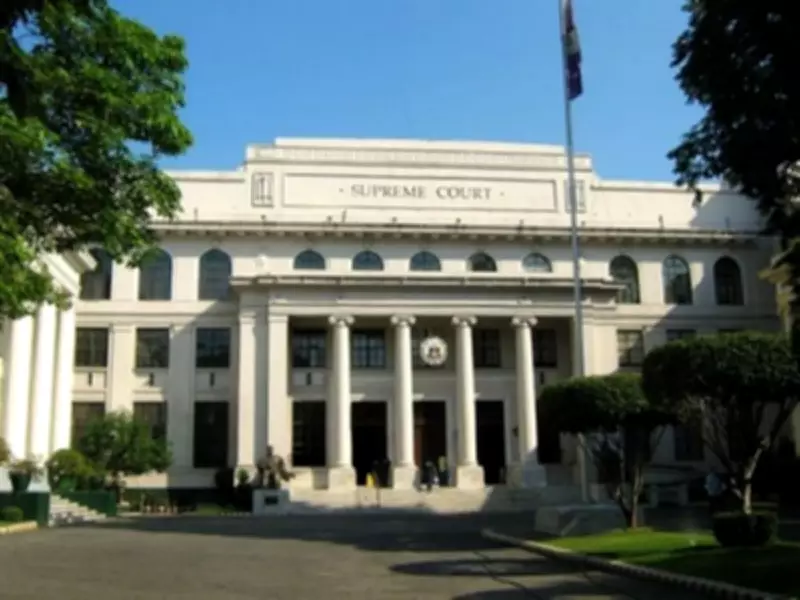
The Supreme Court (SC) clarified on Wednesday, April 29, 2026, that the term “forthwith” in the Senate impeachment trial means “within a reasonable time,” according to a decision penned by Associate Justice Rodil Zalameda.
Petition Dismissed
The high court dismissed the petition for mandamus filed by Catalino Aldea Generillo Jr., which sought to compel the Senate to immediately convene as an impeachment court to try the charges against Vice President Sara Duterte.
Zalameda stated that the petition for mandamus was not the proper remedy, as the Senate’s exercise of its duties is beyond the SC’s power of review except in cases of grave abuse of discretion, since they are co-equal constitutional bodies.

Certiorari Treatment
The High Court treated the petition as one for certiorari in the interest of equity and found that the Senate acted on the impeachment complaint in a “timely manner.” The SC explained in a press briefer: “While the Constitution requires the House of Representatives to act within a certain number of session days on an impeachment complaint, it does not specify a fixed timeframe for the Senate to start an impeachment trial. It simply provides that the trial ‘shall forthwith proceed,’ leaving the timing to the Senate’s discretion.”
The SC clarified that “forthwith” in Article XI, Section 3(4) of the Constitution means within a reasonable time, which may be longer or shorter depending on circumstances, allowing the Senate to make necessary preparations.
Accountability Principle
The SC emphasized that the Senate must avoid undue delay to uphold the principle that public officers must at all times be accountable to the people, even as the Constitution does not set an exact date for the trial.
The High Court declared the petition moot since the Senate had begun impeachment preparations, and the Articles of Impeachment against Duterte were nullified by the SC’s resolutions on July 25, 2025, and January 28, 2026.
Background
The first consolidated impeachment complaint against Duterte was endorsed by more than 250 House lawmakers to the Senate on February 5, 2025, the last session day before a four-month break for the May 2025 elections. The Senate faced criticism for going on break without discussing the matter. In August 2025, the Senate voted to archive the articles of impeachment following the SC’s initial decision on the charges.