Bacolod City has taken decisive action to protect consumers by implementing an automatic price freeze on essential goods following the devastation caused by Typhoon Tino. The measure comes as the city grapples with the aftermath of the severe weather event that struck on November 4, 2025.
Official Signing and Implementation
Mayor Greg Gasataya, serving as chairperson of the Bacolod City-Local Price Coordinating Council, formally signed the Automatic Price Control ordinance alongside Department of Trade and Industry (DTI) Negros Occidental Provincial Director Lynna Joy Cardinal. The signing ceremony took place on Monday afternoon, November 10, 2025, at the Bacolod City Government Center.
This crucial decision follows the official declaration of Bacolod City under a state of calamity, which was recommended by the Bacolod City Disaster Risk Reduction and Management Council. The automatic price control mechanism was triggered by this calamity status, allowing authorities to stabilize prices during the recovery period.

Enforcement and Inspection Measures
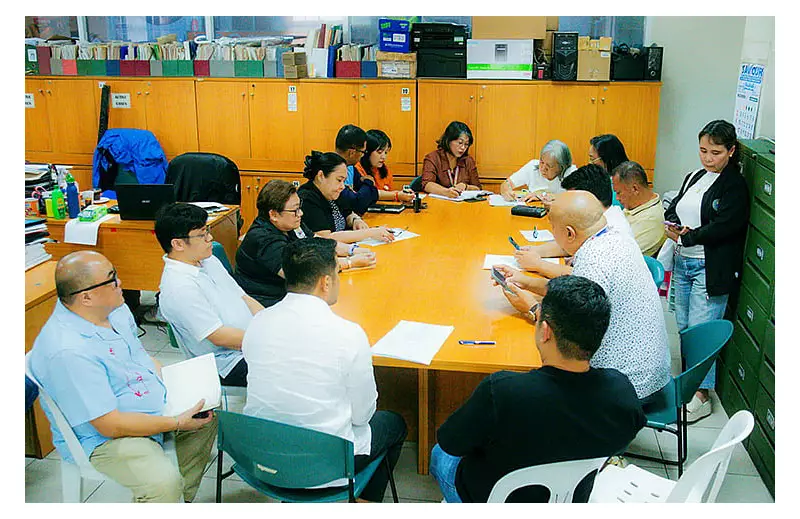
City Administrator Mark Steven Mayo confirmed that the Local Price Coordinating Council has already convened to implement strict compliance measures. Joint inspection teams will conduct regular checks at department stores and grocery outlets across the city, coordinating with multiple government agencies including the Department of Agriculture, Department of Environment and Natural Resources, and the Department of Health.
"Actions will be taken following the results of inspections. If violations are found, the council has the authority to issue show cause orders and recommend the filing of charges," Mayo emphasized during the announcement. The enforcement strategy focuses primarily on major retail establishments that serve as main sources of basic necessities for residents.
Scope and Limitations of Price Control
While the price freeze covers essential basic commodities, officials clarified that not all products fall under the automatic price ceiling. Items such as generator sets, which have seen increased demand during the power outages caused by the typhoon, are excluded from the price control measures.
"The bottom line is to protect consumers from those taking advantage of the situation," Mayo stated, highlighting the primary objective of the price stabilization effort. The council's approach targets preventing price gouging and ensuring affordability of essential items during the recovery phase.
Legal Framework and Penalties
The price control mechanism operates under Republic Act 7581, commonly known as the Price Act, which automatically freezes prices of basic necessities at their prevailing rates when a area is declared under a state of calamity. The price freeze will remain effective for up to 60 days unless lifted earlier by presidential authority or until the situation normalizes.
Violators of the price control measures face severe consequences under Section 16 of the Price Act, including imprisonment ranging from one to ten years, fines between P5,000 and P1,000,000, or both penalties at the discretion of the court.
Multi-Agency Cooperation
The Local Price Coordinating Council comprises representatives from various government offices ensuring comprehensive enforcement. Member agencies include the City Legal Office, City Administrator's Office, Business Permits and Licensing Office, Department of the Interior and Local Government, Bacolod City Police Office, and other key departments.
The DTI has issued a strong appeal to business owners to strictly comply with the price freeze regulations. Consumers are encouraged to report any violations or price manipulation to the DTI-Negros Occidental Provincial Office at telephone number (034) 441-3644.