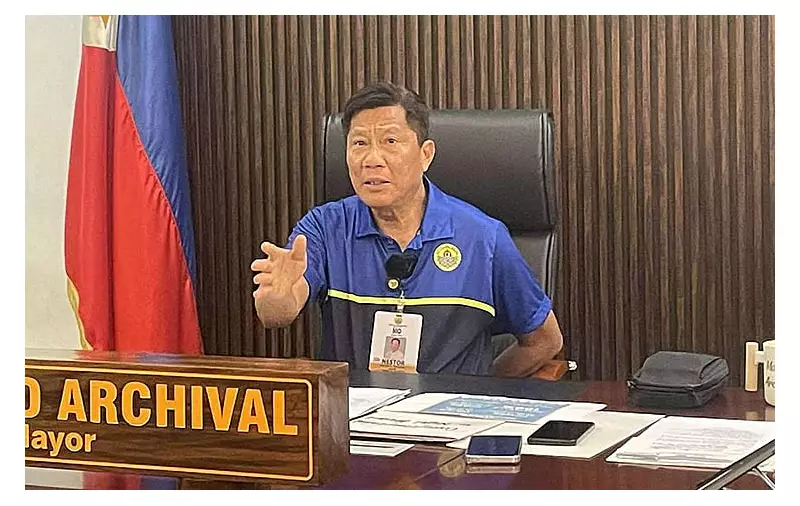
Cebu City has launched a groundbreaking 24/7 government service initiative that's generating both excitement and controversy across the political landscape. Mayor Nestor Archival's executive order establishes what's being called the "Mayor of the Night" program, creating round-the-clock public services while raising important questions about governance structure.
The Birth of 24/7 Government Services
On October 23, 2025, Mayor Nestor Archival signed Executive Order No. 2025-001, officially creating the Cebu City Government 24/7 Services Center. This innovative one-stop shop aims to provide continuous government services to residents, particularly benefiting night-shift workers and those who struggle to access traditional daytime government offices.
The center is planned for location within or near Cebu I.T. Park in Barangay Lahug, with the city government committing to a P12 million lease agreement spanning three years. The timing of this lease approval has drawn criticism from some city council members who question whether the legislative body should have reviewed the concept before the contract was finalized.

Constitutional Questions and Council Concerns
Councilor Pastor Alcover Jr. has emerged as the most vocal critic of the new initiative, raising two primary objections. First, he questions the constitutionality of having what appears to be two mayors serving simultaneously. Second, he objects to the procedural approach, arguing that the City Council should have been consulted earlier in the process.
The irony isn't lost on political observers: Mayor Archival himself frequently criticized similar procedural shortcuts when he served as minority floor leader in the City Council. Now, councilors are expressing the same frustrations about his administration's approach to implementing the "Mayor of the Night" project.
The executive order attempts to address separation of powers concerns by explicitly stating that Vice Mayor Tomas Osmeña will oversee and coordinate the night services "under the control and authority of the city mayor." This qualification appears in bold text throughout the document, emphasizing that there remains only one elected mayor in charge.
Historical Precedents and Practical Considerations
This isn't the first time Cebu City has experimented with expanding executive roles. During former Mayor Tomas Osmeña's previous administration from 2016 to 2019, he appointed eight councilors as "deputy mayors" with specific executive responsibilities in areas like health, public safety, and infrastructure.
That earlier experiment faced legal challenges through an Ombudsman complaint, though the resolution was never publicly disclosed. Now, Vice Mayor Osmeña finds himself on the other side of a similar arrangement, heading the night services program while maintaining his legislative role.
Critics have suggested more practical alternatives, such as utilizing existing City Hall space after regular hours or extending service hours for specific departments. Some have even questioned the need for a dedicated physical location at I.T. Park when digital solutions might achieve similar results.
Safeguards and Future Prospects
Mayor Archival has built several safeguards into the program, including a two to three-year pilot phase that allows for evaluation and adjustment. The experimental nature of the project provides an opportunity to assess actual demand and refine services based on real-world usage.
For Vice Mayor Osmeña, the program represents fulfillment of a 2025 election promise and continues his legacy of innovative public services, following his earlier successful "24/7 public library" initiative. The arrangement also maintains the political balance between the mayor and vice mayor, who leads the BOPK party.
As Cebu City moves forward with this ambitious project, all eyes will be on how effectively the "Mayor of the Night" program serves residents while navigating the complex legal and procedural questions it has raised. The success or failure of this initiative could set important precedents for local government innovation throughout the Philippines.