Cebu Provincial Board Member Celestino "Tining" Martinez III has issued a strong call for the creation of an updated and integrated provincial master plan, declaring that Cebu can no longer depend on the decade-old 2017 Mega Cebu Plan.
Outdated Planning Meets Modern Challenges
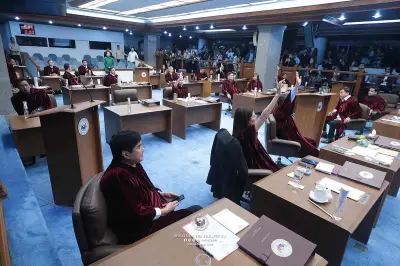
During a privilege speech at the Provincial Board's regular session on Monday, November 24, 2025, Martinez questioned why Cebu continues to recycle old ideas despite evolving needs. "Why are we still relying on outdated master plans? Why have we not developed new, forward-looking solutions?" he challenged his colleagues.
Martinez emphasized the urgent need for a comprehensive plan that includes modern infrastructure such as expressways, railway systems, sustainable waste management, and strategies to reduce congestion while expanding growth beyond Metro Cebu.

Official Response: Updates Already Underway
Provincial Assistant Administrator Aldwin Empaces responded that the master plan is indeed scheduled for updating. "We will update it to align with the Physical Framework Plan of Cebu Province, which will be completed by the first quarter of next year," Empaces told SunStar Cebu on Tuesday, November 25.
Empaces explained that while the plan will be refreshed, the existing framework, feasibility studies, and priorities remain relevant to Cebu's direction toward becoming a smart and sustainable province.
The discussion comes as Governor Pamela Baricuatro's recent call to establish the Metro Cebu Development Authority (MCDA) has brought the 2017 Mega Cebu Master Plan back into focus. The original blueprint, designed to guide Metro Cebu's growth through coordinated solutions for transport, flood control, waste management, and urban development, had stalled due to weak enforcement and the inactivity of its coordinating body.
Budget Priorities and Disaster Recovery
Martinez stressed that the need for a modernized development blueprint has become critical as Cebu deals with widespread damage from recent earthquakes, flooding, and Typhoon Tino, which struck the province on November 4, 2025.
The official urged the Provincial Board to realign portions of the 2026 budget to prioritize disaster-stricken areas, social and health services, and long-delayed rehabilitation programs. "I was hoping that since we have more control over the provincial government's funds and status, we can set our own priorities," Martinez stated in a media interview following his speech.
He noted that supplemental budgets could be pursued later if additional national assistance becomes available.
Time-Sensitive Recovery Efforts
Martinez warned that the province is entering a critical phase of recovery, with the most challenging work still ahead. "The more difficult, more expensive, and time-sensitive work of rebuilding lies ahead," he cautioned.
The board member cited extensive damage to municipal halls, roads, ports, barangay halls, health centers, daycare facilities, and public school classrooms that must be restored before communities can fully recover. He emphasized that livelihood assistance, capacity-building programs, and technical support must form central components of the rehabilitation plan.
Martinez pointed out that Cebu's vulnerability to disasters is worsened by overpopulation, unregulated development, and overstressed drainage systems, making mitigation and preparedness essential. While acknowledging national government support, he stressed that "we cannot rely solely on external assistance" and called for decisive use of provincial resources to protect the most vulnerable communities.