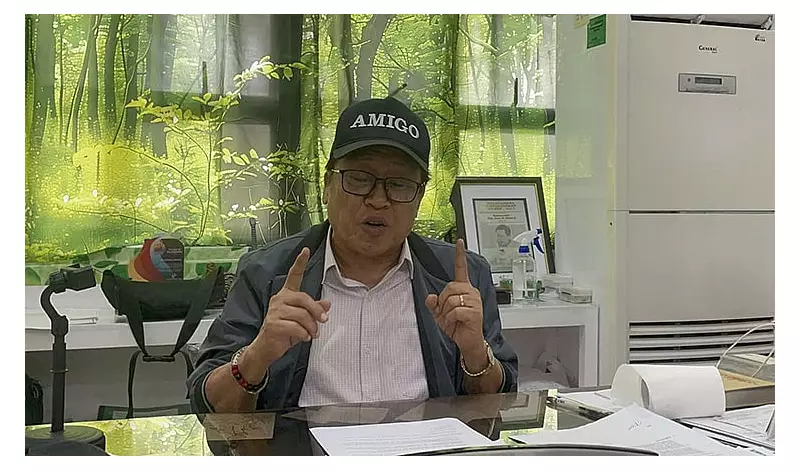
Cebu City Councilor Pastor "Jun" Alcover Jr. has introduced a groundbreaking proposal aimed at transforming the city's historic horse-drawn carriage industry. The "Calesa sa Sugbo Ordinance" seeks to formally regulate the operation of tartanillas, recognizing them as a vital cultural asset while modernizing standards for safety and animal welfare.
Preserving a Legacy on Wheels
The tartanilla, known as calesa in Tagalog, is a living relic of the Spanish colonial era, dating back to the 1700s. For centuries, these carriages dominated Cebu's streets, earning the title "kings of the road" in the 1940s and 1950s. Even after World War II and the rise of jeepneys and buses, they persisted, though their operations were eventually restricted to areas like Pasil, Taboan, and Duljo Fatima by City Ordinance 67 in the early 2000s. Councilor Alcover's new measure is not his first attempt to support the industry; in 2022, he proposed allocating P1 million annually for horse vitamins and medicines.
Key Provisions of the Proposed Ordinance
The ordinance establishes a framework for collaborative oversight and professionalization. Three key city offices will share enforcement responsibilities:

- The Department of Veterinary Medicine and Fisheries will ensure horse welfare, requiring free veterinary checkups every six months and assessing each animal's fitness for work.
- The Cebu City Transportation Office will designate specific heritage-friendly routes and set operating schedules.
- The Cebu City Tourism Office will handle accreditation, issue permits, and integrate calesas into official heritage tourism programs.
To professionalize the trade, kutseros (drivers) must be of legal age, obtain annual accreditation, and wear a prescribed uniform of white collared shirts, black pants, and rubber shoes or slippers. Operators must secure a permit with fees set at P100 for the permit, P50 for the sticker, and P100 for the plate number. Each carriage must be equipped with safety and sanitation features, including a front lamp, reflectorized stickers, cleaning kits, water containers, and manure receptacles.
Standardized Fares, Routes, and Penalties
The proposal introduces clear fare structures to prevent overcharging:
- P200 per hour for tourist package tours.
- P50 per person from origin to any heritage or tourist site.
- A P10 minimum fare for traditional local routes.
Designated terminals for regular operations will be on both sides of Leon Kilat Street, while tourist trip terminals are planned for the Parian monument, Cebu Metropolitan Cathedral, and Fort San Pedro. The ordinance also imposes strict rules: a maximum capacity of six people per carriage, a ban on kutseros approaching tourist buses, and a requirement to display name tags and fare matrices.
Violations carry graduated penalties: a P500 fine for the first offense, a one-month permit suspension for the second, and complete revocation of permits and accreditation for the third. Offenders may compromise with the mayor upon full payment of the penalty.
Implications for Heritage and Livelihood
If enacted, this ordinance will formally integrate the informal calesa livelihood into Cebu City's regulated tourism and transport sectors. It offers kutseros government legitimacy and potential marketing support through heritage tourism programs. However, it also introduces new financial and regulatory responsibilities for operators. For the city government, the move demonstrates a dual commitment: preserving a tangible piece of colonial history while proactively addressing contemporary concerns about traffic management, tourist safety, and animal cruelty. The success of the measure hinges on balancing cultural preservation with practical modernization.