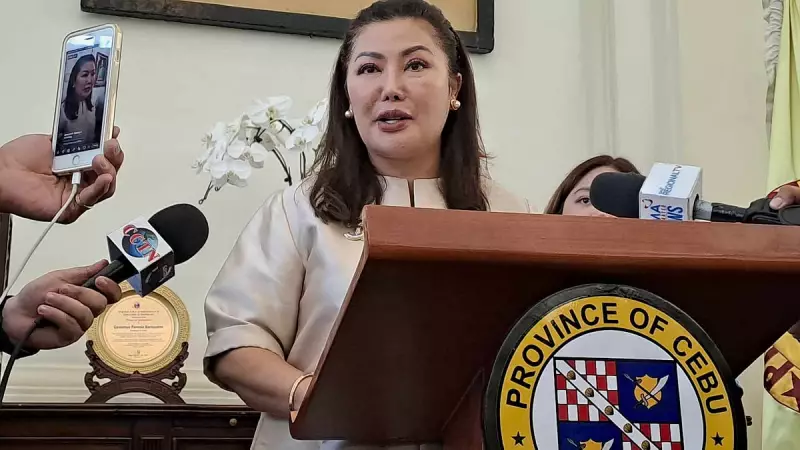
Governor Pamela Baricuatro of Cebu has raised a critical question about the province's top ranking as the wealthiest in the Philippines, asking what the point is if the people do not feel the benefits. Her statement came in response to the latest findings from the Commission on Audit's (COA) Annual Financial Report for 2024.
Cebu Leads Nation with P339 Billion in Assets
The official report, released recently, placed the Province of Cebu in the number one spot among the country's 81 provinces in terms of total asset value for the year 2024. The audit revealed that Cebu holds a staggering total asset value of approximately P339 billion. This figure solidly outperforms the asset portfolios of all other provincial governments across the archipelago.
Governor Baricuatro's Critical Stance on Wealth
Despite the impressive financial standing, Governor Baricuatro expressed a sobering perspective during a press briefing held on Wednesday, December 17, 2025. "What's the point?" she asked reporters, emphasizing that the province's wealth seems abstract to its residents. "We have all the assets, and we're not making use of them," she added, highlighting a gap between recorded wealth and tangible public service.

She pointed out that maintaining the status of the richest province holds little meaning if the Sugboanon (Cebuanos) do not experience or enjoy the advantages of that wealth. "Walay punto kon namintinar ang kadato sa probinsya sa Sugbo apan wala matagamtami sa mga Sugboanon," the Governor stated in the local language. For her, the high asset value remains just a number unless it is actively leveraged for community development and improved services.
Strategic Reappraisal Boosted Asset Value
Governor Baricuatro did acknowledge the provincial government's strategic move that significantly contributed to this financial position. She recognized the province's initiative to reappraise its real estate properties, a tactical financial management decision that led to a substantial increase in the total declared asset value. This reappraisal process is a common practice to reflect the current market value of government-owned lands and properties.
However, she insists that the true measure of success is not found on a balance sheet but in the quality of life of the people. The Governor's comments shift the focus from accumulation of wealth to its application for public good, setting a potential new direction for how the province's vast resources might be utilized in the future.
The revelation from the COA report and the Governor's subsequent reaction spark an important conversation about fiscal responsibility, transparency, and the ultimate purpose of local government wealth in serving its constituency.