Cebu's Urban Development Paralysis: A Tale of Missed Opportunities and Traffic Woes
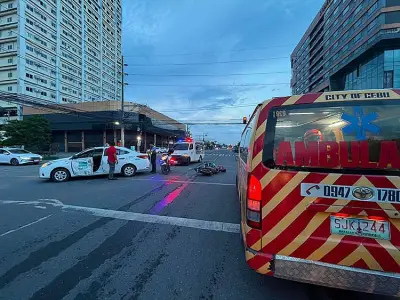
If only our elected officials had demonstrated the political will to implement the urban development plans championed by Japan and other foreign agencies, we might have avoided the current traffic nightmare plaguing our streets today. Cebu could have established a benchmark for urban development and transportation, but these initiatives were sidelined and left unrealized.
The Cebu Bus Rapid Transit: A Classic Case of Stalled Progress
One prominent example discussed in our community is the Cebu Bus Rapid Transit (BRT). This project was first proposed as early as the late 1990s, revived around 2010 with serious studies, and by 2012, numerous gatherings were held—some of which I attended as a representative of the biking community. Yet, despite these efforts, it remains unimplemented.
Whenever urban development is mentioned, the most common response is the high cost. I recall a conversation with the late Bobit Avila during a trip to Manila, where I questioned his opposition to pedestrianizing Colon Street. He cited expense as the reason, to which I replied: Is there anything cheap in development? He had no answer. At that time, estimates suggested the project would cost nearly 400 million pesos to execute.

Pedestrianization: A Feasible Solution with Proven Success
Imagine if Colon Street and its surroundings were pedestrianized, allowing only bicycles and designated stops for vehicles. Is this possible? Why not? However, I understand that local businesses might oppose it, fearing negative impacts on their operations.
This fear is unfounded. In Guangzhou, China, a portion of the city—comparable to New York's Times Square—is pedestrianized. Shoppers enjoy a free and safe environment to walk, with numerous malls, cafes, and boutiques from Western brands. Foot traffic has not decreased; instead, it has increased as people are drawn to the car-free space. Although located in an urban center, pollution from vehicle emissions is remarkably low. Walking becomes a pleasure without the constant worry of vehicles, especially motorcycles, which were banned there as far back as 2007 due to high accident rates.
Learning from Global Examples and Moving Forward
Fear without basis can be addressed through thorough study before implementation. Stakeholder consultations can be conducted, and execution can be phased gradually to allow public adjustment. For instance, as I mentioned last Thursday, many worried that demolishing elevated expressways in Seoul, South Korea, would create traffic chaos, but this did not happen.
Why not give it a try in Cebu? We already have an urban development plan that could serve as a foundation. By embracing proven strategies from abroad and fostering political will, we can transform our streets into safer, more sustainable spaces for all.