Davao City Enhances Emergency Response with Motorcycle Paramedics and Expanded Stations
The City Disaster Risk Reduction and Management Office (CDRRMO) in Davao City is ramping up its emergency response capabilities for 2026, with strategic initiatives aimed at cutting through traffic delays and improving service delivery. During a recent press briefing, CDRRMO Assistant Head Rudy Encabo outlined plans to revive the Fast Response Emergency Service, a program originally implemented under former Mayor Rodrigo Duterte.
Reviving Motorcycle Paramedics for Faster Access
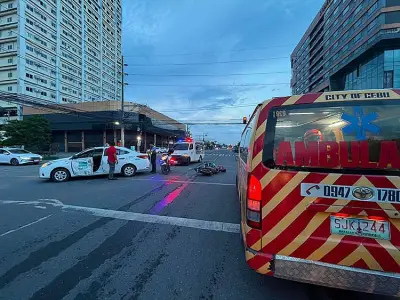
One key component of the enhanced response strategy is the reintroduction of motorcycle paramedic teams, which were previously discontinued. Encabo highlighted that this move addresses a critical challenge: the slow arrival of ambulances during emergency calls. "One of the things we will bring back is the motorcycle paramedics, which were discontinued before. This is because one of our challenges is that our ambulances take too long to arrive when responding to emergency calls," he explained. The goal is to ensure responders can reach incident scenes, especially major accidents in urban areas, within five minutes or less.
The program will deploy pairs of motorcycles, each staffed by two personnel. One motorcycle will carry essential tools and supplies, while the other will have a paramedic on board. "One pair of motorcycles: one will bring the equipment, and one will be the paramedic. Partner motorcycles and two personnel for first responder. They will be the ones to size up the situation if the caller needs an ambulance or first-aid only," Encabo detailed. This approach allows for rapid assessment and initial care, potentially saving lives before full medical support arrives.

Expanding 911 Satellite Stations and Addressing Infrastructure Issues
In addition to the motorcycle paramedic revival, the CDRRMO is working to expand its network of 911 satellite stations across Davao City. Currently, operational stations are located in Toril, Baganihan, Calinan, and Cabantian. However, the Panacan station remains out of service due to structural damage from the October 2025 earthquake. "We have a problem in Panacan because during the October earthquake, the building structure there was put on hold. We requested Barangay Lasang, which is the entry point to Davao from the north, to help us find a lot where we can set up another 911 satellite station," Encabo stated.
He emphasized that expansion efforts are crucial but face challenges, particularly road congestion. "That is our current direction for the year 2026. Our challenge now is expansion, with road congestion being a major difficulty—this is what we are preparing for in 2026," he added. The CDRRMO is actively seeking new locations to improve coverage and reduce response times in high-traffic areas.
Relocating Main Office and Maintaining Strategic Assets
Further bolstering emergency preparedness, the CDRRMO is constructing a new office at the former slaughterhouse site in Ma-a, moving from its current shared space in Sandawa. The new facility will feature a spacious motorpool designed to protect vehicles from weather elements. "When it comes to the motor pool, the first thing we did was build a proper motor pool. It is paved, and our assets are not exposed to heat and rain. So the City Government prepared a very large area for this," Encabo explained, underscoring the city's commitment to safeguarding critical response assets.
Despite the relocation, the Sandawa station will remain operational as a standby point for emergency vehicles. "We will still maintain Sandawa as our standby area for assets such as ambulances and fire trucks," Encabo assured, ensuring that resources are strategically deployed to maximize efficiency across the city.
These comprehensive measures reflect Davao City's proactive approach to disaster risk reduction, aiming to enhance public safety through innovative and expanded emergency response systems in the coming year.