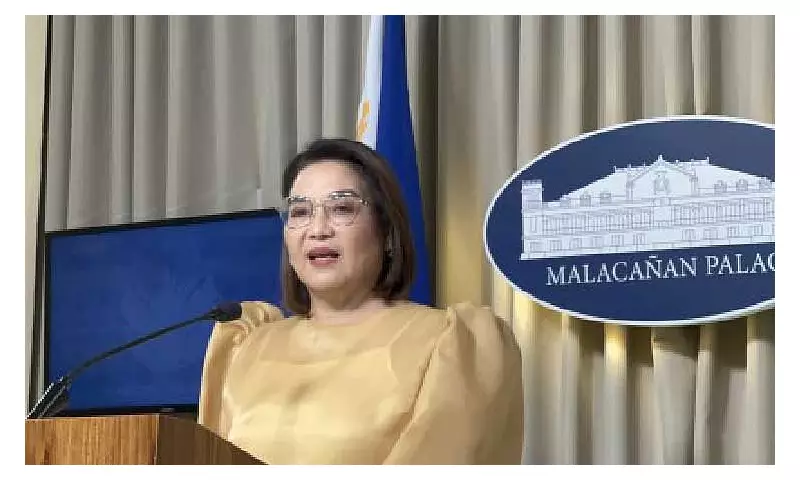
Malacañang has issued a clear directive to local government units (LGUs) across the Philippines: ensure you have the necessary funds before providing hospital guarantee letters to your constituents. This statement comes amid a discussion on financial responsibility for patient care.
Clarification on Financial Responsibility
During a press briefing on Tuesday, Palace Press Officer Claire Castro emphasized that guarantee letters should not become a financial burden on the Department of Health (DOH). This is particularly crucial for medical services already covered under the government's Zero Balance Billing (ZBB) program.
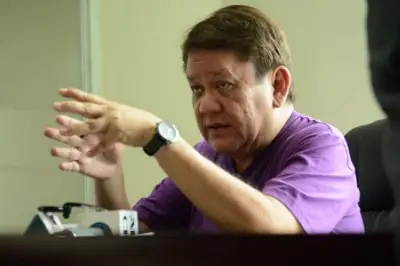
Castro's comments were in response to Baguio City Mayor Benjamin Magalong, who had earlier criticized Health Secretary Ted Herbosa. The Secretary had stated that DOH-run hospitals do not depend on guarantee letters for basic accommodations.

"What Secretary Ted Herbosa is saying is that when we talk about guarantee letters, it means there is a guarantor," Castro explained. She used a simple analogy: if someone takes a loan and fails to pay, the guarantor is held liable. "So, whoever issued the guarantee letter as the guarantor is the one who should pay. That funding should not come from the DOH."
Baguio City's Arrangement and the ZBB Policy
Castro defended Secretary Herbosa's position, noting that DOH hospitals, including the Baguio General Hospital (BGH), follow the ZBB policy. Under this program, patients seeking basic accommodation do not need guarantee letters.
She clarified that any guarantee letters issued by the Baguio City government were funded by the city's own resources, based on its arrangement with BGH, and not by the DOH. "So, if the mayor of Baguio City issues guarantee letters, they must make sure they have funds," Castro stated.
The Palace official reiterated that the issuance of such a letter implies full financial responsibility on the part of the issuing LGU, which acts as the guarantor for the patient.
Timeline of the "Anti-Epal" Provision
Castro also addressed the broader policy context, linking the issue to the proposed "anti-epal" provisions under the 2026 General Appropriations Act (GAA). This initiative, led by President Ferdinand R. Marcos Jr., aims to regulate the use of guarantee letters by politicians.
"First of all, the guarantee letter policy will only be implemented in 2026, so Mayor Magalong should be aware of the timeline," she pointed out, indicating that the full enforcement of the rule is still pending.
She concluded by stating that while LGUs are free to make their own arrangements with private hospitals to assist patients, they must do so with sufficient funding. "And whatever arrangements they make with private hospitals, we will not interfere," Castro said, drawing a clear line between public and private healthcare financing.