CEBU CITY – A nightmare scenario unfolded in a mountain barangay here on Thursday afternoon, January 8, 2026, as a massive landslide of garbage buried structures and people at the Prime Binaliw Landfill. Continuous rainfall over several days is blamed for softening the soil and triggering the collapse.
Ongoing Rescue and Grim Toll
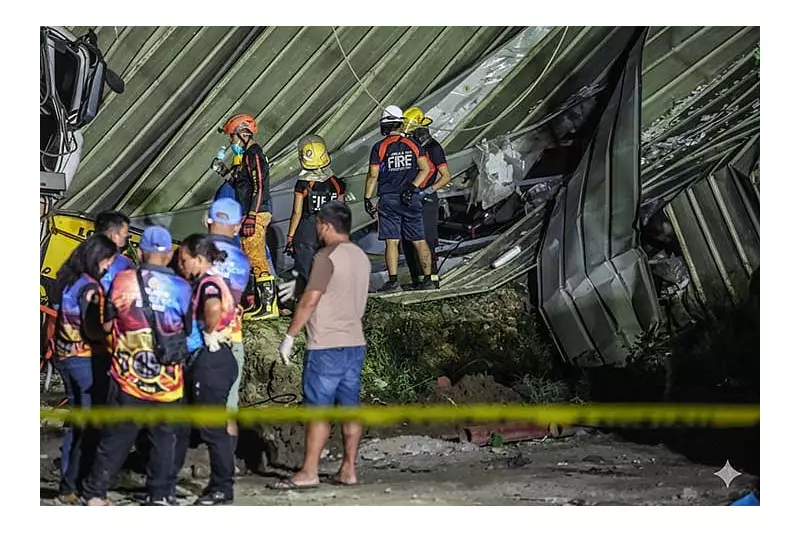
Emergency responders, including five ambulances, a rescue truck, and police and traffic personnel, were immediately deployed to Barangay Binaliw. The operations shifted from rescue to retrieval as hours passed.
Authorities confirmed one fatality. However, the situation remains dire for employees of the landfill facility. Reports indicate that at least 38 workers were trapped and remain missing under the rubble after structures within the dumpsite gave way.

The disaster also struck nearby residences. While an exact number of affected houses is not confirmed, the garbage slide hit multiple homes, forcing residents to flee.
A Disaster Foretold: History of Controversy
The tragedy has cast a harsh spotlight on the long-controversial Prime Binaliw Landfill, operated by Prime Integrated Waste Solutions Inc. For years, neighboring communities have complained about foul odors, water contamination, and fears over the site's structural stability.
Just last June 2025, there were serious talks of permanently shutting down the facility due to the operator's failure to address these persistent issues. Critics argue that Thursday's catastrophic slide is a direct result of unresolved safety and environmental concerns.
The incident creates an immediate and severe crisis for Cebu City's waste management. With the Sinulog festivities approaching and hundreds of thousands of visitors expected, the city now has no active dumpsite for the tons of waste that will be generated.
Revisiting Cebu's Waste Management Crossroads
The collapse forces a painful re-examination of Cebu's garbage disposal strategies. Experts have long warned that open landfills in Cebu, with its porous limestone-based soil, are environmental time bombs prone to groundwater contamination and slides, especially with intensifying climate change.
This has reignited debate over alternative solutions, most notably the stalled P5 billion waste-to-energy (WTE) project with New Sky Energy in Barangay Guba. Approved in 2022, the project has languished despite a positive technical verification report from the Department of Science and Technology (DOST).
Environmental advocates celebrated reported setbacks to the WTE plan last November, urging a focus on waste segregation, composting, recycling, and enforcing the single-use plastic ban. However, the sudden loss of the Binaliw site exposes the vulnerability of relying solely on these methods without a large-scale processing facility.
Mayor Nestor Archival, who as a councilor previously questioned the WTE project's feasibility, now faces immense pressure to provide an immediate and long-term answer to the city's trash, with the clock ticking loudly toward Sinulog.