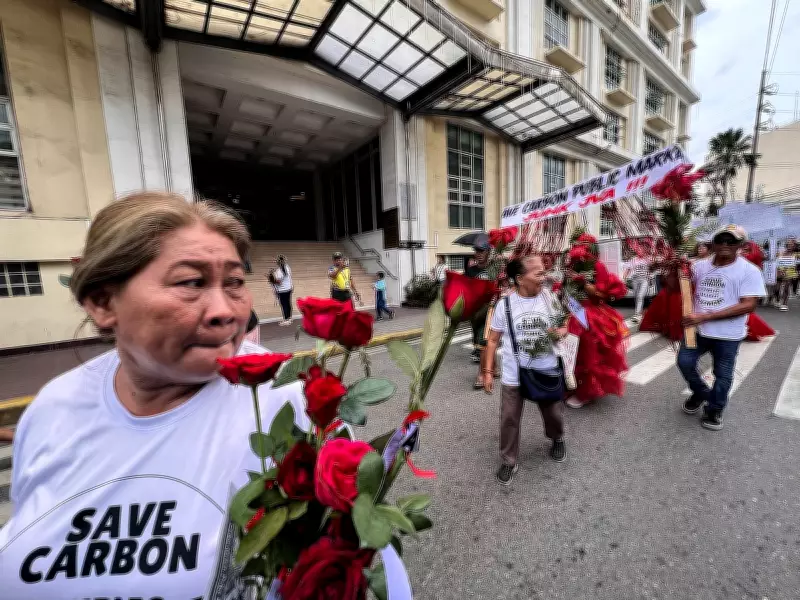
Members of the Save Carbon Public Market Movement, an alliance of vendor groups and individuals, held a Santacruzan procession from Barangay Pari-an to Carbon Market on May 29, 2026. The event featured various queens carrying placards and calls opposing the privatization of the public market in Cebu City.
Procession Details
On Friday morning, May 29, 2026, vendors and supporters opposed to the redevelopment of Carbon Public Market marched from the Iglesia Filipina Independiente Cathedral in Parian to Freedom Park after attending a holy mass. They carried placards and small prayer notes with messages such as “Save Carbon Public Market” and “Mama Mary, I-ampo Mo Kami.”
The protesters, mostly vendors and residents from Carbon and Sityo Bato, wore gowns made of indigenous and recycled materials commonly found in the market. They transformed the traditional Flores de Mayo procession into a symbolic protest to highlight the fears and uncertainties faced by small vendors amid the ongoing market redevelopment.

Appeal for Divine Intervention
According to former Cebu Market Vendors Development Cooperative president Erwin Gok-ong, the group intentionally centered the movement on prayer because they believe the issue has transcended political and legal arguments. He stated that the movement seeks heavenly help in hopes that the redevelopment project will not lead to the privatization of Carbon's operations and management in the future.
Gok-ong expressed the group's fear that control of market operations could fall into the hands of private companies under the joint venture agreement (JVA) between the Cebu City Government and Megawide Construction Corporation through Cebu2World Development Inc. He explained that although the city government remains the technical owner of the land, the group believes that operational policies, management decisions, and business systems within the market could be controlled by the private sector.
Gok-ong warned that this system could lead to a monopoly on the supply and sale of vegetables, rice, meat, groceries, and other goods entering Carbon.