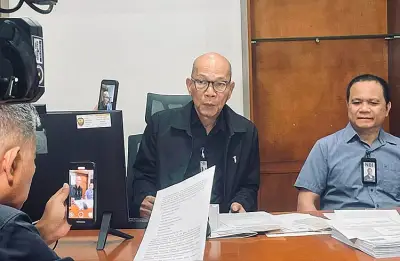
Cebu City's 'Mayor of the Night' Program Set to Begin Operations
The Cebu City Government is poised to launch its innovative 'Mayor of the Night' program, designed to offer extended services beyond regular office hours. This initiative follows the signing of a lease agreement on Monday, March 2, 2025, for office space in the Cebu Exchange Tower located in Cebu I.T. Park, Lahug. The contract, presumably endorsed by Mayor Nestor Archival Sr. and a representative from Cebex, spans from February 1, 2026, to June 30, 2028, covering a period of two years and five months.
Funding and Executive Order Details
The City Council has allocated P5,111,550 for the rental of two units on the second floor of Cebex, a significant reduction from the initially reported P12.5 million. This funding supports the program established under Executive Order No. 027, signed by Mayor Archival on October 23, 2025. The EO mandates 'round-the-clock' city operations and authorizes Vice Mayor Tomas Osmeña to oversee the program's implementation under the mayor's supervision.
According to analysis, the EO creates a 'Mayor of the Night' office without appointing a second mayor. Vice Mayor Osmeña will serve as an overseer and coordinator, managing a one-stop-shop for 24/7 services. However, the EO's language has raised questions about the scope of his authority, as it does not clearly limit his role to night operations alone, potentially encompassing the entire 24/7 framework.

Differences from International Models
The Cebu City model diverges significantly from 'night mayor' programs observed in the United States, where cities like New York have implemented such positions since 2023. Key distinctions include:
- Purpose and Scope: Overseas versions, such as New York City's Nightlife Office, serve the entire night industry, including businesses and cultural economies. In contrast, Cebu City's program primarily targets services like payment processing and permit issuance, with a focus on call-center employees.
- Office Structure: International models often establish separate offices with dedicated directors. Cebu City's approach involves housing representatives from various City Hall departments and national offices in a leased space away from the main government building.
- Leadership: Abroad, a director typically runs the night mayor office. Here, an elected official, Vice Mayor Osmeña, oversees the night hub, blending executive functions with legislative duties.
Legal and Operational Considerations
The program faces scrutiny over its legal framework and potential waste of resources. Critics, including Jun Alcover, have questioned the expenditure and the concept of having two mayors. The EO's vague terminology, particularly regarding '24/7' operations, complicates the vice mayor's role. It remains unclear whether his oversight extends to regular office hours (8 a.m. to 5 p.m., Monday to Friday) in addition to night services.
To avoid confusion, suggestions have been made to adopt the term 'night mayor' instead of 'Mayor of the Night,' which could be misinterpreted. The program is viewed as an experimental initiative, with its future expansion or discontinuation dependent on performance metrics, such as client numbers and the reduction of daytime burdens at City Hall.
Ultimately, the success of this P5.1 million investment will hinge on its ability to deliver efficient services and justify the costs through tangible benefits to Cebu City residents and businesses.