Duterte Supporters Accuse House of Impeachment Double Standard
Loyal supporters of former President Rodrigo Duterte are expressing bitter frustration over what they perceive as a glaring double standard in the treatment of impeachment complaints against President Ferdinand "Bongbong" Marcos Jr. and Vice President Sara Duterte. They highlight a stark contrast in procedural handling that has sparked significant political controversy.
Divergent Paths for Marcos and Duterte Complaints
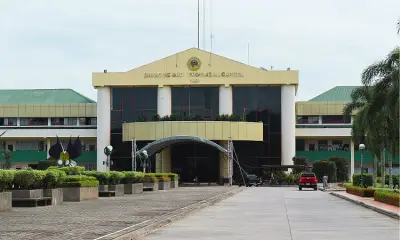
The impeachment case against President Marcos was summarily dismissed by the House of Representatives at the committee level, effectively ending the process before it could gain momentum. In sharp contrast, the impeachment complaint against Vice President Duterte has progressed steadily through the legislative system, with another full hearing scheduled for later this month. This discrepancy has fueled accusations of partisan bias and unequal application of constitutional procedures.
Historical Precedents of Presidential Immunity
President Marcos is not the first chief executive to survive impeachment attempts without significant political damage. Historical records show that Gloria Macapagal-Arroyo faced multiple impeachment charges during her presidency for election fraud (the notorious "Hello Garci" scandal), corruption allegations, and human rights abuses. All these complaints were killed instantaneously by the House of Representatives without reaching trial stages.

Similarly, Benigno Aquino III encountered impeachment complaints in both 2014 and 2015 related to his administration's handling of the Mamasapano massacre and implementation of the Disbursement Acceleration Program. These cases were likewise dismissed without ceremony or extensive investigation. The pattern extends to Rodrigo Duterte's presidency, which faced impeachment complaints concerning extrajudicial killings and alleged betrayal of public trust, all of which were thrown out quickly and without political consequence.
The Critical Role of Political Control
In each of these historical cases, the determining factor was political control rather than legal merit. Presidents Arroyo, Aquino, and Duterte maintained firm control over the House of Representatives during their respective administrations, enabling them to quash impeachment attempts before they could gain traction. This stands in stark contrast to President Joseph Estrada's experience, who lacked such control and consequently became the only Philippine president to face trial in the Senate, though he was not ultimately convicted.
The political dynamic becomes even clearer when examining impeachable officials who lacked political influence. Ombudsman Merceditas Gutierrez, Commission on Elections Chairman Andres Bautista, and Chief Justice Lourdes Sereno—all non-politicians without congressional sway—saw their impeachment cases either pass or nearly pass through the House. Gutierrez and Bautista resigned before their trials could proceed, while Sereno was preparing for a Senate trial until the Supreme Court intervened with an unprecedented and controversial removal process.
Current Political Maneuvering and Future Implications
Unlike Chief Justice Sereno, Vice President Duterte has demonstrated a clear desire to avoid impeachment trial proceedings. She successfully navigated away from such a scenario last year with assistance from the then Senate President and eventual Supreme Court intervention. The current question dominating political circles is whether she can replicate this avoidance strategy during the present impeachment proceedings.
The House of Representatives appears determined to pursue a different course this time. Their unprecedented preliminary investigation serves an evident purpose: gaining access to records they believe could be damaging to the vice president, including her Statement of Assets, Liabilities, and Net Worth (SALN) and various bank documents. If successful in obtaining these materials, House members believe they will have achieved a significant victory even if the Senate ultimately refuses to conduct a formal trial, potentially damaging Duterte's political standing regardless of legal outcomes.

This developing situation highlights the complex interplay between constitutional processes and political realities in Philippine governance, where historical patterns of impeachment handling continue to influence contemporary political battles and public perceptions of institutional fairness.