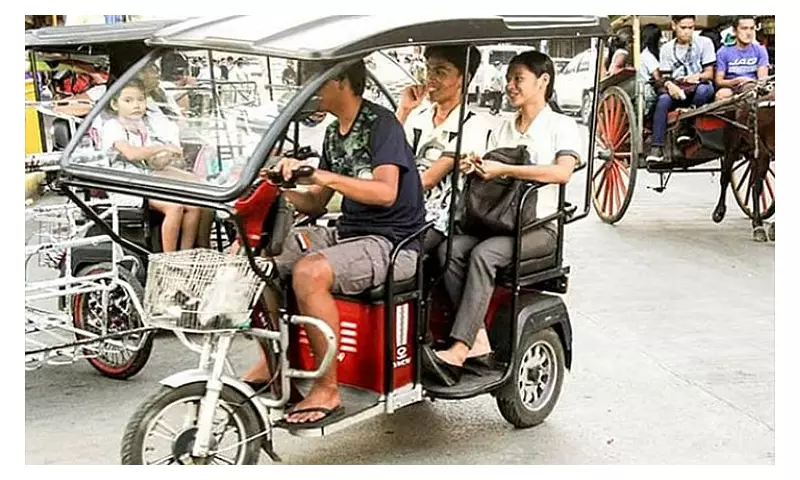
Starting Monday, December 1, 2025, electric bikes and tricycles will face a nationwide prohibition from operating on major roads across the Philippines. This sweeping ban brings to the forefront the ongoing conflict between road safety concerns and the economic survival of thousands of low-income drivers who depend on these affordable vehicles for their livelihood.
National Enforcement Begins
During Senate deliberations on Thursday, November 27, Land Transportation Office Assistant Secretary Markus Lacanilao confirmed that the Department of Transportation will initiate nationwide enforcement against e-bikes and e-trikes operating on major thoroughfares. Under this directive, any units involved in road incidents will face automatic impoundment.
"For Dec. 1 tuloy yan (hulihan) on a national highway," Lacanilao stated. "We understand that many of our fellow citizens will get angry, but our priority here is their safety on the road so they won't get into an accident."

The LTO official emphasized that public safety outweighs public sentiment, adding that protecting families from accidents caused by improper use of e-trikes on national highways remains their primary concern.
Cebu's Existing Regulations
While the national ban takes effect, Cebu City operates under its own regulatory framework established through City Ordinance 2531, passed in 2019. This local legislation already restricts e-trike operations to designated interior routes and prohibits them from major city roads.
The ordinance mandates annual registration with the Cebu City Transportation Office and maintains the interior route limitation. This creates a complex regulatory landscape where local policies must now align with the LTO's national directive.
Other cities like Mandaue have implemented even stricter measures, enforcing a total ban on e-bikes and e-trikes from major thoroughfares while requiring LTO registration and proper driver licensing for all units using public roads.
Economic Impact on Drivers
The ban carries significant consequences for e-trike operators who rely on these vehicles as their primary source of income. Drivers like Gregorio Abellanosa and JR Talipas express deep concern about how the prohibition will affect their ability to support their families.
Abellanosa, who operates in the Carbon Public Market area, stated that the ban "will severely impact their means of livelihood," emphasizing that the income is crucial for feeding his family.
However, not all drivers oppose regulation. Jerome Abing, another e-trike operator, supports the ban as a necessary measure to discipline reckless drivers who engage in dangerous behaviors like counterflowing. He stresses that illegal parking enforcement should accompany the e-trike ban to address overall traffic discipline.
Exponential Growth Demands Regulation
CCTO deputy chief Kent Francesco Jongoy highlighted the dramatic increase in e-trike usage, estimating 200-300 percent annual growth driven by low costs and convenience. This explosive popularity has overwhelmed existing regulatory frameworks.
Jongoy argues that e-trikes used as public transport must be treated as motor vehicles requiring proper registration. He points to concerning statistics: since 2019, Cebu City has recorded over 10,000 traffic violations involving e-vehicles, primarily for "No registration" and "Operating in undesignated area."
The CCTO official identifies two critical amendments needed: dealer-based registration to prevent unregulated sales, and route limitations establishing thresholds for units registered per barangay with comprehensive multi-barangay routes.
Road Safety Rationale
Lacanilao clarified that even registered e-bikes will remain banned from national highways due to fundamental safety concerns. The significant speed and size differential between these light electric vehicles and regular highway traffic has proven to cause accidents.
The enforcement focuses on keeping e-bikes and e-trikes on secondary and interior roads where local government units can better manage slower traffic flow and congestion patterns.

This approach acknowledges the vehicles' utility while addressing the safety risks they pose when mixing with high-speed traffic on national roads.
Looking Forward
The December 1 enforcement date represents a critical turning point that will test coordination between national and local authorities while directly impacting thousands of drivers' economic stability.
Attention now turns to the LTO's imminent issuance of new registration guidelines and how Metro Cebu local government units, particularly Cebu City, will amend existing ordinances to align with the national directive.
The debate has shifted from whether to ban e-trikes to how to effectively regulate their usage and manage the inevitable displacement of drivers from major roads while balancing public safety with economic realities.