Tito Sotto's Political Identity and Cebuano Roots
Senator Vicente "Tito" Sotto III, born in Manila on August 24, 1948, and educated at Colegio de San Juan de Letran, carries a political lineage tied to his grandfather, Vicente Y. Sotto Sr. (1877-1950). Both Vicente Sr. and his brother Filemon Y. Sotto served as senators, lawyers, and journalists, establishing a family tradition in public service. Tito Sotto, however, has carved his own path as an actor and entertainer, which has significantly contributed to his repeated electoral successes in the Senate.
Despite acknowledging his Cebuano heritage during campaigns, Tito Sotto's connection to Cebu remains tenuous. He has not engaged in local politics and is often absent during critical moments in Cebu, leading to his exclusion from lists of Cebuano senators. Notably, since Sergio "Serge" Osmeña III's term ended in 2016, Cebu has had no representation in the Senate, highlighting a gap in regional political influence.
Indirect Contempt Allegations Against Tito Sotto
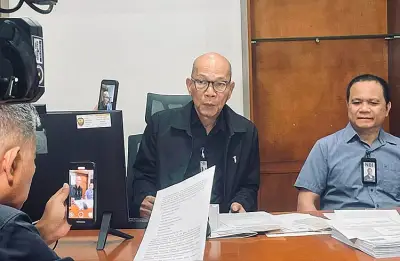
On February 13, 2026, a petition for indirect contempt was filed against Senator Tito Sotto, alleging that his remarks on the Supreme Court's resolution regarding Vice President Sara Duterte's impeachment were "demeaning," "degrading," and "disrespectful." The Supreme Court is set to review these comments, with lawyer Harold Respicio emerging as a prominent petitioner due to his vocal advocacy during the filing process.

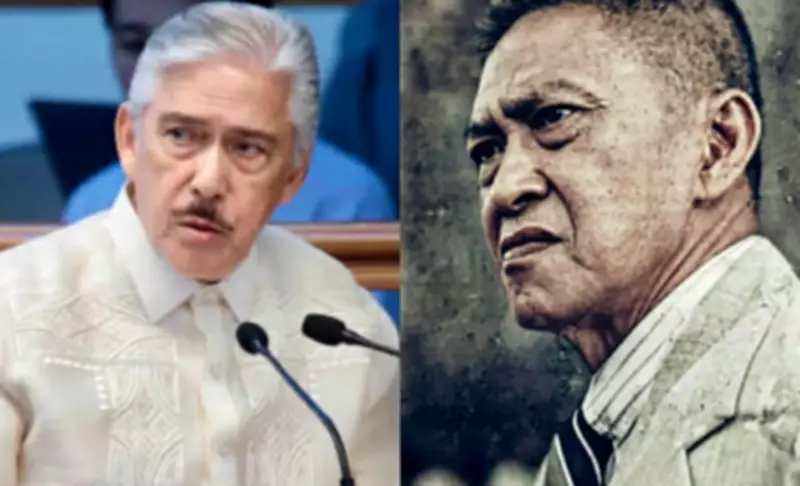
Respicio drew parallels to the historical case against Vicente Sotto, expressing confidence in winning based on that precedent. However, he clarified that he was not directly comparing Tito's behavior to his grandfather's actions in 1948, though some observers might interpret it as such.
Vicente Sotto's 1948 Contempt Case: A Historical Perspective
The Supreme Court's decision on January 21, 1949, found Vicente Sotto guilty of contempt for several reasons. First, he misrepresented the charges against him as an assault on press freedom, when in reality, he was accused of attempting to influence the court's decision in the case of reporter Angel Parazo, who refused to disclose a source regarding leaked bar exam questions. The court noted that Vicente Sotto used "intimidation and false accusations" to achieve his goals.
Second, beyond criticizing the Parazo ruling, Vicente Sotto threatened Supreme Court justices with a congressional bill to reorganize the court and reduce the number of justices. Third, he publicly labeled the justices as "incompetent and narrow-minded" and a "constant peril to liberty and democracy," accusing them of deliberate blunders and injustices. The court fined him P1,000—equivalent to over P100,000 today—and considered disbarment, though the ruling was not enforced due to his death in 1950.
Comparing Tito Sotto's Remarks to His Grandfather's Actions
Tito Sotto's recent comments differ significantly from his grandfather's historical case. Unlike Vicente Sotto, Tito is not attempting to influence an ongoing judicial proceeding; the impeachment case he referenced has already concluded, making his remarks unlikely to affect a final ruling. Additionally, while Tito mentioned charter change in the context of impeachment rules, he did not explicitly threaten the Supreme Court's structure or powers, nor did he wield intimidation tactics.
Associate Justice Gregorio Perfecto's concurring opinion in the 1949 case detailed Vicente Sotto's offenses as a lawyer and publisher, contributing to the court's harsh penalties. In contrast, Tito Sotto's approach has been more subdued, with critics noting he lacks the "tiger-like" aggressiveness of his grandfather. This distinction underscores the evolution in political rhetoric and judicial interactions over the decades.
Political Implications and Legacy
The comparison between Tito and Vicente Sotto highlights broader themes in Philippine politics, including the balance between free speech and judicial respect. Tito Sotto's case may test modern boundaries of political commentary, while Vicente's historical actions serve as a cautionary tale on the limits of criticism. As the Supreme Court examines Tito's remarks, the outcome could influence future interactions between lawmakers and the judiciary, shaping the legacy of the Sotto family in Philippine political history.