The emerging dispute over the proposed Bus Rapid Transit (BRT) station in front of the Cebu Provincial Capitol is not merely a question of design preference. It is a deeper governance failure—one that exposes how Cebu continues to struggle in reconciling infrastructure modernization with heritage protection.
Both Sides Have Valid Points
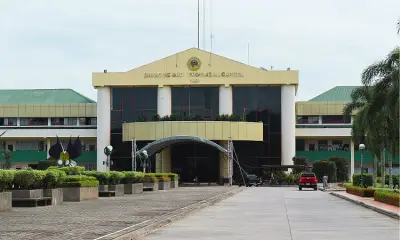
At face value, both sides are right. The BRT system is a long-overdue intervention. Cebu’s primary corridor—from Fuente Osmeña Circle northwards—has long been defined by congestion, unreliable travel times, and a public transport system that has failed to keep pace with urban growth. The BRT promises to move large volumes of commuters efficiently, reduce dependence on fragmented jeepney routes, and introduce a level of predictability that Cebu’s economy urgently needs. But the Capitol is not just another stop along that corridor. The Cebu Provincial Capitol is a declared historical landmark, a symbol of Cebu’s political identity, and a rare example of civic architecture whose value lies not only in the structure itself but also in its spatial context. The axial view from Fuente Osmeña Circle toward the Capitol is not incidental—it is part of the site’s heritage character. Interrupting that line of sight with a large transport structure raises legitimate legal and cultural concerns.
A Failure of Planning
This is precisely why the current conflict is so troubling. Because it should never have reached this stage. Major infrastructure projects, especially those funded and coordinated at the national level, are expected to undergo rigorous planning, including alignment studies, environmental impact assessments, and stakeholder consultations. In a heritage-sensitive zone, that process should have included clear parameters on visual corridors, building scale, and design integration long before construction decisions were advanced. Instead, Cebu now finds itself in a familiar position: negotiating fundamental design questions in the middle of implementation. This points to a structural issue that goes beyond the BRT. It reflects the fragmented nature of Philippine urban governance, where national agencies design and implement projects, while local governments and heritage stakeholders assert their concerns only when physical changes become imminent. The result is delay, friction, and, often, compromised outcomes.

Risks on Both Sides
The risk here is not just project delay—it is a loss on both fronts. If the station proceeds without adequate redesign, Cebu risks degrading a key heritage site, setting a precedent that weakens the protection of other historical assets. If the station is halted or relocated without careful system-level analysis, the efficiency and coherence of the BRT network itself may be undermined. This is not a binary choice. Other cities have faced—and resolved—similar tensions.
Path Forward: Design Intelligence and Coordination
The solution lies in design intelligence and institutional coordination. First, the station design must be revisited with heritage sensitivity as a non-negotiable constraint. This could mean reducing its vertical profile, using transparent or lightweight materials, or shifting its exact placement to preserve the visual axis. In more advanced systems, underground or partially sunken stations are used in heritage districts, though cost and engineering feasibility must be carefully evaluated. Second, decision-making must be grounded in evidence, not assumption. Full-scale mock-ups, 3D simulations, and visual impact assessments should be publicly presented. Stakeholders should not be reacting to abstract plans—they should be evaluating concrete representations of what will actually be built. Third, and most importantly, Cebu must internalize the lesson this conflict presents: infrastructure and heritage cannot be planned in isolation. Urban transport systems are not just engineering projects—they are interventions into lived space, culture, and identity. Treating them purely as technical solutions invites exactly this kind of conflict.

Long-Term Solutions
In the long term, Cebu needs a more integrated planning framework where national agencies, local governments, and cultural authorities are aligned from the outset. Heritage impact assessments should carry the same weight as traffic modeling. Design review should be continuous, not reactive. The BRT remains a necessary project. Cebu cannot afford to abandon or indefinitely delay a mass transit system that directly affects productivity, mobility, and quality of life. But neither can it afford to erode the very landmarks that define its identity as a city. The real failure here is not the conflict itself. It is the fact that Cebu is having this conversation too late. Handled properly, this moment can still produce a better outcome—a BRT system that moves people efficiently while respecting the city’s historical fabric. Handled poorly, it will become yet another example of how good projects are weakened by avoidable governance lapses. Cebu deserves better than that.