The death of 23-year-old businessman Kingston Ralph Cheng in a hit-and-run incident in Banilad, Cebu City, on Feb. 8, 2026, has exposed what road safety advocates describe as a major gap in the country’s anti-drunk driving law: the failure to quickly secure proof of intoxication after a crash.
Current enforcement of Republic Act (RA) 10586, or the “Anti-Drunk and Drugged Driving Act of 2013,” which penalizes motorists driving under the influence (DUI) of alcohol, dangerous drugs and similar substances, is plagued by systemic loopholes that, proponents of the Kingston Cheng Amendments say, allow drivers to avoid liability in DUI cases.
Under the current law, a driver can evade criminal charges by avoiding police contact until the person is chemically sober. The proposed amendments describe this as the “hiding” tactic. Penalties also rely heavily on the threat of future litigation, rather than the “speed and certainty” of immediate punishment.

The amendments also cite unsafe road infrastructure, such as the lack of sidewalks and bike lanes, which forces pedestrians into the path of moving vehicles. This makes impaired driving more deadly, especially in areas where pedestrians have little protection from traffic.
Why Timing Is Critical
In DUI cases, time is a critical factor because blood alcohol naturally dissipates. If a suspect is not tested immediately, the window to collect forensic evidence of intoxication closes. This creates an evidentiary gap, especially in hit-and-run cases or crashes where the driver is not immediately taken into custody.
The Kingston Cheng Amendments propose treating sample extraction as a forensic emergency because delays may result in a blood alcohol concentration (BAC) that no longer reflects the driver’s condition at the time of the crash. Proving a DUI case is also technically difficult under the existing law. By the time a sobriety test is administered, the suspect’s BAC may have already dropped below the legal limit. A suspect may also refuse testing to avoid creating a record of intoxication. Medical and procedural delays can also prevent the timely collection of saliva, blood or urine samples.
The Cheng Case
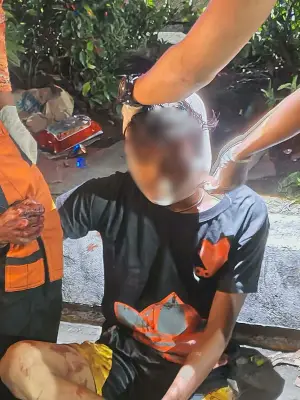
In the early morning of Feb. 8, Cheng died in a hit-and-run incident on Paseo Saturnino in Banilad, Cebu City. The accused, Sean Andrew Pajarillo, allegedly crashed the vehicle he was driving and was not immediately taken into police custody. By the time authorities could administer a sobriety test, the suspect’s BAC had naturally dissipated.
The case became one of the bases for proposed amendments to RA 10586, the country’s main law penalizing impaired driving. Cebu City South District Rep. Edu Rama, House deputy majority leader, filed an amendatory bill on Wednesday, April 22, to strengthen the law following a series of DUI incidents. The trial in Cheng’s death opened on Thursday, April 23.
Proposed Reforms
The bill proposes a “Vision Zero Philippines” framework in response to drunk driving cases in Cebu City, including Cheng’s death. Rama said the bill was based on the proposed Kingston Cheng Amendments drafted by University of San Carlos (USC) students. The proposal was endorsed by USC Law and Governance Dean Jose Glenn Capanas.
The amendments call for mandatory field sobriety testing, stricter enforcement of RA 10586, possible liability for establishments serving visibly intoxicated patrons and stronger rules on evidence preservation.
RA 10586, enacted in 2013, was designed to reduce road deaths by penalizing impaired driving. It sets the legal framework for testing drivers for intoxication and establishes BAC thresholds used to determine criminal liability. Proponents of the amendments argue that the law’s thresholds are outdated and that procedural gaps hinder successful prosecution.
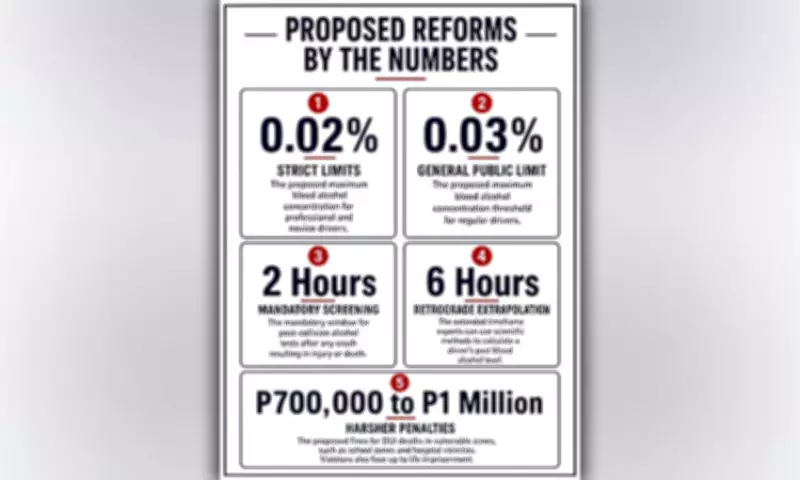
The Kingston Cheng Amendments seek to lower BAC thresholds to 0.02 percent for professional and novice drivers and 0.03 percent for the general public. They also propose implied consent rules, which would treat licensed drivers as having agreed to testing. Refusal to undergo testing would create a rebuttable presumption of intoxication and trigger immediate license revocation.

The amendments also seek mandatory post-collision screening within two hours for all drivers involved in crashes that result in injury or death. Another proposal is the use of retrograde extrapolation, a scientific method used to estimate a driver’s BAC at the time of the crash. Under the proposal, experts may calculate earlier BAC levels for up to six hours after the incident.
The bill also proposes harsher penalties for DUI-related deaths in vulnerable zones, such as school zones, hospital vicinities and dense residential areas. DUI homicide in these areas may be punished with up to reclusion perpetua and fines ranging from P700,000 to P1 million. Repeat offenders may also be required to use ignition interlock devices, while violators may be required to undergo an Impaired Driver Intervention Program. Failure to comply could result in permanent license revocation.
“We are pushing for the amendment of RA 10586 as part of our continued effort to address the growing number of road accidents, reckless driving incidents and DUI incidents across the country, recognizing that more than a decade since the law’s enactment, road-related injuries remain a serious and persistent issue,” Rama said.
Why Infrastructure Matters
The bill also points to the structural dangers of Philippine roads. Unlike countries that follow Vision Zero principles, where roads are designed to reduce fatal outcomes from human error, many Philippine roads lack sidewalks, pedestrian overpasses and dedicated bike lanes. Pedestrians are often forced to share lanes with vehicles. This means an impaired driver can cause more severe harm in places where road design offers little protection. The amendments support the case for stricter road safety laws to protect the public.
Rama credited USC officials, faculty and students for helping shape the proposed amendments. He said the collaboration showed how academic and legislative partnerships can help address urgent policy concerns. The same proposed amendments were also sent to Sen. Bam Aquino for possible sponsorship in the Senate.