In the quiet that follows violence, there is a silence that unsettles the soul. It is the silence of families waiting for answers, the silence of communities gripped by fear, and the silence where truth struggles to be heard above competing narratives.
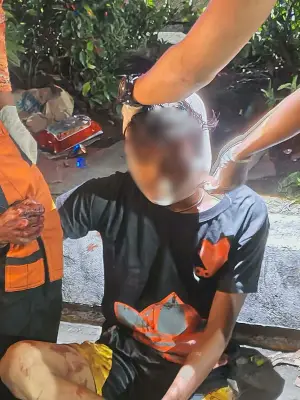
The April 19 incident in Toboso has left not only lives lost but questions that remain painfully unresolved. Who were the victims? What truly transpired? Were all those killed part of an armed encounter, or were some caught in circumstances that demand deeper scrutiny? At this moment, we stand not at the end of a story but at the beginning of a moral responsibility.
Listening Beyond the Noise
In situations like this, there is a temptation to choose sides too quickly, to cling to narratives that confirm our biases. Yet if we are to be faithful to truth, we must first learn to listen. We listen to the accounts of authorities who assert that the operation was legitimate. We listen to witnesses and families who raise troubling doubts. We listen especially to those whose voices are often marginalized—the poor, the vulnerable, the grieving. Listening is not weakness; it is the first act of justice. For truth is rarely found in noise, but in the patient, courageous work of hearing what is often inconvenient.

The Inviolable Dignity of Life
Regardless of the circumstances, one truth must remain non-negotiable: every human life is sacred. No label—whether “combatant,” “suspect,” or “collateral”—can erase the fundamental dignity of a person created in the image of God. This is why the use of force by the State carries a grave moral weight. It demands not only legality but accountability, not only authority but transparency. If even one life was unjustly taken, it is not a minor error—it is a wound to the moral fabric of our society. And if we allow such wounds to pass without serious examination, we risk normalizing what should never be tolerated.
The Urgent Need for Truth
At the heart of the Toboso incident is a simple but urgent question: What really happened? This is not a question of ideology; it is a question of truth. And truth requires more than statements—it requires credible, independent, and transparent investigation. We therefore call for: a thorough and impartial inquiry by appropriate institutions, protection for witnesses and families seeking justice, and full transparency in the presentation of evidence. Accountability is not an attack on institutions; it is the means by which trust in those institutions is strengthened. Without truth, there can be no justice. Without justice, there can be no peace.
The Responsibility of All
This moment also calls for responsibility from all sectors. For authorities: exercise power with restraint, humility, and openness to scrutiny. For media and digital platforms: report with integrity, avoid sensationalism, and do not exploit images of death for engagement or profit. The dignity of the dead must never be compromised. For citizens: resist the pull of disinformation and division, seek verified information, and choose dialogue over hostility. In times of crisis, the character of a nation is revealed not only in what happens but in how we respond.
A Call to Conscience
The tragedy of Toboso confronts us with a deeper question: What kind of society are we becoming? Are we a people who accept violence as inevitable, explanations as sufficient, and accountability as optional? Or are we a people who insist—quietly but firmly—that truth matters, that life matters, that justice matters? As a Church, we do not claim to have all the answers. But we are called to stand where Christ stands—among the wounded, the grieving, and those seeking truth. In this search, we must remain steadfast: to listen, even when it is difficult; to discern, even when it is uncomfortable; to respond, even when it demands courage.
Toward a Just Peace
Peace is not the absence of conflict. It is the presence of justice. And justice begins with truth. May the lives lost in Toboso not be reduced to statistics or forgotten in the passing of headlines. May they instead awaken in us a deeper commitment—to protect life, to uphold dignity, and to build a society where truth is not feared but faithfully pursued. For in the end, the measure of our nation will not be how power is exercised but how humanity is honored.