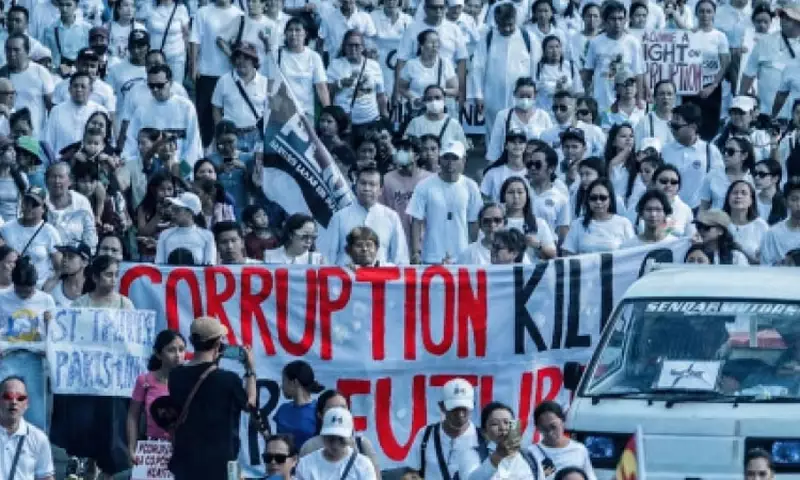
Philippines at Political Crossroads: Protests and Leadership Dilemma
The Philippines faces mounting political uncertainty as citizens question whether current protests could lead to presidential removal, echoing the historic EDSA Revolutions that ousted two previous leaders. The nation confronts a complex dilemma: if President Ferdinand Marcos Jr. were removed from power, who would take over given the deeply divided political landscape?
Public discontent continues to grow, with many Filipinos rejecting the traditional political cycle where grievances are supposedly addressed in the next election. As one observer noted, this approach often fails because people forget and powerful interests can influence outcomes. However, the nature of political revolutions has fundamentally changed, with the cost of such movements increasing significantly.
Historical Precedents and Current Realities
The prospect of repeating the 1986 and 2001 EDSA Revolutions that removed Ferdinand Marcos Sr. and Joseph Estrada appears increasingly unlikely under current circumstances. Most analysts agree that such an outcome would require either President Marcos Jr. voluntarily admitting he's no longer fit to govern, or the military and police withdrawing their support from the government.

The geopolitical dimension further complicates matters. President Marcos Jr. has strongly aligned with the United States, while the Duterte faction maintains closer ties with China. This international alignment makes external pressure for leadership change improbable.
The fundamental question remains: How can the country effectively punish corruption, recover stolen public funds, and implement policy changes to stop the bleeding of government resources? The challenge appears monumental when the primary suspects in what's described as massive, methodical, and ruthless stealing include top leadership, along with key officials and legislators.
The Succession Conundrum
The political deadlock creates a classic between-a-rock-and-a-hard-place scenario. Marcos loyalists naturally resist any move against President Marcos Jr., while anti-Duterte forces prefer maintaining the status quo rather than seeing Vice President Sara Duterte-Carpio assume power.
This leaves Filipinos with what many describe as a choice between the devil and the deep blue sea. Both major political figures face serious allegations: the president faces accusations of corruption and incompetence, while the vice president confronts impeachment complaints for various offenses including corruption, though she hasn't been formally tried.
Legal technicalities further complicate matters. Vice President Duterte's supporters argue she hasn't been properly heard in court, while President Marcos appears even more secure from impeachment proceedings than his potential successor.
Budget Corruption and Public Anger
The corruption crisis extends to the very language of governance. Previously innocent-sounding budget terms like insertion and allocation have become dirty words in the wake of massive theft in government flood control projects.
These technical terms, defined by Cambridge Dictionary as putting something inside something else and giving someone their part of a total amount, respectively, have been weaponized in corruption schemes. The recent scandal involving hundreds of millions of pesos stolen from public funds has exposed how these bureaucratic processes facilitated systematic plunder.
Even provincial projects face heightened scrutiny. The case of Cebu Province's sea ambulance illustrates the new climate of suspicion. While the project itself is beneficial, officials faced criticism for their lack of transparency during testing phases, leading to accusations of cutting corners in procurement processes.
As one citizen lamented, Filipinos pay for all the mistakes and wrongdoings funded by our tax money, ending up with heavier tax burdens while the country grows poorer daily. The sense of national embarrassment is palpable, with many fearing the Philippines has become the laughing stock of the world.

Yet hope persists in small acts of resistance. As Atty. Jun Mantuerto expressed in his November 30, 2025 post, even feeling like a small voice in the wilderness can inspire others to add their voices and light more candles against the darkness.