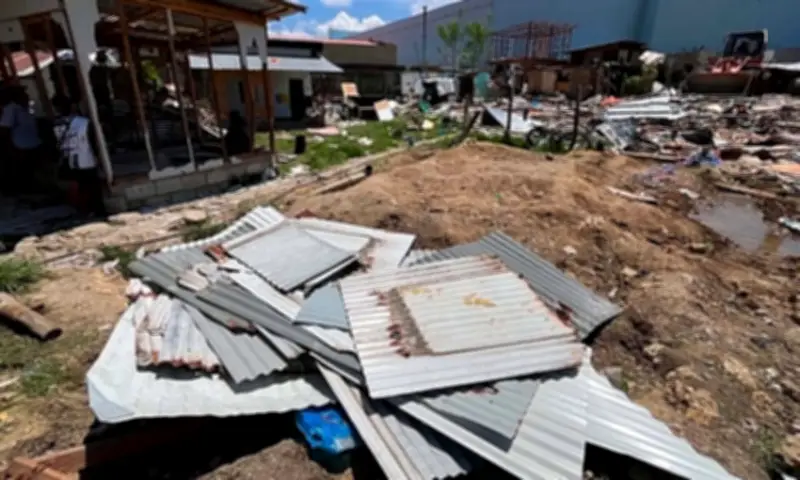
A demolition crew illegally destroyed 20 houses belonging to 100 families in Barangay Subangdaku, Mandaue City, on Thursday, June 25, 2026, triggering a tense standoff with local officials. The operation was halted by the City Government after it was discovered that the crew used an expired 2016 court order and lacked required legal permits.
Intervention by City Officials
The Housing and Urban Development Office (Hudo) led the intervention. Ramy Inopiquez, an executive assistant from Hudo representing the Mandaue City Government under the Office of the Mayor, confronted the demolition team to demand legal accountability. According to Inopiquez, the crew, acting on behalf of private claimant Taipan Corporation, arrived unexpectedly with a bulldozer and a backhoe, immediately tearing down structures across the multi-hectare property.
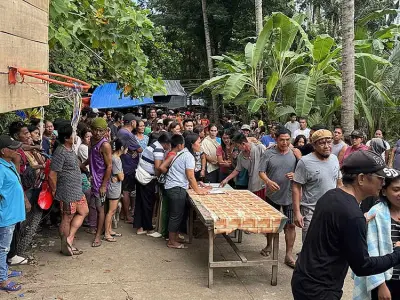
Around 20 houses were flattened before local officials arrived to intervene, disrupting the lives of an estimated 100 families residing in the area.

Expired Court Order
When Inopiquez pressed the demolition team leader, identified as Jonathan Alvarez, to produce a valid writ of demolition, the crew could only present a court order dating back to 2016. Inopiquez stated, "The order they showed us was from all the way back in 2016. Under the law, a demolition order must be executed within a strict three-year window from its issuance. That order has long since expired. It has been nearly ten years since that document was signed, meaning it is completely invalid."
Inopiquez further emphasized that because the community has re-occupied and lived on the land for roughly a decade, the claimants cannot simply rely on ancient paperwork. By law, Taipan Corporation must return to court to secure a brand-new eviction order to legally remove the current settlers.
Violations of RA 7279
The enforcement tactics used by the demolition crew also drew sharp criticism from city officials, who described the operation as a rogue execution. Local ordinances and national frameworks, specifically Section 28 of the Urban Development and Housing Act, or Republic Act (RA) 7279, strictly dictate the protocols for clearing residential areas. Inopiquez noted, "If this is a dispute involving private land, a court-appointed sheriff must be present to lead the team. There was no sheriff on the ground. The crew chose to take the law into their own hands. On top of that, their demolition team wore facial coverings and masked themselves like ninjas, completely devoid of required identification tags. The law mandates that anyone participating in a demolition must wear proper name tags."
Timing and Fear
Compounding the community’s distress was the timing of the demolition. Legal evictions in the country are confined to a designated daytime window, typically running from 8:00 a.m. to 3:00 p.m. to protect the safety and dignity of the displaced residents. However, witnesses reported that the crew aggressively pushed forward with the clearing well into the dark hours of the evening. The presence of the crew also brought an atmosphere of fear to the neighborhood.
Standstill Agreement
To prevent further destruction, Inopiquez and local authorities negotiated a binding verbal standstill agreement with Alvarez. Under the agreement, the demolition team is strictly prohibited from moving machinery or dismantling further homes until they can produce legitimate, up-to-date court documents proving the legality of their operation. A formal review has been scheduled at the Mandaue City Mayor’s office, where the claimants must present verified paperwork.