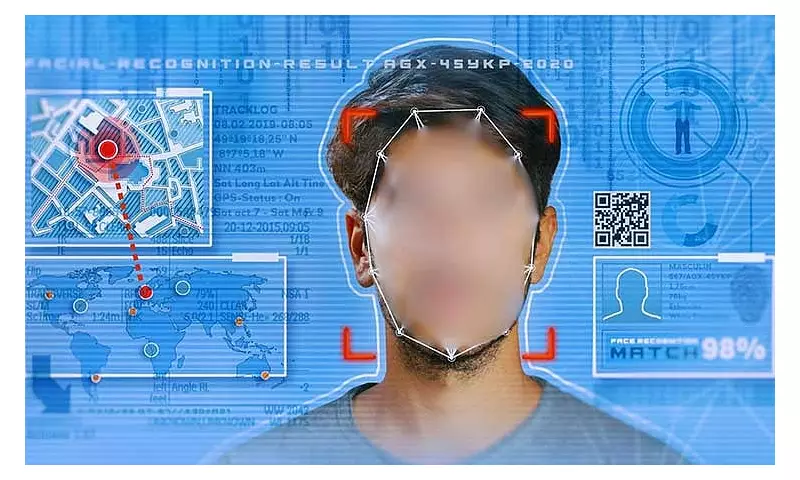
The Davao City Council has given its final approval to a groundbreaking ordinance that will implement artificial intelligence (AI) facial recognition technology across the city's major entry and exit points. This move, approved on its third and final reading on November 27, 2025, marks a significant step in bolstering public safety and border security.
A New Era of Public Safety
Proposed by Councilor Bonz Andre Militar, the chairperson of the Committee on Information Technology, the ordinance mandates the installation of advanced AI facial recognition systems. These systems will be deployed in a wide array of public spaces, including government buildings, parks, seaports, airports, land terminals, shorelines, and other areas where people congregate.
The core function of this technology is to link directly with law enforcement databases. This integration will allow authorities to instantly detect individuals who are flagged for arrest or are under surveillance, significantly aiding in crime prevention and counterterrorism efforts.

Ensuring Accuracy and Addressing Privacy
Before bringing the proposal forward, Councilor Militar confirmed the system's operational feasibility with the Public Safety Office. To ensure the technology functions correctly, the ordinance prohibits caps or other facial obstructions that could hinder detection.
Militar emphasized the system's high reliability, noting it boasts a 99.99 percent accuracy rate and is even capable of distinguishing between identical twins. Once a potential match is identified, a verification process will confirm if the individual is indeed in the database.
In a move to respect cultural and religious practices, the ordinance provides for a designated inspection room for members of the Muslim community, ensuring their comfort and privacy during security procedures.
To tackle potential privacy concerns head-on, Section 9 of the ordinance guarantees compliance with the Data Privacy Act of 2012. The mayor will appoint a city data protection officer, and all monitored areas will be clearly marked with public notices measuring at least two feet by three feet.
Implementation, Funding, and Penalties
The funding for this ambitious project will be sourced from the budgets of the implementing agencies and allocations from the executive department. An initial fund has been set aside for the first bidding phase, with plans to procure approximately 150 high-definition CCTVs equipped for AI facial recognition.
Councilor Militar described it as a "very huge project" and believes it is the first of its kind in the Philippines. He made these remarks during the Pulong-Pulong sa Dabawenyos on Tuesday, November 26, 2025.
Section 8 of the ordinance is critical for its effectiveness, mandating data-sharing agreements with key agencies. These include the Davao City Police Office (DCPO), the National Bureau of Investigation (NBI), the National Intelligence Coordinating Agency, and the Bureau of Immigration–Davao Region, among others. This will grant real-time access to watchlists and criminal databases.
The ordinance also establishes strict penalties for violations. Individuals who tamper with equipment, access or leak data, or evade security protocols—such as refusing a facial scan or using a fake identity—face fines of up to ₱5,000, imprisonment of up to one year, or both.