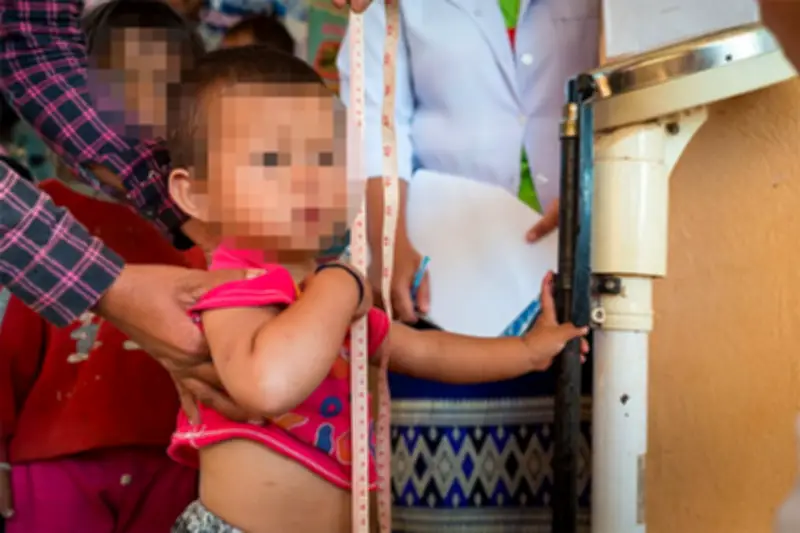
Despite sustained nutrition interventions, Cebu City continues to record child malnutrition cases, with health officials stating that funding constraints remain a major challenge in extending services to all 80 barangays.
Malnutrition Prevalence Among Young Children
Data from the Cebu City Nutrition Office (CCNO) from January to March 2025 showed that children aged 0 to 59 months remain the group most affected by malnutrition, including stunting, wasting, underweight, and overweight or obesity conditions.
Based on the 2025 CCNO data, the prevalence of underweight and severely underweight children stood at 1.63 percent, while stunted and severely stunted cases were recorded at 3.27 percent. Moderately wasted and severely wasted children made up 0.68 percent of the demographic, while 1.53 percent were classified as overweight or obese.

The city also recorded 516 cases of moderate and severe acute malnutrition (MAM/SAM).
CCNO Official Cites Root Causes
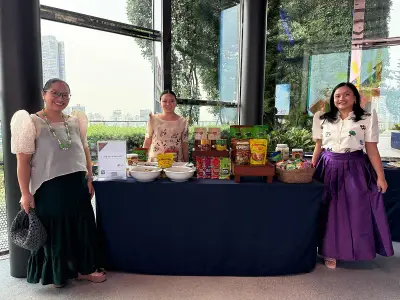
In an exclusive interview with SunStar Cebu on July 1, during the launch of the 52nd Nutrition Month held at Plaza Sugbo, Cebu City, CCNO officer-in-charge Shaira Camille Labastida-Alatraca said the figures indicate that malnutrition remains a concern despite continuous interventions.
She identified poverty, parental vices, and large family sizes as leading causes of malnutrition.
City Nutrition Scholars and Barangay Health Workers conduct monthly monitoring to identify malnourished children and provide them with necessary interventions.
“They will inform parents directly if their child is improving, or if they are malnourished they will be given interventions that a child needs,” she said.
Current Nutrition Programs
These initiatives include the CCNO and City Health Department’s (CHD) implementation of 90-day nutrition interventions across the city. These feature milk-feeding programs for children aged three to five years and nutritionally at-risk pregnant women, alongside complementary feeding for children aged 6 to 23 months.
Alatraca said that children from birth to 59 months old remain a priority for the city’s nutrition programs and services because they are the most vulnerable to developing long-term health problems caused by poor nutrition.
Barangay-Level Data Highlights
Based on the same data, 10 barangays recorded the highest prevalence across different forms of malnutrition:
For underweight and severely underweight: Lorega (Lorega San Miguel): 7.35%; Paril: 5.88%; Buot-Taup Pardo: 4.89%; Sambag I (Pob.): 4.83%; Tagbao: 4.55%; Central (Pob.): 4.49%; Sirao: 4.33%; Babag: 4.14%; Sambag II (Pob.): 3.90%; Sawang Calero (Pob.): 3.89%.
For stunting and severe stunting: Lorega (Lorega San Miguel): 17.14%; Day-as: 15.63%; Tagbao: 15.15%; Paril: 10.29%; Luz: 10.25%; Calamba: 10.02%; Sambag I (Pob.): 9.80%; Sawang Calero (Pob.): 9.38%; Cambinocot: 9.09%; Sambag II (Pob.): 9.02%.
For moderate and severe wasting: Agsungot: 3.29%; Calamba: 3.27%; Sambag II (Pob.): 2.93%; Luz: 2.59%; Tagbao: 2.27%; Central (Pob.): 2.25%; Cogon Pardo: 2.08%; Lusaran: 1.91%; Mabolo: 1.88%; Tejero (Villa Gonzalo): 1.85%.
For overweight and obesity: Day-as: 10.42%; Pari-an: 7.25%; Paril: 5.88%; Luz: 5.27%; Sambag I (Pob.): 4.98%; Cambinocot: 4.70%; Mabolo: 4.69%; Pung-ol Sibugay: 4.44%; Calamba: 4.25%; Taptap: 3.83%.
Declining Trends in Some Indicators
The data indicated that the prevalence of underweight children has steadily declined, dropping from 2.36 percent in 2021 to 1.23 percent in 2025. Similarly, the proportion of severely underweight children decreased from 0.60 percent in 2021 to 0.40 percent by 2024, remaining stable into 2025.
The prevalence of stunted children dropped further to 2.44 percent, while severely stunted cases slightly declined to 0.83 percent. Meanwhile, the percentage of children classified as tall slightly decreased to 1.64 percent.
The prevalence of moderately wasted children declined to 0.49 percent, while severely wasted cases dropped to 0.19 percent. The percentage of children classified as overweight decreased to 0.93 percent, and obesity slightly declined to 0.60 percent. (Note: The historical dataset provided did not explicitly break down year-over-year comparative trends for overweight and obesity lines from 2021 through 2025).

Budget Constraints Hamper Full Coverage
According to Alatraca, the CCNO receives an annual budget of approximately P30 million to P40 million for its nutrition programs. Despite the funding, she acknowledged that the current budget is insufficient to fully implement nutrition programs across all barangays.
“It would have been better if the budget had allowed all barangays to be covered by the program so that those who are poor households, pregnant women, families with children, and the elderly would all receive the attention and assistance they deserve,” she said.
She added that expanding the programs to every barangay would allow more vulnerable sectors, including low-income households, pregnant women, children, and senior citizens, to receive critical nutrition support.