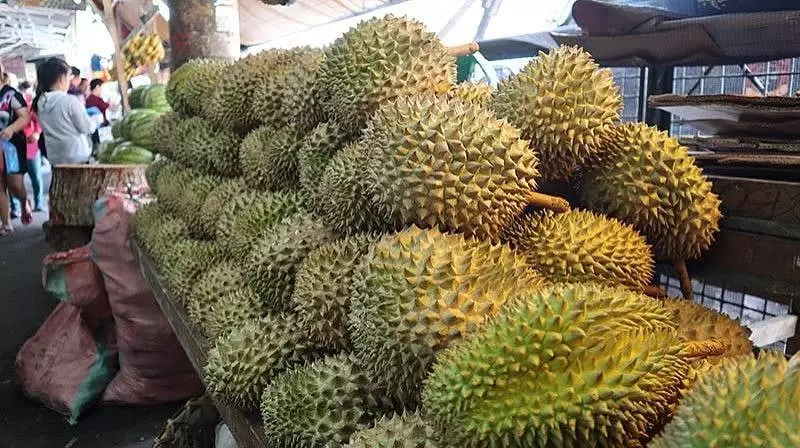
The Philippine durian industry, a cornerstone of Mindanao's agriculture and a key fruit export, is facing a severe downturn. Despite its iconic status, the sector is struggling with climate disruptions, fierce regional competition, and the difficult task of converting its vast potential into a stable share of the global market.
Climate Crisis Triggers Production Collapse
The industry's challenges crystallized in 2025 with a dramatic export drop. Shipments of Philippine durian to China crashed to approximately five million kilograms this year. This figure represents a staggering fall from the 35 million kilograms recorded in 2022, marking an estimated 86 percent decline.
Industry experts clarify that weak demand is not the culprit. Instead, the plunge is attributed to a catastrophic drop in farm output. Prolonged and unseasonal rains from May to July severely disrupted the flowering cycle of durian trees across Mindanao, leading to sharply reduced yields. This timing was particularly damaging as the peak production period, which typically runs from August to November, depends on a healthy flowering stage.

Larry Miculob, President of the Durian Exporters Association of the Philippines (DEAP), described 2025 as a tough year for growers and exporters alike. Speaking at a recent business forum in Davao City, he emphasized that climate volatility has exposed and intensified the industry's long-standing structural weaknesses.
Vast Potential Meets Logistical Hurdles
Paradoxically, demand, especially from China, remains robust. The formal entry of Philippine durian into China in April 2023—marked by an 18-metric-ton shipment to Beijing—initially boosted the sector. However, the Philippines currently supplies less than one percent of China's durian market, which is dominated by Thailand, Vietnam, and Malaysia.
Miculob points out that Philippine durian has not fully penetrated the Chinese market, where consumption is still focused on southern and eastern provinces. "The market in China is huge. There is still a lot of potential, but logistics and production costs are major concerns," he stated. Central and northern regions remain largely untapped due to high distribution costs and logistical barriers.
In response, exporters are now prioritizing productivity improvements at the farm level to reduce costs and become more competitive. The industry's backbone remains in Mindanao, where about 15,000 hectares are planted with durian and another 5,000 are under development.
Key expansion areas include:
- North Cotabato (Makilala, Kidapawan City, Arakan Valley)
- Davao del Norte (San Isidro, Panabo City), where banana farms affected by Panama disease are shifting to durian
- Davao de Oro (Compostela, Montevista, Nabunturan, Pantukan)
- Barangay Kapatagan in Digos City, Davao del Sur
Fragmentation and Strategic Pivots for Recovery
A critical hurdle is the industry's fragmented nature. About 98 percent of the national durian output comes from small backyard farms, many with fewer than 50 trees per hectare. This lack of scale, combined with limited capital and technical resources among smallholders, hinders the ability to compete with integrated producers in neighboring countries.
To navigate these challenges, the industry is pursuing multiple strategies. With 21 registered exporters in Mindanao and seven more awaiting Chinese customs approval, businesses are looking beyond fresh fruit. DEAP plans to start exporting durian pulp to Malaysia next year. This pulp will be blended with Malaysian varieties and re-exported to China, leveraging Malaysia's processing infrastructure to circumvent restrictions on certain fresh Philippine varieties.
Simultaneously, there is a push to grow the local market. With average annual consumption at just 600 grams per person, raising this to three kilos could significantly bolster the industry's stability. Exporters are also working with agricultural attachés to explore new opportunities in South Korea and the Middle East.

While climate risks and intense competition persist, industry leaders believe that a focus on better productivity, expanded market access, and stronger institutional support can still help Philippine durian carve out a larger slice of the global market in the years to come.