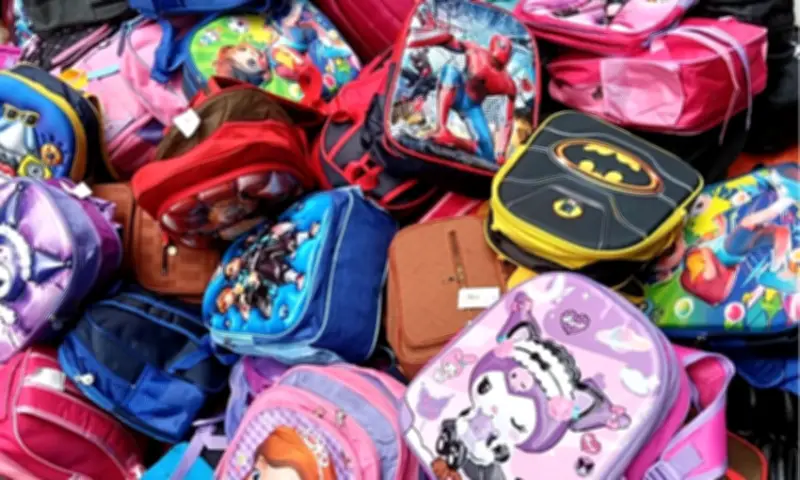
The EcoWaste Coalition has urged the Food and Drug Administration (FDA) to regulate lead in accessible components of children's products to protect children from exposure to this potent neurotoxin. The non-profit group, which advocates for children's protection against hazardous chemicals, made this recommendation after discovering high levels of lead in back-to-school essentials such as backpacks and lunch bags.
In a letter sent to the FDA on June 9, the group requested a policy that would regulate lead in accessible parts of children's products, including zipper teeth, sliders, pull tabs, buttons, grommets, and other easily reached components. The group had earlier revealed the detection of lead in zippers of backpacks and lunch bags purchased during its "balik-eskwela" health and safety campaign. Using a portable X-Ray Fluorescence (XRF) device, they found that out of 46 backpacks analyzed, 17 had metallic zipper parts containing lead between 12,040 ppm and 30,320 ppm. Six out of 11 lunch bags also contained lead ranging from 13,360 ppm to 25,670 ppm.
For comparison, the U.S. Consumer Product Safety Improvement Act limits lead in accessible components of children's products to no more than 100 ppm, while Canada's Consumer Product Safety Act sets a limit of 90 ppm. The EcoWaste Coalition emphasized that controlling lead in these components would protect children from a preventable source of lead poisoning.

"Young children unknowingly expose themselves to lead when they zip up their clothes, bags, and other items if the zipper contains lead in the alloy or paint," the group stated. "Lead in metal or paint, if ingested, can harm brain development and cause other health effects." The group also noted that zippers and other components could be detached and accidentally swallowed, posing severe poisoning risks.
To highlight the dangers, the EcoWaste Coalition recalled a 2006 incident where a four-year-old boy from Minnesota died after swallowing a heart-shaped metallic charm from a Reebok bracelet. This led to a recall of 300,000 units and a $1 million civil penalty for Reebok.
Currently, the Department of Environment and Natural Resources (DENR) Administrative Order No. 2013-24 bans lead in paints and in the manufacture of toys and school supplies, with a maximum limit of 90 ppm. The EcoWaste Coalition urged the FDA to complement this ban by issuing a specific regulatory measure controlling total lead in accessible parts of children's products.
The group also recommended mandatory labeling of children's products with full disclosure of chemical composition to inform consumers. Citing FDA Advisory No. 2020-1585, the group noted that lead is a cumulative toxicant particularly harmful to young children, affecting brain and nervous system development, and causing long-term harm in adults, including high blood pressure and kidney damage. There is no known safe level of lead exposure.