At least 525 Badjao families, or more than 2,000 individuals, in Barangay Mambaling, Cebu City, are set to benefit from a new clean water and livelihood initiative launched by Junior Chamber International (JCI) Cebu and JCI Japan. The project aims to address long-standing sanitation, health, and economic challenges in the community.
Project Launch and Funding
The project, dubbed “Bohe Maka Sannang” (Water is Life), was launched on Sunday, June 21, 2026, at the Nano Nagle Learning Center in the Badjao community in Alaska, Barangay Mambaling. It operates under the JCI Rise program, which seeks to address socio-economic and health concerns in underserved communities.
Funded through a 2-million Japanese yen grant (approximately P752,000) from JCI Japan’s Smile by Water initiative, the project includes installing a Japanese water filtration system. This system will provide access to clean drinking water while supporting livelihood and financial literacy programs for residents.

Water Filtration System
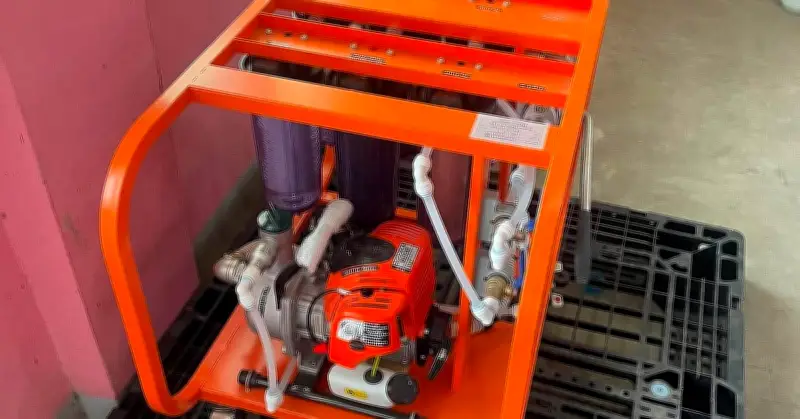
The water treated in the system is sourced from the community’s existing water supply in Mambaling, which may include tap water connections, shared communal water sources, and rainwater collected during the rainy season. Under the project’s technical design, raw water from the community’s supply is mechanically drawn into a treatment unit using an integrated high-pressure pump.
The water then passes through a specialized ultra-filtration membrane that removes microscopic sediments, heavy particulates, and larger bacterial contaminants. It is then processed through an active UV sterilization chamber, which neutralizes viruses and other biological contaminants to ensure the water is microbiologically safe. Once fully treated, the purified water is stored in large stainless-steel tanks installed on the facility roof for distribution to the community. The system serves as a centralized water purification network intended to ensure a stable supply of safe drinking water for students, families, and nearby households.
Community Selection and Needs
According to JCI Cebu, the project was developed after identifying the Badjao community as one of the areas most in need of assistance. Jay Emanuel Alegarbes, project chairperson of JCI Cebu, said: “Right now, the Badjao community has a lot of problems, and they really need visibility. We need to hear them because there are many concerns in their community.”
Alegarbes noted that JCI Cebu conducted ocular visits in northern Cebu, southern Cebu, and Metro Cebu before selecting Mambaling as the project’s beneficiary. “We found that the problem on waste management is really heavy here in Mambaling. There are also water sources in the area, so we wanted to provide clean water access to the community,” he said.
Partnership with JCI Japan
A major component of the project is the installation of a water filtration system under Project Hydrate, implemented in partnership with JCI Japan’s Smile by Water program. Kotaro Mizuyama, vice chairperson of JCI Japan’s Smile by Water initiative, said the system was specifically designed to address water-related health concerns affecting children and families.
“The kids need clean water for drinking and washing their hands. This is very important because they experience health problems such as stomach illnesses. We want to provide them with clean water that is good for their health and hygiene,” Mizuyama said. He added that Mambaling was selected after JCI Cebu introduced the community and highlighted its need for improved sanitation and access to potable water. The undertaking marks JCI Japan’s first project in Cebu.
The filtration technology, which originated from Japan, was designed to be simple and sustainable. Community members were trained on how to operate the system and perform basic maintenance to ensure its long-term use.
Livelihood and Circular Economy
Beyond providing clean water, JCI Cebu said the initiative aims to create livelihood opportunities through a community-based social enterprise. “We don’t want this to be just a water purification system. We want it to become a circular economy,” Alegarbes said.

As part of the project, children participated in jewelry-making workshops designed to develop creativity and entrepreneurial skills, while women underwent soap-making training that could eventually generate income for their families. The soap products will be produced using purified water from the filtration system. Alegarbes said JCI Cebu has already started coordinating with hotels and restaurants that could serve as potential buyers of the community-produced soap. “From the purified water, we can make soap. From there, we can create jobs and generate income. The goal is for the community to eventually sustain the project on its own,” he said.
The livelihood component initially targets 20 women from the Badjao community, while the water system is expected to benefit approximately 2,000 individuals. JCI Cebu will continue monitoring and overseeing the project for a period before gradually transferring management to community members through a shared ownership arrangement.
Alegarbes said the initiative is also intended to provide alternative livelihood opportunities for families who often resort to begging. “This is one way of showing them that there are opportunities for a better life and that they can become self-reliant,” he said.
Community Impact
For residents, access to water has long been a daily struggle. Edwina Quailquial, head of the Nano Nagle Learning Center, said many families still do not have water connections in their homes, while the safety of available water sources remains uncertain. “Our top problem here is diarrhea, especially during the rainy season. This is a huge blessing not only for the children studying in the center but for the entire community,” she said.
Quailquial said the community consists of 525 families, or around 2,009 individuals, all of whom are expected to benefit from the project. She added that the center’s Women’s Association, the first organized women’s group established in the Badjao community, will help oversee the soap-making initiative and train beneficiaries. The association was formed to help women develop sustainable sources of income and encourage residents to work collectively rather than individually.
Community members expressed optimism over the project, particularly the installation of the water filtration system. Arlyn Daomani, president of the community’s livelihood association, described water access as one of the community’s oldest problems. “The water supply is difficult. Sometimes it doesn’t flow. Sometimes it only comes at night and is gone again by morning,” she said. Daomani recalled that water-related illnesses frequently occur during the rainy season, making access to safe drinking water even more important. She also welcomed the soap-making training, saying residents are excited to learn new skills and eventually produce their own products. “We’re excited because we will be able to make the soap ourselves and learn something new,” she said.
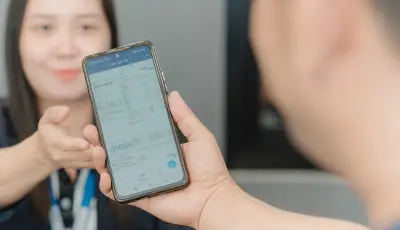
Participants also attended financial literacy sessions on budgeting, saving, and money management as part of efforts to strengthen the community’s long-term economic stability. Organizers said they hope the initiative will improve access to safe water, reduce water-related illnesses, strengthen sanitation and hygiene practices, create sustainable livelihood opportunities, and empower the Badjao community to become more self-reliant in the years ahead.