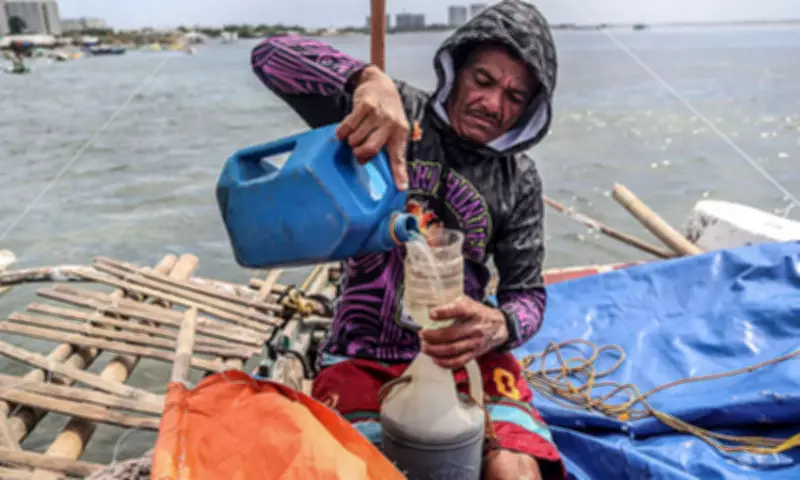
The high cost of fuel remains the primary concern of fisherfolk in Central Visayas, following the Bureau of Fisheries and Aquatic Resources (BFAR) 7’s shift toward grassroots governance this month through the launch of coastal consultations and a localized immersion program for Farmers' and Fisherfolk Month.
In an interview with SunStar Cebu on Tuesday, May 26, 2026, BFAR 7 Director Mario Ruinata said the immersion program is a national initiative that helps the agency design more effective interventions.
"Fuel. In fact, that is the main problem now, like for example, the high cost of fuel really affects operations, especially for small-scale fishermen," he said, when asked after immersing at the ground level what the main concern of the fisherfolk is.

To ensure government aid matches the actual needs of coastal communities, Ruinata said that BFAR 7 officials spent the early weeks of the celebration participating in a regional community immersion and policy dialogue in Bohol.
This domestic fuel surge stems directly from the ongoing conflict involving the United States, Israel, and Iran, which has severely disrupted crude oil shipments and tightened supply chains passing through the critical Strait of Hormuz. Because the Philippines relies almost entirely on imported oil, the international crisis triggered a massive spike in localized pump prices, heavily impacting energy-dependent sectors like municipal fishing.
During the celebration, BFAR officials traveled to Bohol to live alongside local fishers, conduct field consultations, and evaluate ongoing livelihood projects. The agency intends to use the feedback gathered from these ground-level dialogues to determine whether existing coastal projects should be expanded or replicated in other parts of Central Visayas.
"Farmers and fisherfolk month is our way of recognizing or really giving importance to the role of fisherfolk, especially in providing fish on our table," Ruinata said.
He further explained the rationale behind the field deployments. "The real purpose is really to feel how the fishermen live, so that we can experience it. So that the projects we provide are responsive," Ruinata said.
The agency budget remains a primary challenge, which requires careful allocation toward effective projects. BFAR 7 supports these grassroots initiatives through its nine regional production facilities, including six multi-species hatcheries that supply milkfish and tilapia fingerlings to local fishing associations and cooperatives.
Priority Aligned Programs for 2026
To counter the ongoing fuel crisis and improve local production, BFAR 7 is executing several core programs this year:
The Lambaklad Project Expansion
The agency is expanding its sustainable, passive set-net technology. BFAR 7 allocated P3 million to P3.5 million per project to add four new Lambaklad units in Cebu and Bohol this year, bringing the regional total to 12. This technology allows municipal fishers to catch migratory fish close to the shore, eliminating the need to travel far into the deep sea and significantly cutting down fuel expenses.
The FishCoRe Project (Year 3)
Under the World Bank-funded Fisheries and Coastal Resiliency (FishCoRe) Project, the agency is focusing on Fisheries Management Area 9 (FMA 9), which encompasses 17 municipalities in Bohol and five in Siquijor. Key components for 2026 include aquaculture cages, oyster development, and a P15-million solar-powered ice plant and cold storage facility in Ubay, Bohol, which is currently in the bidding pipeline to minimize post-harvest spoilage.
Dual-Track Fuel and Financial Assistance
The agency is directly addressing high operational costs through targeted subsidies. Out of the 15,000 targeted fisherfolk for the regular fuel subsidy program, BFAR 7 already distributed 3,000-peso debit cards to 13,000 recipients, with roughly 2,000 remaining slots in process. Alongside this, the agency rolled out the Presidential Assistance for Farmers and Fisherfolk (PAFF), identifying 43,000 beneficiaries across the region to receive 2,325 pesos in direct cash aid.
Inland and Upland Aquaculture Development
Beyond marine capture fisheries, BFAR 7 is developing inland aquaculture by distributing tilapia and milkfish fingerlings through its Technology Outreach Stations.

Special Areas for Agricultural Development (SAAD)
This continuous initiative focuses on marginalized fishing communities, providing alternative livelihood interventions such as seaweed farming inputs, fish cages, fiberglass boats, and training for value-added post-harvest processing like bottled sardines.
The Department of Agriculture (DA) through BFAR allocated P75 million in fuel assistance for more than 15,000 fishermen to cushion the impact of rising oil prices due to the conflict in the Middle East.