The Philippine Cacao Industry Council (PCIC) and the Philippine Cacao Industry Association (PCIA) are intensifying efforts to consolidate data for comprehensive monitoring of cacao production nationwide. This initiative aims to enhance the sector's competitiveness and sustainability in response to rising global demand.
Data-Driven Monitoring for Targeted Support
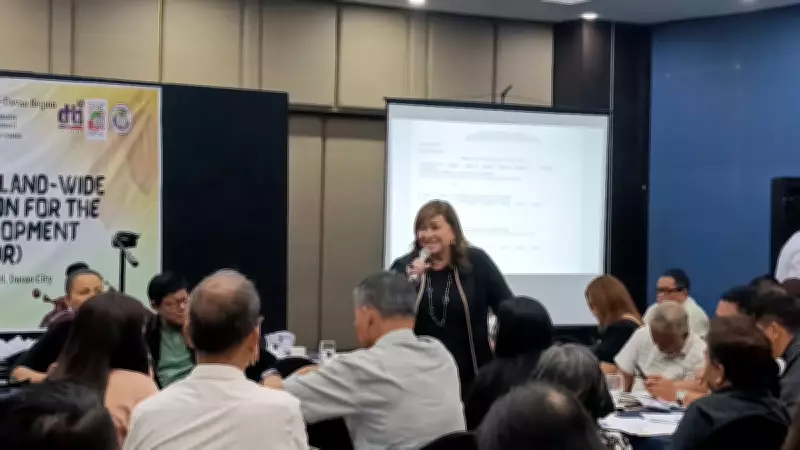
Consul Armi Lopez Garcia, who serves as chairperson of PCIC and president of PCIA, emphasized the critical role of data collection during a recent talk at the Apo View Hotel in Davao City. She explained that by systematically tracking cacao output, the council can identify regions with low productivity and provide tailored assistance to farmers.
Garcia detailed that consolidated data will enable precise decision-making, determining where cacao planting should expand and where it may be unnecessary. She encouraged small-scale farmers to collaborate with municipal agricultural officers to record their production metrics, ensuring grassroots involvement in the data-gathering process.

Building a Unified Database
Christopher H. Lindo, vice president for Mindanao of PCIC and board director of PCIA, highlighted ongoing work to compile data into a single, accessible database. He stressed that this centralized system will ensure information is readily available across all regions, fostering transparency and efficiency. Lindo underscored the importance of sector-wide collaboration to achieve this goal, noting that unified efforts are essential for the initiative's success.
Expanding Production with a Focus on Quality
Garcia pointed out that increasing global demand for cacao, driven by both international buyers and local chocolatiers, positions the Philippines as a key potential supplier. She argued that the country must ramp up production to meet this demand but cautioned against prioritizing quantity over quality.
Producing high-quality cacao beans, Garcia explained, would allow farmers to command better prices, thereby increasing their income and making farming more attractive to younger generations. She warned that without consistent quality, the Philippines risks remaining a low-value commodity market internationally. Maintaining bean quality, she added, would also help stabilize market prices, benefiting the entire industry.
Roadmap for Sustainable Growth
A newly crafted roadmap serves as a unified strategic framework, aligning with government agencies, local government units, the private sector, farmers, and development partners. This framework will guide investments in key areas such as:
- Area expansion and yield improvement
- Farm clustering and market development
- Promotion of climate-resilient and sustainable practices
Lindo noted that the roadmap aims to boost farmer incomes by encouraging value-added processes like fermentation. On a local level, Davao-based agri-entrepreneur Lizabel "With" Holganza, owner of Gran Verde Farm, expressed optimism that the roadmap could help small-scale farmers adopt national strategies locally. However, she raised concerns about data gaps, as farmers typically lack resources for data collection, emphasizing the need for stronger collaboration with local government units and other sectors to ensure survival and growth.
Current Production Estimates
According to 2025 estimates from the roadmap, the Philippines has a total cacao area of approximately 25,500 hectares, with annual production ranging from 10,300 to 11,200 metric tons (MT). Regional breakdowns include:
- Luzon: 2,000 hectares, producing 1,000 to 1,200 MT
- Visayas: 1,500 hectares, producing 800 to 1,000 MT
- Mindanao: 20,000 hectares, producing 10,300 to 11,200 MT
These figures underscore Mindanao's dominance in cacao production, highlighting opportunities for targeted development and support across the archipelago.