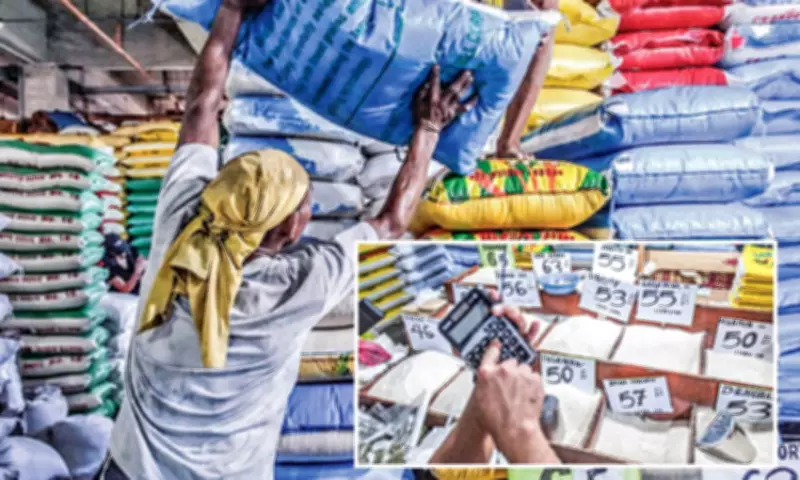
Rice prices at Carbon Public Market in Cebu City have experienced a significant increase, rising by P10 to P15 per kilo as of Thursday, March 5, 2026. This surge is part of a broader trend affecting the Province of Cebu, where tensions in the Middle East are beginning to impact local economies through higher transportation and production costs.
Impact of Middle East Tensions on Local Markets
Erwin Gok-ong, vice president of the Grains Retailers Confederation of the Philippines (Grecon) - Cebu City North Chapter, confirmed the price hike in an interview with SunStar Cebu on March 5, 2026. He explained that even before any direct escalation in the Middle East, certain rice varieties were already being sold at P70 per kilo. The rising cost of oil and gasoline is a key driver, as it leads to increased expenses in the food supply chain. "If crude oil and gasoline become more expensive, the price of rice will definitely go up—significantly," Gok-ong stated.
Supply Constraints and Price Variations
Gok-ong highlighted that rice supply is currently limited, with minimal allocations and cheap varieties nearly out of stock. Local rice types, such as Lion Ivory, have reached P65 per kilo or P3,000 for a 50kg sack, while Ganador is selling at P67 to P70 per kilo or P3,200 per sack in markets like Carbon Public Market. In contrast, imported rice like "Gwapa" is available at P47 to P49 per kilo, but Gok-ong warned that the supply allocated for Cebu is restricted. He noted that the Department of Agriculture has provided only a small allocation for the region.

Broader Economic Concerns
Other retailers are sourcing stocks from wholesalers and distributors in Metro Manila, where prices have been increasing since August 2025. There are growing concerns that other food commodities, including sugar, flour, cornstarch, and meat products, may also see price hikes. Additionally, major rice-exporting countries such as Vietnam, Thailand, Pakistan, and India are reducing their exports to secure domestic stocks, which could further affect nations reliant on rice imports, according to Gok-ong's warnings.