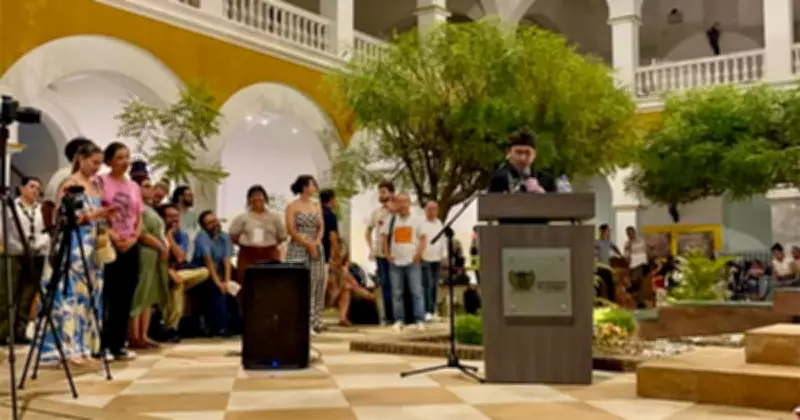
In a powerful international academic gathering, a Cebuano scholar from the University of the Philippines Diliman has called for urgent global action on agrarian reform and pro-poor food systems. Assistant Professor Karlo Mikhail I. Mongaya, born and raised in Cebu City, delivered this critical message at the International Academic Conference for Land, Life & Society held at the University of Cartagena in Colombia from February 20 to 22, 2026.
International Platform for Agrarian Advocacy
The conference brought together an impressive assembly of over 400 academics and rural advocates from across the globe. This academic gathering ran parallel to the significant Second International Conference on Agrarian Reform and Rural Development (ICARRD+20), a major United Nations-facilitated multilateral forum hosted by the Colombian government with support from the Food and Agriculture Organization of the United Nations, the Government of Brazil, and various social movement and academic partners.
Groundbreaking Research Presentation
Professor Mongaya presented the co-authored paper titled "Food Regimes and Radical Movements in Agrarian Change: An Invitation for Rethinking the Agrarian Question in the Philippines." This research, developed alongside junior research analyst Sheila Mae Pagurayan, challenges existing academic perspectives on Philippine agrarian transformation.

The paper argues that academic literature has largely overlooked crucial issues in Philippine agrarian change since the 1980s. This oversight persists despite four decades of significant rural transformation characterized by land redistribution efforts, market liberalization, labor migration, and deepening food insecurity challenges.
Connecting Academic Research to Real-World Struggles
Both authors serve as members of the Collective of Agrarian Scholar-Activists of the South (Casas), a solidarity-based network of Global South agrarian studies scholars that led the conference alongside numerous Colombian and international universities, ministries, academic networks, and research institutes. The conference itself represented 410 participants from 321 universities, research institutions, and academic organizations across all continents.
Mongaya and Pagurayan's research emphasizes that agrarian issues are not merely historical concerns. Their paper states clearly: "The combined crises of food, energy, and climate change have made the agrarian question more urgent than ever." The study provides a comprehensive historical overview of how global food regimes and radical social movements have shaped agrarian transformation in the Philippines.
Direct Links to Grassroots Advocacy
The academic work connects directly with ongoing agrarian struggles. Both authors volunteer as researchers for Katarungan (Kilusan para sa Repormang Agraryo at Katarungang Panlipunan), an organization dedicated to advocating for small farmers' land rights and food sovereignty. This connection between academic inquiry and practical advocacy strengthens the relevance and impact of their research.
Drafting the Cartagena Declaration
Professor Mongaya played a significant role in shaping the conference's outcomes by serving on the drafting committee that produced the Cartagena Declaration. This collective statement summarized the discussions and debates of the academic conference and was read during the plenary session of ICARRD+20.
The declaration reaffirms the commitment of engaged scholars to conduct rigorous, evidence-based, and co-produced research grounded in the lived realities of rural communities. It emphasizes that securing land and territory "for people, for work, for food, and for life" represents not a utopian ideal but a necessary and achievable response to today's global crises.
Scholarship Informing International Policy
The academic conference in Cartagena demonstrated how scholarly research directly informs international policy debates on agrarian reform and rural development. By bringing together academics, advocates, and policymakers, the event created a vital space for knowledge exchange and strategic planning to address pressing global food and land justice issues.

Professor Mongaya's participation highlights the important role Filipino scholars play in international discussions about agrarian reform, food systems, and rural development. His work bridges local Philippine experiences with global conversations about creating more equitable and sustainable agricultural systems worldwide.