The thesis project is a crucial requirement for completing an academic college program. As the ultimate academic output demonstrating a student's learning from years of university study, a thesis also underscores the need to innovate and contribute new knowledge to the field. In architecture school, the thesis showcases creativity through efficient site and building planning, eye-catching building perspectives, and astounding renders. However, it should be more than what meets the eye.
The best thesis works often address real-world needs, no matter how small, and present a contextualized design approach valuable to the community. The University of San Carlos Department of Architecture recently concluded its undergraduate architecture thesis deliberations. Two of the three student proponents whose projects tied for bronze awards this school year discuss their projects.
Floating Houses
One of these is the lone project-track thesis that explored sustainable housing design in a time of changing climate. Entitled "A Proposed Low-Cost Amphibious Residential Prototype for Sitio Lahing-Lahing, Mabolo, Cebu City," the project delved into the possibilities of a "floating" house when intense flooding occurs in low-lying communities.

The student proponents, Boris Michael Arque and John Elan Martinez, are well aware of current events and share the frustration over poorly managed flood-control projects. For them, architecture should adapt to weather extremes rather than rely on government band-aid solutions. Armed with knowledge from courses taken since their first year, coupled with hard work and the "mindset of a future architect," they presented a residential prototype designed to withstand intense flooding while considering affordability, safety, and suitability for the community.
"The thesis project instilled in us the value of collaborating with allied professionals, such as engineers, to create a more comprehensive design solution," said Michael. He added that it reminded them that good architecture is not just about designing beautiful buildings but must also address the relevant spatial needs of the community.
Sustainable Building Boards
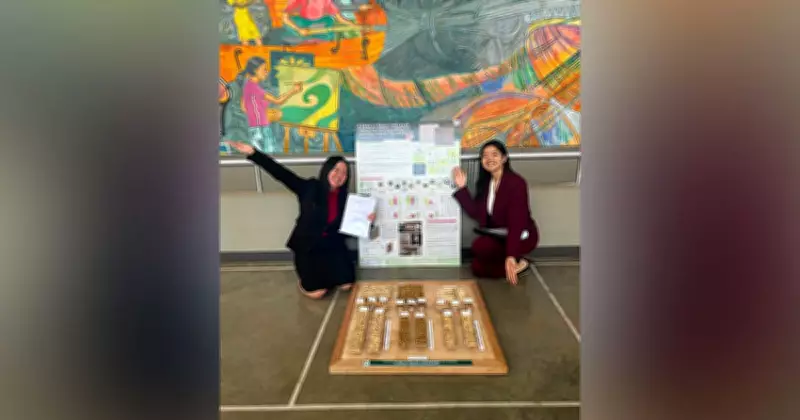
Amanda Grace Kaw and Lorraine Anne Ong conducted a study exploring the possibility of using a type of grass to create composite building boards. Their research-track thesis entitled "A Study on Napier Grass as an Alternative Building Material in Creating Oriented Strand Boards" is one of two research-track thesis projects that received bronze this year.
The proponents shared that they were especially hands-on in the research process, particularly in preparing the materials for the Napier grass-oriented strand boards for testing. "This thesis also served as a practical experience, incorporating the theoretical learnings we had throughout the past five years in architecture school," Lorraine said.
"We chose the topic because it genuinely seemed interesting to do this type of thesis, which had never been done in an undergraduate program before," said Amanda, who also recently made it to the Dean's List. "Aside from that, materials are a large part of architecture, and we wanted to explore that topic to potentially offer a more novel and, perhaps, sustainable building material." Both credit their resourcefulness and patience for getting them through the research work, which had uncertainties given the experimental nature of the methodology.
These architectural thesis works clearly show the promise of future professionals in the built environment. Even if they remain on paper, walkthrough videos, and presentation boards for now, the students demonstrated the creativity and imagination of future architects molded by years of academic training. The students hope to inspire those who will soon be doing their thesis, whatever program they may be in, to always strive for excellence through hard work, passion, and sensitivity to the needs of their community.