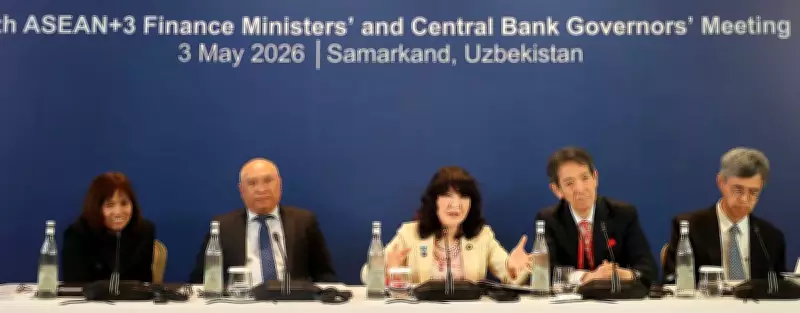
The Bangko Sentral ng Pilipinas (BSP) joined fellow central banks and finance ministries in the ASEAN+3 group in reaffirming their commitment to regional cooperation as global economic challenges continue to intensify. This commitment was highlighted during the 29th ASEAN+3 Finance Ministers’ and Central Bank Governors’ Meeting held on May 3 on the sidelines of the Asian Development Bank Annual Meeting in Samarkand, Uzbekistan.
Key Discussions and Initiatives
Senior officials discussed ongoing regional initiatives, including the Chiang Mai Initiative Multilateralization (CMIM), a regional financial safety net that provides liquidity support during crises. They also reviewed the macroeconomic surveillance work of the ASEAN+3 Macroeconomic Research Office (AMRO), accomplishments under the Asian Bond Markets Initiative, which promotes bond markets and cross-border investments, and efforts to strengthen cross-border digital payments. The outcome of the discussions was summarized in a joint statement.
BSP Co-Chair Emphasizes Resilience
BSP Monetary Board Member Rosalia V. De Leon, who served as ASEAN+3 co-chair for the BSP, stressed the importance of the CMIM alongside AMRO’s surveillance and analytical work and other regional cooperation initiatives in safeguarding regional financial stability. “By advancing these mutually reinforcing pillars, we are not only responding to emerging risks but also fortifying our collective resilience as we navigate an increasingly complex global environment,” De Leon said.

Central Banking Dialogue
De Leon and Ryozo Himino led the Central Banking Dialogue, a sideline event of the ASEAN+3 meeting held the same day. The dialogue served as a high-level forum for member central banks to exchange views on strategic issues affecting regional and global financial stability. Discussions during the inaugural dialogue focused on cross-border payments and regional payment connectivity amid rapid technological changes and evolving global conditions. ASEAN+3 central banks also underscored the importance of efficient and interoperable payment systems in facilitating trade and remittances, promoting financial inclusion, and maintaining financial stability.