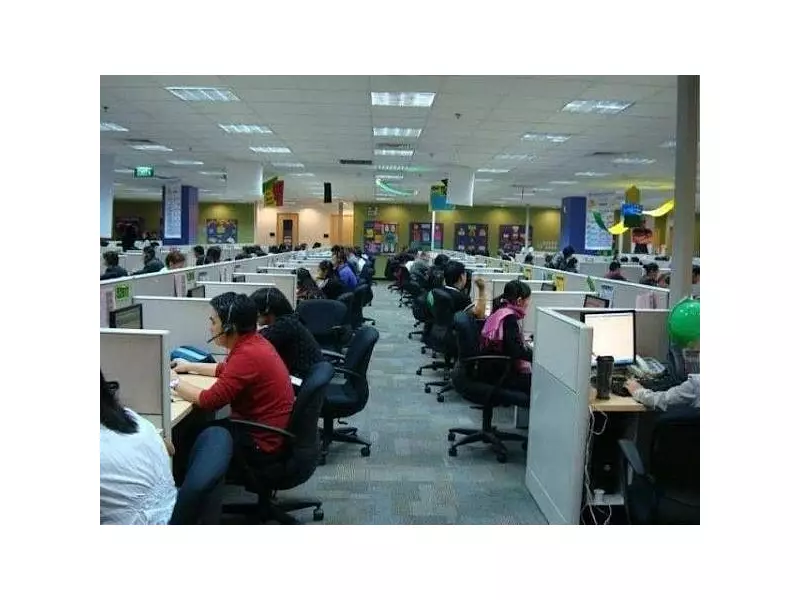
The Information Technology and Business Process Management (IT-BPM) sector in the Philippines is on a strong growth trajectory, with industry leaders projecting it will achieve about $42 billion in export revenues and employ close to 1.97 million Filipinos by 2026. This optimistic forecast is anchored on the accelerated integration of artificial intelligence, the expansion of global capability centers, and a strategic push into more complex, high-value services.
Solid Momentum from 2025 Fuels 2026 Outlook
According to the IT & Business Process Association of the Philippines (IBPAP), the industry built significant momentum in 2025, closing the year with roughly 1.9 million direct jobs and $40 billion in export revenues. This represents an impressive addition of approximately 80,000 new positions and $2 billion in revenue compared to the previous year.
IBPAP President and CEO Jack Madrid highlighted that the sector's growth rate of 4% in employment and 5% in revenue last year outpaced the estimated global industry growth of about 3%. "Despite macroeconomic headwinds, the Philippine IT-BPM industry grew faster than the global market," Madrid stated. He attributed this resilience to the ongoing shift towards more sophisticated, capability-driven work.

The industry's contribution now exceeds 8% of the country's Gross Domestic Product (GDP), solidifying its status as a major pillar of the modern Philippine economy and a primary generator of quality employment.
AI Reshapes Operations, Talent Development Intensifies
The nature of demand within the sector is evolving rapidly. IBPAP reports a clear movement away from traditional voice-based contact center roles toward higher-value domains such as data analytics, business intelligence, and strategic program management. This shift is largely propelled by the growing presence of Global Capability Centers (GCCs) in the country.
Simultaneously, Artificial Intelligence is transforming operations across key verticals like banking, financial services, and healthcare. While AI boosts productivity, it also raises the bar for the workforce, demanding greater digital fluency and advanced problem-solving skills.
To bridge the persistent talent gap, IBPAP has significantly expanded its collaboration with government bodies and academic institutions. Key initiatives include:
- Senior high school work-immersion programs with the Department of Education (DepEd).
- Skills-progression frameworks with the Commission on Higher Education (CHED).
- Enterprise-based training programs with the Department of Information and Communications Technology (DICT) and the Technical Education and Skills Development Authority (TESDA).
Policy Reforms and Regional Growth Boost Investor Confidence
Investor sentiment received a boost in 2025 following crucial policy reforms. The passage of the CREATE More law and the clarification of work-from-home rules by the Philippine Economic Zone Authority (PEZA) helped alleviate long-standing concerns regarding fiscal incentives and operational flexibility.
While consistent implementation remains critical, these reforms have encouraged multinational companies to resume expansion plans and make longer-term reinvestments in the Philippines. Growth is also becoming more geographically dispersed, with major regional hubs like Cebu, Iloilo, Bacolod, Davao, Cagayan de Oro, and Clark attracting a significant share of new investments and projects beyond Metro Manila.
Strategic Priorities for 2026 and Beyond
As the industry approaches the landmark two-million-job threshold, IBPAP has outlined its core priorities for 2026. The focus will be on three main areas: scaling AI adoption responsibly, further expanding Global Capability Centers, and deepening investments in comprehensive workforce upskilling and well-being programs.

"What got us here will not be enough to take us where we need to go next," emphasized Jack Madrid. "Our focus in 2026 is to relentlessly upskill our workforce, embrace higher-value work and continue working closely with government, academe and investors to keep the Philippines at the heart of global services." The association's direction underscores a commitment to sustainable, value-led growth that benefits both the economy and the Filipino workforce.