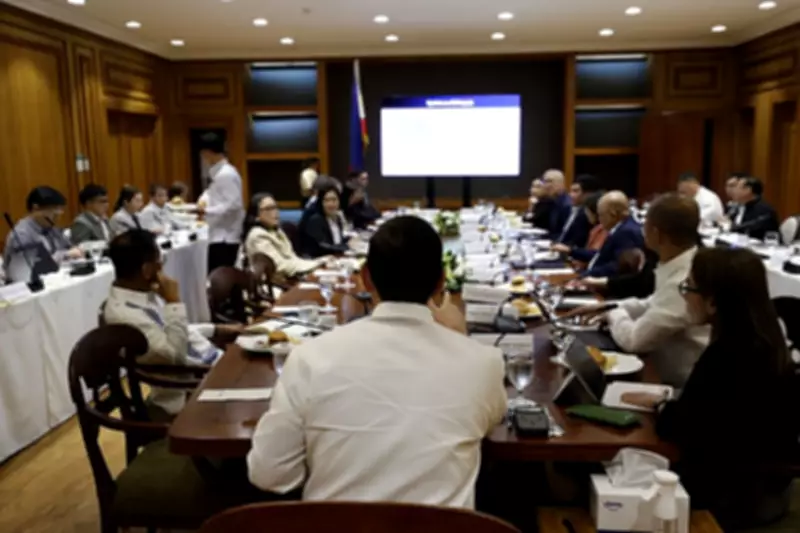
In a significant move to address the economic impact of soaring petroleum prices, Malacañang officials convened with key business leaders and petroleum executives on April 6, 2026. The meetings aimed to develop strategies to mitigate the effects of fuel price spikes on people, prices, and productivity across the nation.
Dialogue with Business and Petroleum Sectors
Acting Executive Secretary Ralph Recto led discussions with 22 leaders from nine major business groups, followed by a separate session with 25 executives representing 14 petroleum companies. These wide-ranging dialogues focused on critical issues such as fuel supply, inventory levels, and cost management.
Recto emphasized the government's proactive approach, stating, "Since Day One of this conflict, the President's instruction was to reach out to business, civic leaders, and local government executives to gather their views." He assured participants of an open line of communication with all government agencies, highlighting that many suggestions from these stakeholders have already been incorporated into the government's response plans.

Addressing Supply Chain Bottlenecks
Business leaders raised urgent concerns about how rising fuel costs are driving up prices for transported goods. They called for immediate action to clear logistics bottlenecks and speed up trade facilitation. One participant noted, "Diesel accounts for approximately 70 percent of movement costs, and one container van carries products made by hundreds of workers and needed by thousands of consumers. Delay is cost passed on to the consumers."
In response, Recto referred several proposals to relevant agencies for swift implementation. These include opening container yards outside Metro Manila to ease port congestion, which was sent to the Bureau of Customs for immediate action, and revisiting truck ban hours, forwarded to the Metro Manila Development Authority for urgent review.
Energy-Saving Measures and Policy Reforms
Participants also advocated for more efficient online document transactions as an energy-saving measure and appealed for lower fees charged by local governments. Recto committed to fast-tracking action on these requests, stating, "With or without this conflict, we should be removing friction costs across the supply chain, including unnecessary checkpoints, especially for perishable goods."
Recto called on the private sector to support these efforts by practicing energy conservation, implementing flexible work arrangements, and preventing unfair pricing practices. "This is a time for partnership of all, and not profiteering of the few," he asserted.
Government Assurance and Support
The government pledged targeted assistance for vulnerable individuals and struggling small companies, ensuring that support measures will be extended and sustained effectively. All proposals from the meetings have been issued as "Office of the President directives" to agencies such as the Department of the Interior and Local Government and the Philippine Export Zones Authority.
Key Cabinet members joined Recto in the discussions, including Energy Secretary Sharon Garin, who reported that the country's fuel inventory is sufficient for 50 days, and Department of Economy, Planning, and Development Secretary Arsenio Balisacan. Also present was Dave Gomez of the Presidential Communications Office.
Broad Business Representation
The meetings included representatives from prominent business groups such as the Semiconductor and Electronics Industries in the Philippines Foundation, the Philippine Chamber of Commerce and Industry, and the Makati Business Club. Their collective input underscores a unified approach to tackling the fuel price crisis and its broader economic implications.