A decade of comprehensive data paints a nuanced picture of the Philippine economy, revealing a story of regional income convergence alongside persistent geographic divides in output and welfare. This central insight emerged from a recent World Bank presentation, which analyzed trends from 2012 to 2023, underscoring both progress and ongoing challenges in the nation's economic landscape.
Income Convergence Dynamics Over the Decade
Between 2012 and 2015, low-income regions in the Philippines experienced average annual household income growth of slightly above five percent, significantly outpacing middle-income regions, which grew at around 4.2 percent. In contrast, the National Capital Region (NCR) expanded by less than one percent annually during this period.
The convergence dynamic intensified from 2015 to 2018, with low-income regions sustaining growth of approximately 5.2 percent per year, while middle-income regions accelerated to nearly five percent. NCR rebounded to about 2.7 percent growth but continued to trail poorer regions, leading to a measurable narrowing of interregional income gaps during the pre-pandemic expansion.

However, from 2018 to 2023, growth slowed sharply across all regions. Low-income regions maintained positive income growth of roughly two percent annually, showing relative resilience. Middle-income regions saw growth fall to near zero, while NCR experienced slightly negative average annual growth, reflecting its heavy exposure to service-sector disruptions during the pandemic. This data suggests that while convergence persisted, its momentum weakened considerably in the most recent period.
Poverty Reduction and Uneven Recovery Patterns
Income gains translated into faster poverty reduction, particularly in poorer regions. From 2012 to 2015, low-income regions reduced poverty by about one percentage point annually, compared with roughly 0.4 percentage points in middle-income regions and around 0.2 percentage points in NCR.
The period from 2015 to 2018 marked the most dramatic improvement, with both low- and middle-income regions reducing poverty by approximately 2.6 to 2.7 percentage points per year. NCR's poverty rate also declined more quickly, by around 0.8 percentage points annually.
But the 2018–2023 period, encompassing years before and after the pandemic, revealed emerging pressures. Low-income regions continued to reduce poverty by roughly half a percentage point per year, while middle-income regions experienced a slight increase of about 0.4 percentage points annually. NCR's poverty rate remained broadly stable. These trends indicate that poorer regions were catching up in welfare improvements, though recent shocks have slowed progress and exposed vulnerabilities.
Persistent Productivity and Output Gaps
Despite convergence in growth rates and poverty reduction, structural disparities remain pronounced. Per capita regional GDP data for 2022, measured in PPP-adjusted international dollars, show NCR at approximately 26,800 dollars per person.
Several mid-tier regions fall within a range of 6,000 to 10,000 dollars per capita. At the lower end, the Bangsamoro Autonomous Region in Muslim Mindanao (Barmm) stands at roughly 3,600 dollars per capita. NCR's per capita output is therefore more than seven times higher than Barmm's, underscoring entrenched differences in productivity, industrial depth, and economic complexity.
These output disparities demonstrate that faster growth in poorer regions, while encouraging, has yet to erase long-standing structural divides.
Geography of Poverty and Urbanization as a Catalyst
Provincial poverty mapping reinforces the uneven landscape of development. Highly urbanized provinces and major economic hubs report poverty rates largely below 10 percent. In contrast, several provinces in Mindanao and parts of Eastern Visayas record poverty incidences exceeding 30 percent, with some areas surpassing 40 percent.
The persistence of geographically concentrated poverty highlights disparities in access to infrastructure, markets, services, and employment opportunities. The report argues that urbanization, if effectively managed, can help sustain convergence and accelerate structural transformation. Connectivity is critical to building dynamic urban growth corridors that generate jobs and link lagging regions to national and global markets.

However, the capacity of local governments to finance infrastructure, manage urban expansion, and deliver essential services will determine whether urbanization becomes an engine of inclusive growth or a source of new inequalities.
Mindanao's Strategic Role in National Development
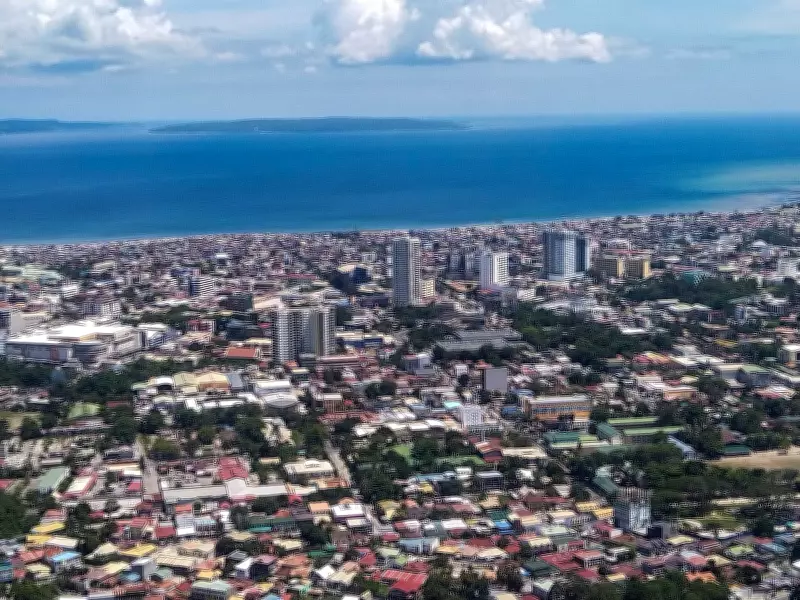
The dialogue in Davao City placed Mindanao at the center of this transformation agenda. Infrastructure upgrades, improved logistics networks, and expanding agro-industrial value chains are strengthening the region's role in national development.
Yet Mindanao also reflects the country's enduring disparities, hosting some of the lowest per capita output levels and highest poverty rates despite strong growth potential. The data presented by Narae Choi, Senior Urban Development Specialist at the World Bank Philippines, underscored a critical inflection point.
The Philippines has achieved measurable convergence in incomes and poverty over the past decade. The challenge ahead is to convert that convergence into lasting structural change—narrowing not only growth gaps but also the deep-rooted geographic inequalities that continue to shape the nation's economic trajectory.