Rice Price Decline Pushes Inflation Negative for Poorest Filipino Households, Revealing Economic Inequality
From October 2023 to October 2025, declining food costs, spearheaded by rice, drove inflation into negative territory for the poorest 30 percent of Filipino households. This significant shift underscores how agricultural prices can profoundly reshape inequality and consumption patterns in developing economies, according to economists.
World Bank Economist Presents Findings at Davao City Forum
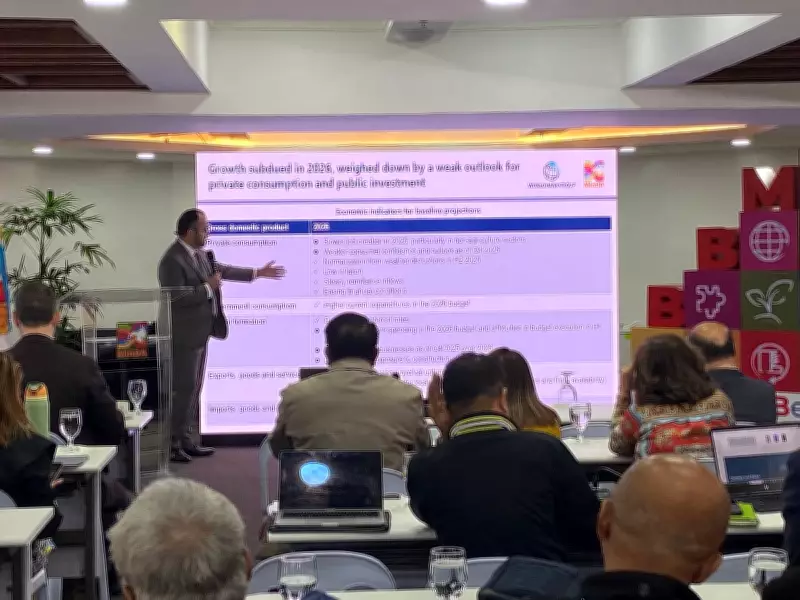
Jaffar Al-Rikabi, the World Bank's senior country economist for the Philippines, presented these findings during the Philippines Economic Update development dialogue on February 26 in Davao City. The forum gathered regional officials, business leaders, and policymakers to assess economic trends and investment prospects, with a particular focus on Mindanao.
"Inflation for the poorest 30 percent has been negative, driven by declining food prices," Al-Rikabi stated, emphasizing the critical role of staple goods in household budgets.

Rice Exerts Outsized Influence on Low-Income Households
Rice drives a sharp divergence in inflation experiences due to its large share in the daily spending of low-income families. Data from the report revealed that falling rice and food prices effectively offset increases in utilities, transport, and other non-food items for poorer households.
While national inflation averaged 1.7 percent from January to October 2025, with core inflation at 2.4 percent, these headline figures masked significant income gaps. Higher-income households, with more diversified spending patterns, continued to face positive inflation. In contrast, poorer households, whose budgets center heavily on food, experienced real price declines.
Structural Reality in Developing Economies
Economists noted that this divergence highlights a structural reality: agricultural supply conditions can shape income distribution as powerfully as labor markets or capital flows. This insight shifts the focus from traditional economic drivers to farm productivity and food supply management.
Rate-Cut Room Emerges Amid Farm Pressures
The easing of food prices has pulled overall inflation below target, providing the Bangko Sentral ng Pilipinas with room to trim interest rates. This potential move could stimulate borrowing and investment, boosting retail, construction, and service sectors as households regain purchasing power.
However, analysts warned of trade-offs. If commodity prices fall faster than production costs, farmers' margins shrink, placing pressure on rural incomes even as urban consumers benefit. This delicate balance requires careful policy consideration to avoid exacerbating rural-urban disparities.
Broader Economic Growth Slows but Outlook Remains Steady
The broader Philippine economy remains stable but has slowed. Gross domestic product expanded 5.0 percent in the first three quarters of 2025, down from 5.9 percent a year earlier, as investment softened and services exports grew more slowly.
The World Bank projects growth to average about 5.1 percent in 2025, rising gradually to 5.3 percent in 2026 and 5.4 percent in 2027, assuming reforms continue and global conditions remain manageable. Economists cautioned that risks tilt to the downside, including weaker global demand, climate-related supply shocks, and policy uncertainty.
Mindanao's Strategic Role in Price Stability
Officials at the forum underscored Mindanao's strategic role in stabilizing food prices nationwide. As a major producer of staple crops, the island's output directly affects supply and retail prices across the Philippines.
Leo Tereso A. Magno, chairperson of the Mindanao Development Authority, emphasized that investments in infrastructure and logistics can cut distribution costs, expand market access, and accelerate poverty reduction. Stronger farm productivity and supply chains reinforce the link between regional development and macroeconomic stability, he noted.

A Segmented Inflation Landscape Emerges
Economists identified the most significant takeaway as the growing segmentation of inflation across income groups. For policymakers, this means food supply management and farm productivity are no longer peripheral rural issues but central pillars of macroeconomic management. For investors, declining staple prices can buoy consumer demand even if overall growth moderates.
Still, analysts warned that negative inflation for the poorest households may prove temporary. Weather disturbances, supply disruptions, or global commodity swings could quickly reverse these gains, highlighting the fragility of the current situation.
Sustaining Inclusive Growth Requires Comprehensive Reforms
The World Bank stressed that sustaining inclusive growth will require governance reforms, credible fiscal consolidation, and structural improvements that protect purchasing power while strengthening production and investment. Rice prices, long treated mainly as an agricultural indicator, now stand out as a key barometer of inflation dynamics, poverty trends, and policy flexibility in the Philippine economy.
This evolving economic landscape calls for integrated strategies that address both consumer welfare and producer sustainability, ensuring that gains in inequality reduction are not undone by external shocks or internal imbalances.