Clark Freeport and OzooDevelopment Corporation Forge P4-Billion Mixed-Use Development on Ancestral Land
Clark Development Corporation (CDC) and property developer OzooDevelopment Corporation have officially inked a lease agreement for a sprawling 200-hectare integrated mixed-use development. This landmark deal operates under a Joint Management Agreement (JMA) that specifically covers Certificate of Ancestral Domain Title (CADT) 025-A, marking a significant step forward in balancing economic progress with indigenous rights.
Key Details of the Agreement
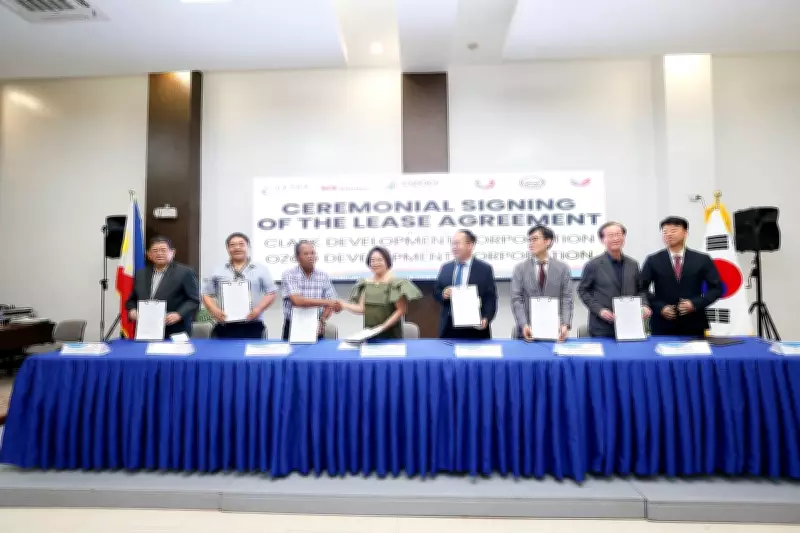
The agreement was formally signed by CDC President Agnes Devanadera and OzooDevelopment Corporation Chairman Nam Kwan Sik. It involves a substantial P4-billion investment anchored by a premier golf resort, complemented by hotel and villa components. This development is strategically designed to bolster tourism, leisure, and long-term investment within the Clark Freeport, with projections indicating it will generate 120 direct employment opportunities and 450 indirect jobs upon completion.
Technological and Environmental Integration
Chairman Nam emphasized that the project will incorporate smart city technologies and environmentally responsible design. This includes sustainable infrastructure, efficient resource systems, and regulated land-use practices, ensuring the development aligns with modern ecological standards while enhancing operational efficiency.

Governance and Indigenous Consultation
Devanadera highlighted that the lease agreement followed extensive consultations with the National Commission on Indigenous Peoples (NCIP) and local leaders, adhering strictly to the governance framework for ancestral domains. She stated, "This is a triumph of what we are fighting for -- progress in the CADT area. Beyond investors and CDC, the true beneficiaries are the owners of CADT. Kaya ngayon, mayroon tayong tagumpay. Ito ang hangad natin para sa lahat." She further urged stakeholders to "take care of this program and ensure we take care of progress."
Historical Context and Implementation
The Joint Management Agreement governing CADT 025-A was initially signed on December 6, 2007, but remained unimplemented for nearly 17 years. It was finally operationalized on March 19, 2024, under Devanadera's leadership, following the signing of the Implementing Rules and Regulations (IRR) of the JMA and the Land Use Management Plan by CDC, the NCIP, and the Ayta Indigenous community. These documents are integral parts of the Ancestral Domain Sustainable Development and Protection Plan (ADSDPP), which serves as the overarching framework for the development and protection of ancestral lands.
Ceremony Attendees and Community Impact
The signing ceremony was witnessed by CDC Chairperson Edgardo Pamintuan and members of the CDC Board of Directors, including Jose Philip Panlilio, Manuel Feliciano, Pablo de Borja, Sharon Faye Malapitan-Bautista, Helen Nicolette Henson, and other senior management officials. Also present were representatives of the Indigenous Political Structure, led by Oscar Rivera of the Pinanlupuyan Mamuun, and NCIP Regional Office III Officer-in-Charge Regional Director Roman Antonio.
Chairman Nam praised the coordination among CDC, NCIP, and the Pinanlupuyan Mamuun, stating, "From the bottom of my heart, I want to say something very important, it's the harmony. Because only through harmony can this project be a success. Through the leadership of CDC, of course Ayta and NCIP, we finally have this ceremony today. Our long wait has a successful conclusion."
For his part, Rivera expressed optimism about the project's benefits for the Ayta community, saying, "Ako po, masaya ako dahil ito ay project na naman, ito po ay kapaki-pakinabang sa buong Ayta."

Framework for Future Developments
Under the JMA framework, CDC and the Indigenous Political Structure will jointly manage and authorize developments within ancestral domains. This ensures that all investments proceed with respect for Indigenous governance, legal safeguards, and regulatory processes, fostering a collaborative approach to economic growth and cultural preservation.