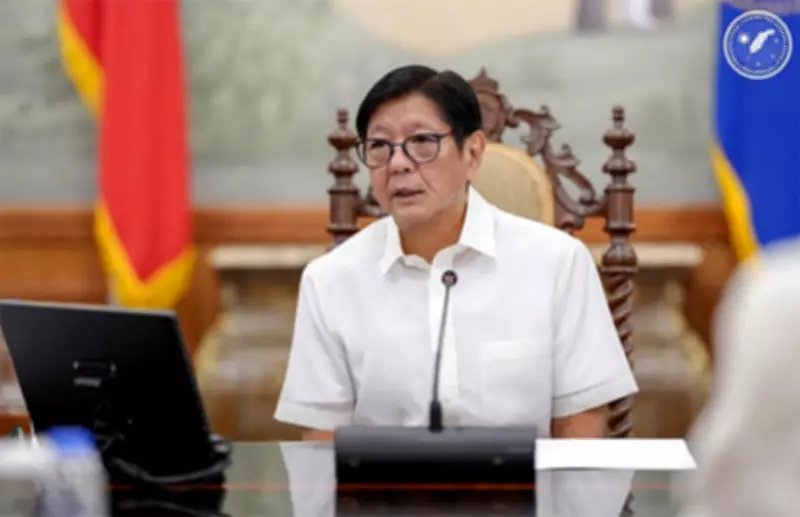
President Marcos Removes Excise Tax on LPG and Kerosene Amid Energy Crisis
President Ferdinand "Bongbong" Marcos Jr. has taken decisive action to alleviate the financial burden on Filipino families by ordering the removal of excise tax on Liquefied Petroleum Gas (LPG) and kerosene. This move aims to cushion the impact of a looming energy crisis triggered by ongoing conflicts in the Middle East, which have driven up global oil prices.
Significant Price Reductions Announced
In a recent press conference, President Marcos detailed the expected savings for consumers. The removal of excise tax translates to a reduction of P3.36 per kilogram of LPG, which amounts to approximately P37 off the price of a standard tank. For kerosene, the reduction is P5.60 per liter, leading to lower expenses for cooking and other daily household needs.
"I have already removed the excise tax on LPG and kerosene," Marcos stated. "This is equivalent to a P3.36 reduction per kilogram of LPG, or about P37 off the price of a single tank. For kerosene, it's P5.60 per liter, meaning lower expenses for cooking and the family's daily needs."

Legal Framework and Authority
This action is enabled by Republic Act 12316, which President Marcos signed into law. The legislation grants the executive branch the authority to temporarily suspend or reduce excise taxes on petroleum products in response to surging global oil prices. The law specifies that the President can exercise this power upon the recommendation of the Development Budget Coordination Committee and in coordination with the Energy Secretary, once the average price of Dubai crude oil reaches or exceeds $80 per barrel for a continuous one-month period.
As of March 9, the price of Dubai crude had already surpassed $100 per barrel, raising concerns about higher fuel costs in the Philippines and other oil-importing nations. The law sets clear limits on this authority, allowing any suspension or reduction to last for a maximum of three months at a time, with a total cap of one year. Taxes will automatically revert to their original rates either one week after the average monthly price of Dubai crude falls below the $80 threshold, as certified by the Department of Energy, or after the three-month period expires, whichever occurs first.
Balancing Fiscal Stability and Consumer Protection
The measure is designed to provide the government with greater flexibility in responding to volatile oil markets, while attempting to balance fiscal stability with consumer protection. President Marcos emphasized that this step is part of a broader strategy to support households during these challenging times.
Assurances on Food Supply and Prices
In addition to addressing energy costs, President Marcos assured the public that there is no need for worry regarding basic food commodities. He confirmed that the country has sufficient supplies of rice, corn, vegetables, sugar, fish, poultry products, and eggs, with prices expected to remain stable until the end of April.
"I have already instructed the Department of Agriculture and the Tariff Commission to lower tariffs on imported food in order to help bring down prices for consumers," Marcos explained. "The directive is clear: it cannot be done arbitrarily. Every step includes clear protection for our local production. We will protect consumers, farmers, and industry—that's the balance we are seeking, because, as you know, the economy is a complicated system."
Ongoing Efforts and Committee Meetings
To further address these issues, President Marcos announced that another meeting of the Unified Package for Livelihoods, Industry, Food, and Transport (Uplift) Committee is scheduled for Tuesday, April 14, 2026. This committee, established under Executive Order 110 which declared a state of national energy emergency, will discuss strategies to keep prices down and normalize the supply of oil and food products. The executive order was issued in response to the "imminent danger posed upon the availability and stability of the country's energy supply" due to the Middle East conflict.

These comprehensive measures underscore the government's proactive approach to mitigating the economic impacts of global instability, ensuring that Filipino families receive necessary support during this period of uncertainty.