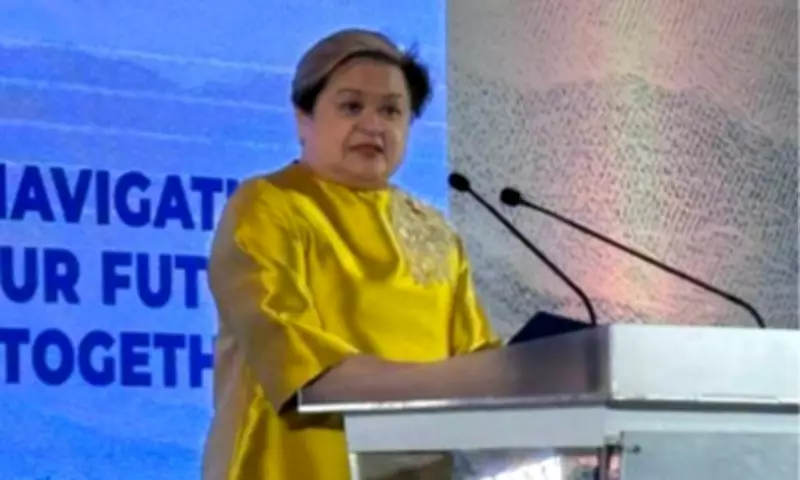
Foreign Affairs Secretary Ma. Theresa Lazaro announced on Friday that the Philippines is actively considering the importation of oil from Russia. This development follows the temporary lifting of sanctions on Russian crude oil currently in transit at sea, a move authorized by the United States to address global energy market disruptions.
Global Energy Disruptions Prompt Strategic Considerations
During a virtual press conference convened after a special Association of Southeast Asian Nations (ASEAN) foreign ministers meeting, Secretary Lazaro addressed inquiries regarding Manila's potential shift in oil sourcing. She confirmed that importing from Russia is under serious evaluation as persistent conflicts in the Middle East continue to destabilize global energy supplies. "That is something which is being considered, but I will leave this to the office, or rather to the Cabinet member in charge of this, and that is the Department of Energy," Lazaro stated, emphasizing the collaborative nature of this strategic decision.
Dependence on Middle Eastern Oil Supplies
The consideration comes amid heightened concerns over the Philippines' heavy reliance on Middle Eastern crude oil. Energy Secretary Sharon Garin previously highlighted that approximately 98 percent of the country's domestic crude oil supply originates from the Middle East. A significant portion of these shipments must navigate the Strait of Hormuz, a critical maritime chokepoint currently experiencing disruptions due to regional tensions involving Iran.

U.S. Sanctions Waiver and Its Implications
In a pivotal move, the United States temporarily authorized the delivery and sale of sanctioned Russian crude oil and petroleum products loaded on vessels as of March 12. This waiver, effective for one month until April 11, aims to mitigate potential spikes in oil prices. The decision is strategically designed to cushion the impact as major oil-producing nations in the Gulf region become increasingly entangled in the crossfires of the ongoing U.S.-Israel conflict with Iran.
Broader Regional and Economic Context
The Philippines' potential pivot to Russian oil imports underscores the broader challenges faced by nations dependent on volatile energy markets. The ASEAN meeting, which prompted Secretary Lazaro's remarks, reflects regional efforts to coordinate responses to such economic and security threats. As global energy disruptions persist, the Philippine government's deliberations highlight a proactive approach to safeguarding national energy security while navigating complex international sanctions and geopolitical dynamics.
This development marks a significant moment in the Philippines' energy policy, as it explores alternative sources to reduce vulnerability to Middle Eastern supply chain interruptions. The outcome of these considerations could have lasting implications for the country's economic stability and its diplomatic engagements within ASEAN and beyond.