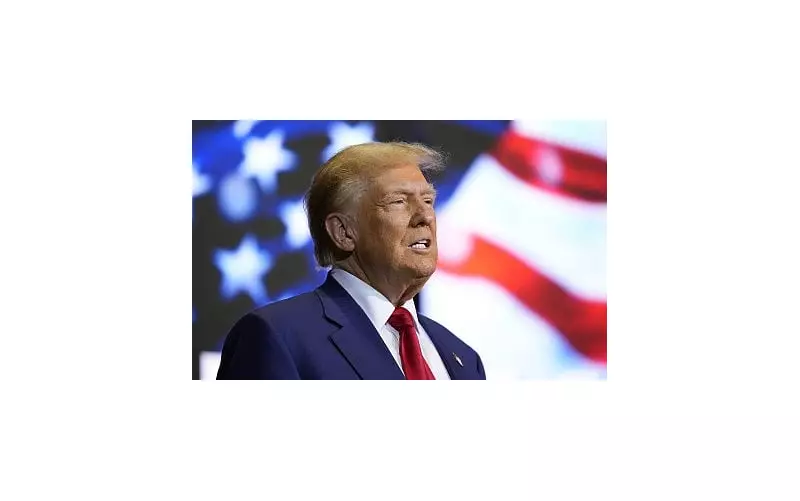
In a significant move to reshape global energy dynamics, US President Donald Trump has called on America's largest oil corporations to back a massive reconstruction plan for Venezuela's crippled petroleum sector. The push came during a high-stakes meeting at the White House on Friday, January 9, 2026.
A $100 Billion Vision Meets Corporate Caution
President Trump presented his ambitious strategy to secure a minimum of $100 billion in investment to revive Venezuela's oil infrastructure. He directly urged executives from major US firms to participate, promising them quick and favorable returns on their capital. However, the response from the industry leaders was notably guarded, with most declining to make immediate commitments.
The reluctance stems from deep-seated concerns over the South American nation's legal and political instability. Exxon Mobil CEO Darren Woods was unequivocal, stating that under current conditions, Venezuela presents an "unacceptable risk" and is "uninvestible." He emphasized that substantial changes to the country's legal and commercial frameworks are necessary before his company would consider diving in.

ConocoPhillips CEO Ryan Lance pointed to a painful history, reminding the room that his firm suffered a staggering $12 billion loss from the previous nationalization of its Venezuelan assets. This historical context cast a long shadow over discussions of new ventures.
Chevron's Cautious Footprint and US Control of Exports
The meeting revealed the varied positions within the industry. While most CEOs expressed hesitation, Chevron detailed its existing, limited operations. The company is currently the only US oil firm active in Venezuela, operating through a joint venture with the state-owned oil company PDVSA. Its officials focused on current activities rather than plans for dramatic expansion.
By convening this summit, President Trump aimed to forge an agreement on which American companies would be allowed to enter Venezuela and lead the rebuilding of its energy infrastructure. This effort is part of a broader US strategy to control the country's oil exports. US Energy Secretary Chris Wright stated that this control is a tool to drive necessary changes within Venezuela.
Seizures and a "GREAT Energy Deal"
The geopolitical backdrop to this meeting is intense. Earlier on Friday, President Trump announced on Truth Social that US forces, in coordination with Venezuela's Interim Authorities, had seized an oil tanker that left the country without approval. He declared the vessel was being forced back, and its cargo would be sold through a newly created "GREAT Energy Deal."
This incident marks the fifth oil tanker seized by US forces allegedly linked to Venezuela. It follows the dramatic raid on January 3, 2026, where US military forces apprehended Venezuelan President Nicolas Maduro and his wife.
The Trump administration has swiftly framed these actions as an economic opportunity. Officials now state the US will control Venezuelan oil sales indefinitely, with Venezuelan authorities expected to turn over between 30 million and 50 million barrels of previously sanctioned oil to the United States.
The stakes are enormous. Venezuela sits atop the world's largest proven crude oil reserves, estimated by the US Energy Information Administration at approximately 303 billion barrels, or about 17% of the global total. The outcome of this US push will significantly impact global oil markets and the political future of Venezuela.