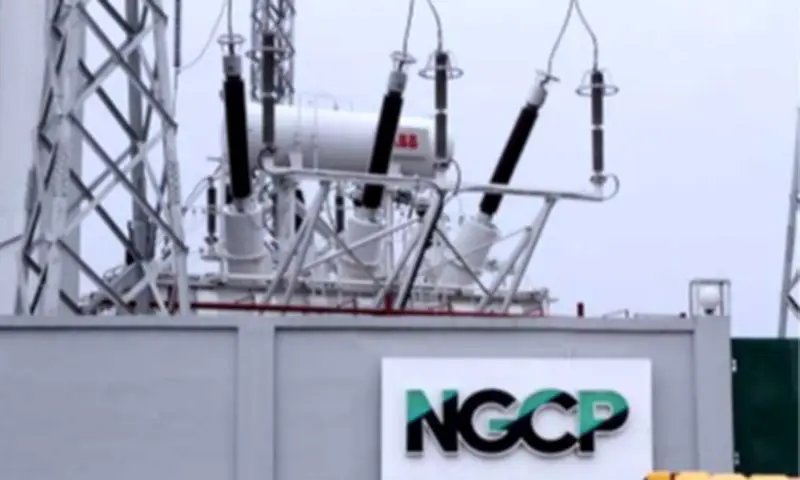
The Visayas power grid entered Wednesday evening, June 3, 2026, operating with little room for error. The region is relying heavily on electricity imports from Luzon and Mindanao to avoid a deeper power crisis as nearly 1,000 megawatts of generation remain unavailable.
Under Yellow Alert
The National Grid Corporation of the Philippines (NGCP) placed the Visayas Grid under a Yellow Alert from 4 p.m. to 9 p.m. on Wednesday, June 3, after reserves dropped below contingency requirements.
At the time of the advisory, available capacity stood at 2,552 megawatts (MW), against a projected peak demand of 2,392 MW. This left the region with only a 160 MW operating margin.

While a Yellow Alert does not automatically trigger rotational brownouts, energy officials said it signals that the system is operating with limited backup should another major plant or transmission line suddenly fail.
Why power supplies are so tight
The tight supply reflects a deeper vulnerability in the region’s power system. Several large power plants remain offline while electricity demand continues to stay elevated.
As of June 2026, ten generating units remained under forced outage while others were operating below normal capacity, removing a combined 985.5 MW from the grid.
Among the major unavailable facilities were Therma Visayas Inc. (TVI) Units 1 and 2, KEPCO SPC Power Corp. Unit 2, and Panay Energy Development Corp. (PEDC) Unit 3.
Neighboring islands save the day
Despite the shortfall, the Department of Energy (DOE) said the Visayas has so far avoided service interruptions because of the country’s interconnected transmission network.
DOE 7 Director Renante Sevilla said surplus electricity from Mindanao has become the region’s primary stabilizer, with Luzon providing additional support whenever reserves permit.
“So far, ang Mindanao gyud ang adunay dako nga surplus ug mao nay makatabang sa Visayas karon,” Sevilla said. (So far, Mindanao has the largest power surplus, and that is what is helping support the Visayas for now.)
The dependence on imported power became more evident weeks earlier when a fault on the Tayabas–Ilijan 500-kilovolt transmission line temporarily disrupted transfers from Luzon and added pressure on supply. The line has since been restored.
What lies ahead
Authorities stressed that conditions remain manageable and no Red Alert is expected in the immediate term. A Red Alert is declared when available supply can no longer satisfy consumer demand, forcing operators to implement manual load dropping or rotational outages to prevent a wider system collapse.
Relief may come in the next few months. The approaching rainy season is expected to improve hydroelectric generation, while several large generating units are scheduled to return to service.
PEDC Unit 3 is targeted for restoration by July or August, followed by the return of TVI’s larger coal-fired units later in August.
Still, NGCP warned that sustained demand growth before those plants come back online could quickly tighten reserves again. Officials are urging consumers to reduce unnecessary consumption and support conservation measures such as the “Oras Natin ’To Efficiency” (ONE) campaign.
For now, the message from energy managers is clear: the lights remain on—but with less margin than the public may realize.