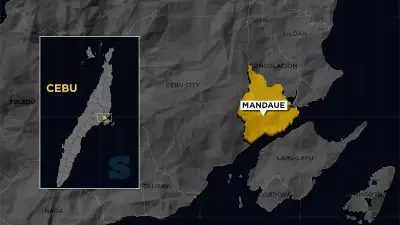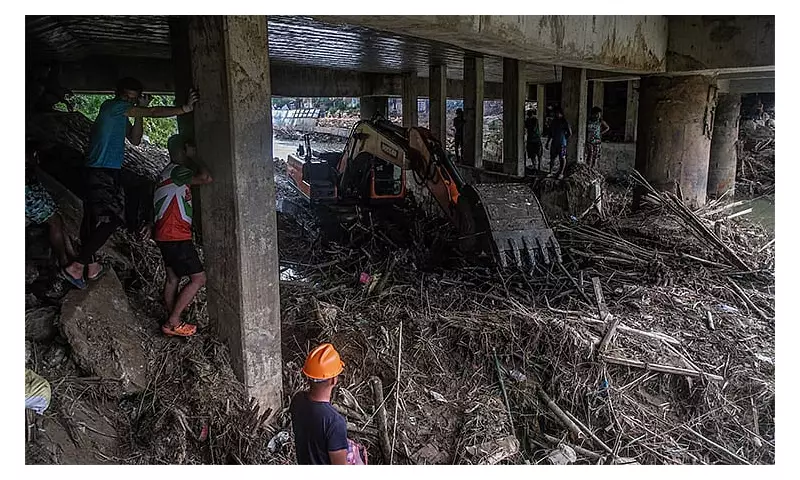
Authorities in Central Visayas are grappling with the twin challenges of responding to a recent disaster while planning for future ones. On Thursday, December 4, 2025, a search operation for potential human remains beneath the Cotcot Bridge in Compostela was halted due to heavy rain. Simultaneously, regional development officials convened to address the severe shortcomings in Metro Cebu's flood defense system, which was overwhelmed by Typhoon Tino (Kalmaegi).
Search Operation and a Stalled Master Plan
Personnel from the Philippine Navy, the Department of Public Works and Highways (DPWH), and the Compostela Municipal Disaster Risk Reduction and Management Office spent Thursday searching the area under the Cotcot Bridge. The operation was initiated after a K9 unit alerted to the potential presence of human remains. The search was called off at 4 p.m. due to inclement weather.
Meanwhile, at the Capitol building, the Regional Project Monitoring Committee (RPMC) of the Regional Development Council (RDC) 7 held its fourth-quarter meeting. The committee delivered a stark assessment of the region's flood preparedness. It directed DPWH Central Visayas (DPWH 7) to advance feasibility studies and detailed engineering designs for proposed dams in Metro Cebu. Furthermore, the RPMC mandated a crucial review and update of the 2017 Metro Cebu Integrated Flood Control and Drainage System Master Plan.

Alarming Gaps in Implementation
The push for action stems from a review that exposed significant delays in executing the 2017 master plan. Anthony Noel of the RDC 7’s Infrastructure Development Committee reported that DPWH 7 has finished only a small portion of the planned infrastructure. Official data reveals a troubling picture:
- Revetments (river walls): 64% completed.
- Drainage systems: Only 27.24% constructed.
- Proposed dams and retention basins: 0% implemented.
The absence of dams and basins is particularly critical. An assessment presented by Dr. Danilo Jaque of HydroNet Consultants showed that if the proposed Mananga II, Cotcot, and Butuanon dams had been built, they could have retained up to 21 million cubic meters of water per day during Typhoon Tino. This capacity could have drastically reduced the flooding caused by the storm, which dumped over 183 millimeters of rain in less than 10 hours.
Challenges and a New Direction
DPWH 7 officials cited major obstacles to progress. Nonato Paylado, Chief of the Planning and Design Division, explained that delays are primarily due to issues involving informal settler families and urban expansion not accounted for in the 2017 plan. He emphasized that projects in areas like Mananga require close cooperation with local governments to relocate residents without formal land titles before construction can begin.
In response to these hurdles and evolving environmental strategies, the RPMC recommended a more balanced approach. The committee urged DPWH 7 to integrate nature-based solutions into standard infrastructure designs. Environment Committee chairman Aurelio Salgados endorsed this, highlighting the protective role of mangroves against storm surges. DPWH expressed openness to this idea, noting existing projects that use bamboo-based materials for flood mitigation.
The Path Forward
The DPWH 7 now plans to collaborate with its central office to prepare terms of reference and detailed designs for four dams, including Lusaran. The target is to submit these documents in the first and second quarters of 2026. The Cebu Provincial Government has been asked to fund the feasibility studies, with technical procurement expected in Q1 2026.
The overarching master plan will also be comprehensively updated to reflect drastic changes in land use and rainfall patterns since 2017. This update aims to ensure that future flood control projects are grounded in the current realities of Metro Cebu, aiming to prevent a repeat of the devastation seen after Typhoon Tino.