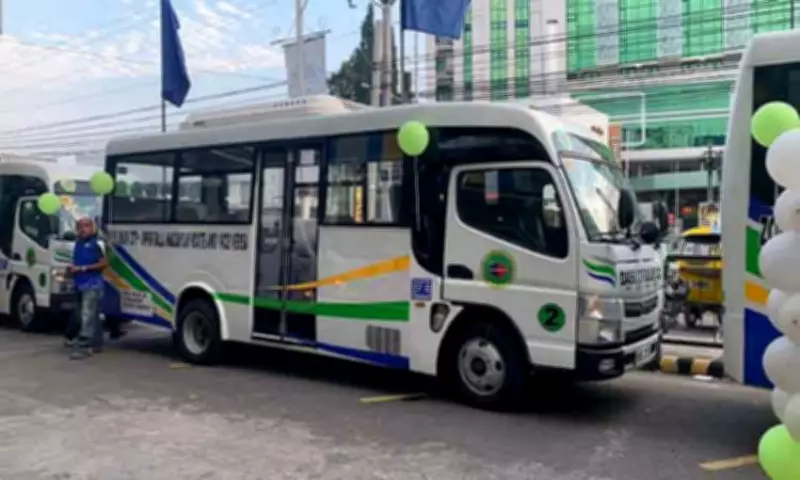
The Land Transportation Franchising and Regulatory Board-Davao Region (LTFRB-Davao) has announced that the public transport modernization program in the region is advancing steadily, even as rising fuel prices have introduced significant delays. This initiative, which focuses on replacing traditional public utility vehicles with modernized units, has been impacted by the surge in fuel and oil costs, slowing the expansion of modernized fleets despite initial strong interest from transport groups and cooperatives.
Progress Amid Economic Challenges
Nonito Llanos III, LTFRB-Davao regional director, highlighted that the program was gaining momentum before the fuel price hikes disrupted progress. In a media interview on April 13, 2026, at SM City Davao, he noted, "Actually, before this happened, it was going well because there were cooperatives that wanted to add more modernized units." Despite these setbacks, data shows the region has made notable strides in consolidation.
Consolidation Rates and Financial Reliability
Reports indicate that the Public Utility Vehicle (PUV) consolidation rate has reached 88 percent as of January 2026, up from 86 percent in previous years. This increase reflects stronger compliance among operators outside Davao City. Llanos emphasized the financial stability of transport cooperatives in the region, stating, "In truth, all cooperatives in the Davao Region that have modernized have no past dues with banks, so we have a good reputation and no problems."

Funding Challenges and Alternative Solutions
However, the program's reliance on national funding has created additional hurdles. Government financial institutions, such as the Land Bank of the Philippines and the Development Bank of the Philippines, provide loans under a nationwide system, meaning delays in other regions can affect local loan releases. Consequently, some operators have turned to private banks, even though repayment terms are shorter at five years compared to seven years in government banks.
Current Implementation and Future Outlook
In terms of on-ground implementation, only around 90 modernized units are currently operating in the region, excluding Davao City, which follows a separate transport modernization system. Nevertheless, these developments have contributed to improved commuter access and reduced congestion in some areas, benefiting over one million passengers across the region.
Llanos expressed confidence that modernization targets remain achievable despite the ongoing crisis. He added that discussions are ongoing with financial institutions to allow deferred payments, noting, "Our leaders have already talked with Landbank and DBP to allow deferred payments until everything stabilizes." He stressed that if these measures are implemented, the modernization program will regain momentum, emphasizing that modernization should not be halted but strengthened to ensure a more efficient, reliable, and sustainable public transportation system in the Davao Region.