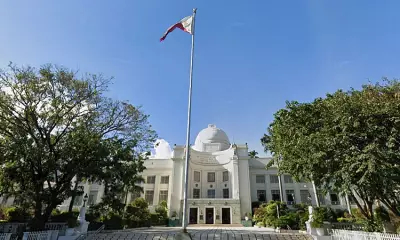
President Ferdinand Marcos Jr. has strongly reaffirmed his administration's commitment to building world-class connectivity across the Philippines, identifying modern airports and upgraded transport infrastructure as central pillars for regional development and economic expansion.
Aviation as a Driver of National Competitiveness
Speaking at the Philippine Airlines' (PAL) 85th anniversary celebration and the unveiling of the new Airbus A350-1000 at Villamor Air Base on Saturday, January 17, 2026, the President outlined his vision. He emphasized that the government remains sharply focused on a comprehensive upgrade of the nation's infrastructure backbone.
"This Administration remains committed to upgrading infrastructure, modernizing airports, enhancing connectivity, and boosting the economy," President Marcos stated. He underscored the critical role of a robust aviation sector in sharpening the country's competitive edge on the global stage.

Marcos also called for continued collaboration with private sector partners, noting that such teamwork is indispensable for sustaining aviation-led initiatives and creating more opportunities for Filipinos.
Key Airport Projects Across the Archipelago
The President cited several ongoing airport projects designed to improve passenger experience and stimulate local economies. These initiatives are spread across the country's key tourist and economic hubs.
In the Visayas and Mindanao regions, the government is actively improving air links. Through public-private partnerships (PPPs), upgrades and expansion are underway at Laguindingan Airport in Misamis Oriental and the Bohol Panglao International Airport. These projects aim to support tourism and spur broader regional development.
Other significant developments include:
- The construction of a modular Passenger Terminal Building (PTB) at Siargao Airport, the key gateway to the famous surfing destination.
- A new international PTB at Davao International Airport, which will boost the region's capacity for international travel and trade.
- A new terminal at Caticlan Airport, the primary gateway to Boracay, to better accommodate the steady flow of domestic and foreign travelers.
President Marcos stressed that these improved airport facilities are essential for sustaining the tourism sector, a major economic driver for the Philippines.
Modernizing the Nation's Main Gateway
A centerpiece of the infrastructure agenda is the modernization of the Ninoy Aquino International Airport (NAIA). The President highlighted that this transformative project is being pursued under a public-private partnership framework.
"Equally significant is our collaboration under a public-private framework to modernize, operate, and maintain the Manila Airport," Marcos said. The effort encompasses the comprehensive modernization, operation, and maintenance of the country's primary gateway. It includes the rollout of new facilities and immigration eGates designed to make travel faster, safer, and more efficient for all.
President Marcos framed these wide-ranging infrastructure initiatives as more than just physical improvements. He described them as strategic, long-term investments in the nation's future.
"These are our investments in mobility, in opportunity, and in national progress," he added. Linking this infrastructure push to his broader vision, he urged all stakeholders to unite in building a more interconnected Philippines.
"Together, let us shape a Bagong Pilipinas where our people are free to explore, where our regions are better connected, and where opportunity is within reach," President Marcos concluded.