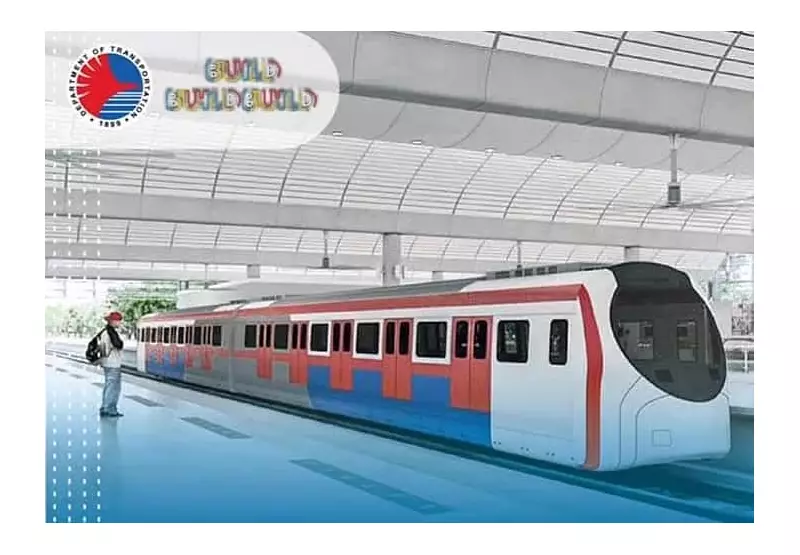
After decades of anticipation, the Mindanao Railway Project is gaining significant momentum with the relocation of approximately 178 families to make way for the island's first railway system. The Department of Transportation has allocated roughly P148 million to transfer affected families to the newly developed Tagum Train Village, marking a crucial step forward for this long-delayed infrastructure initiative.
Accelerating Mindanao's Transportation Future
Acting DOTr Secretary Giovanni Lopez emphasized the urgency of moving forward with the project, stating that Mindanao residents have waited far too long for this transformative railway system. "Our people in Mindanao have waited far too long for this railway. That's why we are moving quickly. The sooner we start, the sooner thousands of commuters can benefit," Lopez explained during project updates.
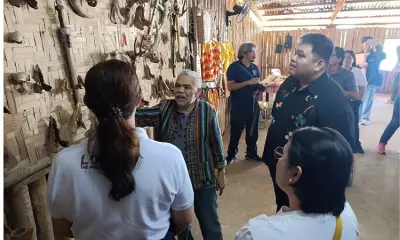
To ensure smooth implementation, DOTr Assistant Secretary IC Calaguas recently inspected the Tagum Train Village and coordinated with Tagum City Mayor Rey Uy to streamline the relocation process for affected families. The relocation site is managed through a collaborative effort between the local government, DOTr, and the Department of Human Settlements and Urban Development.

An additional 82 families are scheduled for relocation once they complete submission of required documentation, including proof of residency, identification cards, family records, and affidavits concerning income and land ownership.
Project Scope and Historical Context
The current phase focuses on right-of-way acquisition for the Tagum-Davao-Digos segment, a 100-kilometer stretch featuring eight stations that will connect three key cities in Davao Region. Once operational, this segment is expected to dramatically reduce travel times while opening new economic opportunities across the region.
The Mindanao Railway Project represents the latest attempt to realize a vision first conceived in 1936 under President Manuel L. Quezon's administration. Despite revival attempts in the 1950s, 1990s, and 2000s, the project repeatedly stalled at the proposal and feasibility study stages.
The current iteration entered development in 2018, with the ambitious goal of creating a 1,544-kilometer network that would eventually expand to 2,278 kilometers of track. The comprehensive plan includes:
- A major circumferential line linking urban centers across Mindanao
- An east-west mainline extending to Zamboanga Peninsula
- Multiple branch lines to serve various communities
Financing Challenges and New Directions
In an exclusive July 2025 interview with SunStar Davao, Mindanao Development Authority Assistant Secretary Romeo Montenegro acknowledged the project's history of setbacks while reaffirming government commitment. The project faces a significant turning point following the Philippines' withdrawal from Chinese ODA financing in September 2023.
This development has prompted the DOTr to reconsider the project's design and alignment. While the original plan approved by DOTr envisioned a single-track, diesel-powered system, MinDA had previously recommended a dual-track, electrified railway. The current alignment is also under review due to opposition from residents and businesses along the proposed route.
Montenegro noted that the funding shift presents an opportunity to explore private sector participation through Public-Private Partnerships. "The study needs to be completed first. Then DOTr can decide whether to proceed with a government loan, like the previous plan, or open it to the private sector through an unsolicited proposal," he explained.
Despite these challenges, the government renewed efforts in 2024, with the Asian Development Bank conducting new feasibility studies. Simultaneously, the Northern Mindanao Railway—a proposed 54.8-kilometer line connecting Cagayan de Oro to Laguindingan and Villanueva—is being evaluated by the Public-Private Partnership Center.

The initial Tagum-Digos segment was originally scheduled for partial operation in 2022, with complete implementation of all 17 segments projected for the 2030s. While timelines have shifted, the current progress in family relocations signals tangible movement toward finally realizing Mindanao's railway dream.