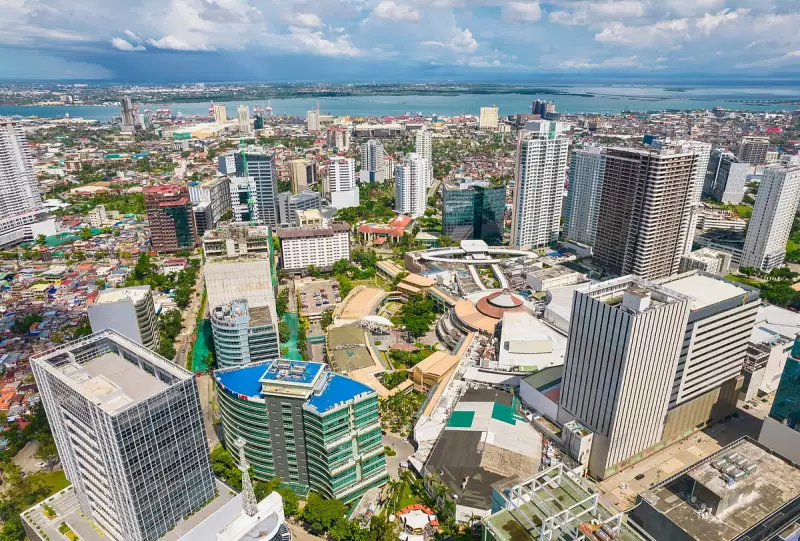
Provincial officials in Cebu are aggressively promoting the area as a primary engine for national growth and a compelling alternative for investors, even amid broader economic challenges facing the Philippines. The launch of the Cebu International Investment Summit 2026 on Monday, January 12, marks a concerted push to draw international funding into key sectors like manufacturing, artificial intelligence, and healthcare.
Leveraging a Competitive Workforce and Strategic Infrastructure
Local leaders are highlighting Cebu's unique advantages to secure long-term development. A major selling point is the province's deep pool of skilled, multilingual, and tech-savvy talent. Global strategist Brian To, who is married to Governor Pamela Baricuatro, emphasized that the region is evolving beyond traditional call centers into high-value creative fields and healthcare. He noted that Cebu produces over 12,000 medical professionals each year, offering licensed expertise at costs significantly lower than in markets like the United States.
On the infrastructure front, 1Tahanan Party-list Representative Nathaniel Oducado described Cebu as a high-performance vehicle where infrastructure acts as the engine. Critical upgrades include the Mactan-Cebu International Airport, which now handles 12.5 million passengers annually and uses a second parallel runway to avoid Manila air traffic congestion. Other key assets are the globally-ranked Port of Cebu, a power supply exceeding 1,000 megawatts, stable water services, and recent hospital investments totaling P1.3 billion.

Financial Incentives and a "Fortress" Strategy
To directly lower operational costs for businesses, Cebu is implementing a strategy known as the "Fiscal Shield." This policy is anchored on the Create More Act, which permits a 100 percent additional deduction on power expenses. Officials state this effectively reduces industrial power costs to between $0.08 and $0.09 per kilowatt-hour, making Cebu competitive with neighboring countries like Vietnam and Thailand.
The summit also promoted the concept of "Fortress Visayas," capitalizing on Cebu's geopolitical safety. As a designated site under the U.S. Enhanced Defense Cooperation Agreement (EDCA), Mactan is positioned as a secure logistics hub with upgrades funded by allied nations.
Building Resilience Through "Privatizing Survival"
This economic drive comes as Cebu adapts to environmental realities, such as the flooding during Typhoon Tino in late 2025. The provincial strategy now includes a focus on "privatizing survival." Investors are being encouraged to set up operations within economic zones that feature independent desalination plants and battery storage systems, ensuring business continuity during natural disasters.
Governor Baricuatro framed this comprehensive approach as a demonstration of the province's capacity to govern through complexity. If successful, it could reduce Cebu's dependence on national interventions and help retain skilled workers who might otherwise seek opportunities abroad. By targeting high-value sectors, Cebu aims to transform from a service-based economy into a genuine hub of innovation.