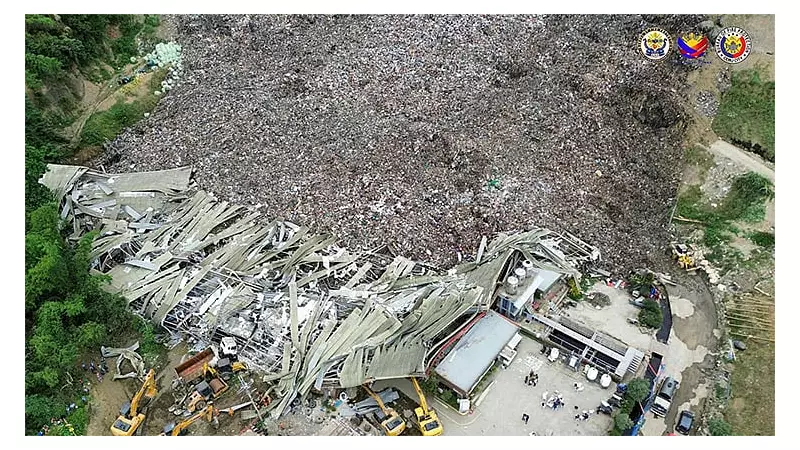
The tragic collapse at the Binaliw landfill in Cebu City has resulted in a devastating death toll of 25, transforming a local search and rescue mission into a nationwide indictment of the waste management sector's safety failures. One week after the January 8 incident, the families of 11 missing workers remain in agonizing uncertainty, while labor groups and officials point to systemic neglect.
Not an Accident, But a Failure of Accountability
The Philippine National Waste Workers Alliance (PNWWA) has forcefully rejected any attempt to label the landslide a natural disaster. The group insists the catastrophe on January 8, 2026, was a direct result of flawed solid waste management practices. According to the PNWWA, workers had issued repeated warnings about unstable garbage piles, exposure to toxic materials, and a critical absence of safety protocols at the site, all of which were allegedly ignored by management.
City Councilor Dave Tumulak, who leads the local disaster risk reduction council, has accused the landfill operator, Prime Integrated Waste Solutions Inc. (Piwsi), of failing in its crisis response. Tumulak criticized the company for not providing timely information to the families of the missing, leaving the local government to shoulder the burden of support and communication.

"The families deserve clear answers. They should not be left in the dark while waiting and hoping," Tumulak stated in Cebuano. He emphasized that Piwsi, not the city, should be leading the response and offering solutions to the grieving families.
Daily Hazards and a Legislative Push for Change
Labor leaders have painted a grim picture of the everyday dangers faced by waste workers. Jaime Paglinawan, chairman of the Alyansa sa mga Mamumuo sa Sugbo–Kilusang Mayo Uno (AMA‑Sugbo‑KMU), described an environment where protective equipment is scarce and workers constantly inhale harmful substances.
"This tragedy should serve as a serious lesson for all local government units, not only in waste segregation and disposal, but more importantly in protecting the health, safety and lives of waste workers," Paglinawan said.
In response to the disaster, labor alliances are urgently pushing for the passage of two key bills in Congress:
- House Bill 6413, the Magna Carta of Waste Workers, which would guarantee job security, living wages, and allowances for hazards.
- House Bill 5221, seeking to amend the Occupational Safety and Health Law to criminalize serious safety violations and impose stiffer penalties on negligent employers.
The outcome of the Binaliw investigation is expected to significantly influence the momentum behind this proposed legislation.
Operator's Defense and the Path Forward
Facing intense criticism, Piwsi issued a statement on January 14 defending its operations. The company claimed it conducts regular inspections and that the affected area showed no visible signs of structural weakness, such as cracks, prior to the collapse.
"We are actively working with experts and authorities for a comprehensive investigation. Operations at the Binaliw facility remain suspended as retrieval efforts continue," the company stated.
However, for the families of the 25 confirmed dead and the 11 still missing, these assurances offer little comfort. The disaster at the Binaliw landfill has exposed deep and long-standing gaps in labor protection and regulatory oversight, raising a painful question: with proper safeguards, could this tragedy have been prevented?